











When it comes to premium massage chairs in the U.S. market, Osaki and Luraco sit on opposite ends of both business philosophy and engineering focus. Osaki has built a dominant presence through its extremely broad catalog, offering dozens of models that range from budget entry-level chairs like the OS-Champ, through high-value mid-tiers like the OS-Pro Admiral II, and into full-blown 4-D flagship systems such as the Maestro LE 2.0. Osaki appeals to a wide spectrum of buyers—households seeking features-per-dollar, flexibility, and accessible pricing across multiple platforms.
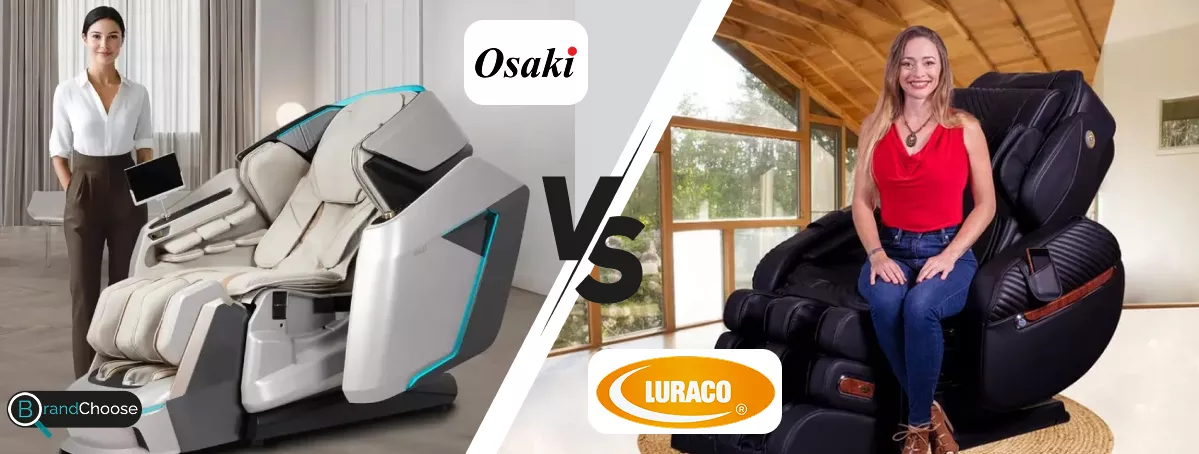
Luraco, by contrast, is laser-focused on clinical precision, U.S.-based manufacturing, and true medical-grade massage chair engineering. Unlike most global massage chair brands that assemble products entirely overseas, Luraco builds its high-end models in Texas, targeting long-term therapeutic use, veteran care, and serious chronic-pain management. While its catalog is far smaller than Osaki’s, Luraco’s attention to durability, regulatory certifications, and proprietary split-track roller systems place it in a category that feels more like professional-grade equipment than a home appliance.
Customer Support & Warranty
Support quality makes a dramatic difference once a chair leaves the showroom and enters years of household use.
🟦 Osaki: Provides 1- to 3-year warranties on parts and labor, with frame coverage extendable to 5 years for select models. The company operates U.S.-based warehouses for parts inventory, which aids speed of replacement. However, because Osaki distributes through numerous retailers and dealers, customer service experiences can vary based on the seller, with some buyers reporting delays in technician scheduling or inconsistent after-sale service.
🟪 Luraco: Operates one of the most respected service networks in the entire industry. Every chair is supported directly from its Arlington, Texas headquarters. Standard warranties cover 5 years on parts, 3 years in-home labor, and frame coverage beyond that. Customer service is highly personalized, often involving direct technician consultation. Luraco’s U.S.-built modular systems allow faster part swaps and more efficient repair processes compared to fully imported chairs.
✅ Verdict: Luraco offers exceptional U.S.-based customer service and highly personalized long-term support. Osaki provides solid service infrastructure but with dealer-dependent variability.
Massage Variety
At the core of every massage chair is its ability to simulate multiple types of massage therapy. The more nuanced and adaptive the technique variety, the better it can serve different body types and therapy needs over time.
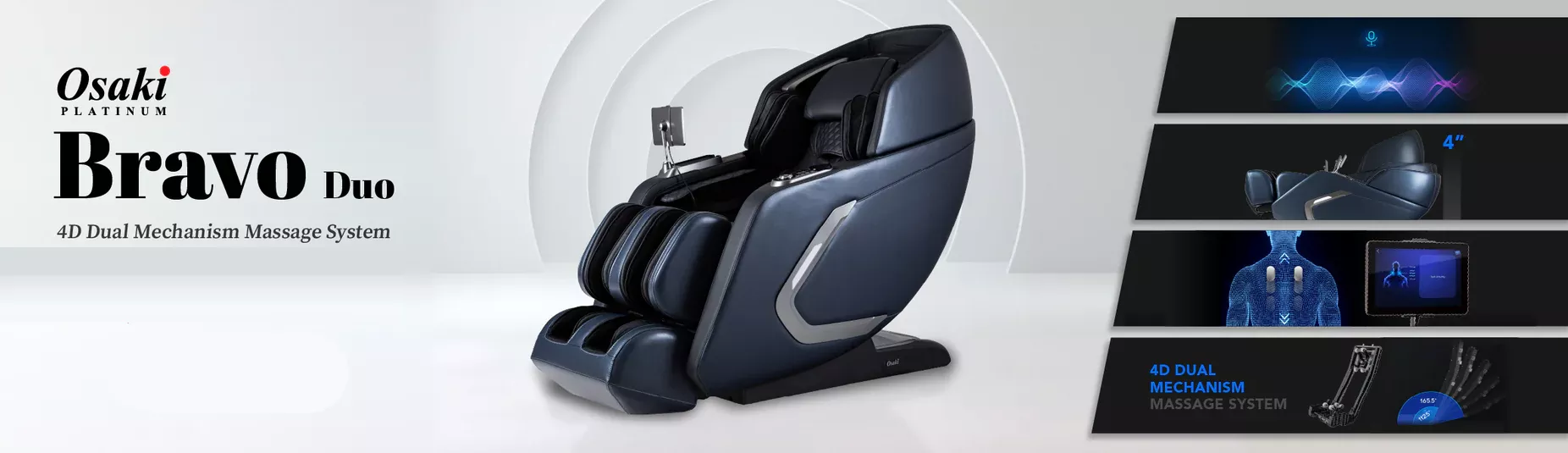
🟦 Osaki: Offers extensive technique libraries across all tiers. The OS-Champ opens with basic kneading, tapping, and rolling functions paired with five auto programs. Moving up to the Admiral II unlocks 3-D roller depth control with fifteen programs covering sport recovery, spinal stretches, and targeted body-region relief. At the flagship level, the Maestro LE 2.0 incorporates heated 4-D rollers with variable speed modulation, allowing roller motion to dynamically adjust tempo mid-stroke. Programs like "Thai Stretch," "Tech Neck Relief," and "Gentle Wake-Up" provide rich program diversity that adapts easily to multi-user households.
🟪 Luraco: Takes a very different approach: fewer gimmicks, more clinically-validated routines. Even its Sofy entry model includes full-body air compression, back rollers, and stretching sequences—though simpler than its premium siblings. The Legend Plus introduces a 3-D L-track system combined with advanced air compression and carefully calibrated spinal decompression modes. The flagship i9 Max Plus leads the industry with its patented split L/S-track system, which allows the roller carriage to separate and better follow spinal alignment through both recline and stretch cycles. Luraco’s massage programming is designed around medically advised pressure patterns with routines such as "Health," "Soft," "Shiatsu," "Sport Recovery," and "Nighttime Therapy"—each carefully regulated to avoid hyper-aggressive, potentially harmful forces.
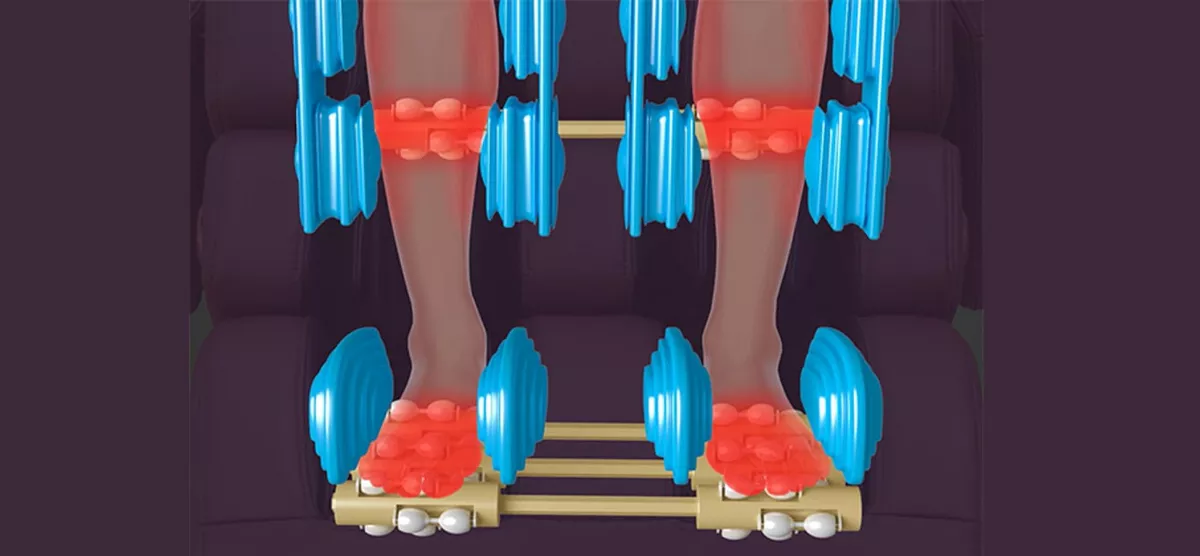
✅ Verdict: Osaki delivers greater volume of massage modes and feature-rich variety for multi-user enjoyment. Luraco prioritizes fewer but far more medically sophisticated routines designed for long-term therapeutic outcomes.
Body Coverage & Adjustability
Comprehensive body coverage is defined by roller track design, airbag placement, and how intelligently the chair adapts to changing body shapes and heights.
🟦 Osaki: Provides impressive coverage via full-length SL tracks. The Maestro LE 2.0 offers a 53-inch track that extends from neck to upper hamstrings. Airbags number over 30, covering shoulders, arms, hips, calves, and feet with adjustable intensity levels. The Admiral II retains most of these features in the mid-tier and includes 3-speed foot roller adjustments. Auto-scan functions accurately detect shoulder height and allow for manual fine-tuning, delivering broad adjustability for users of varying sizes.
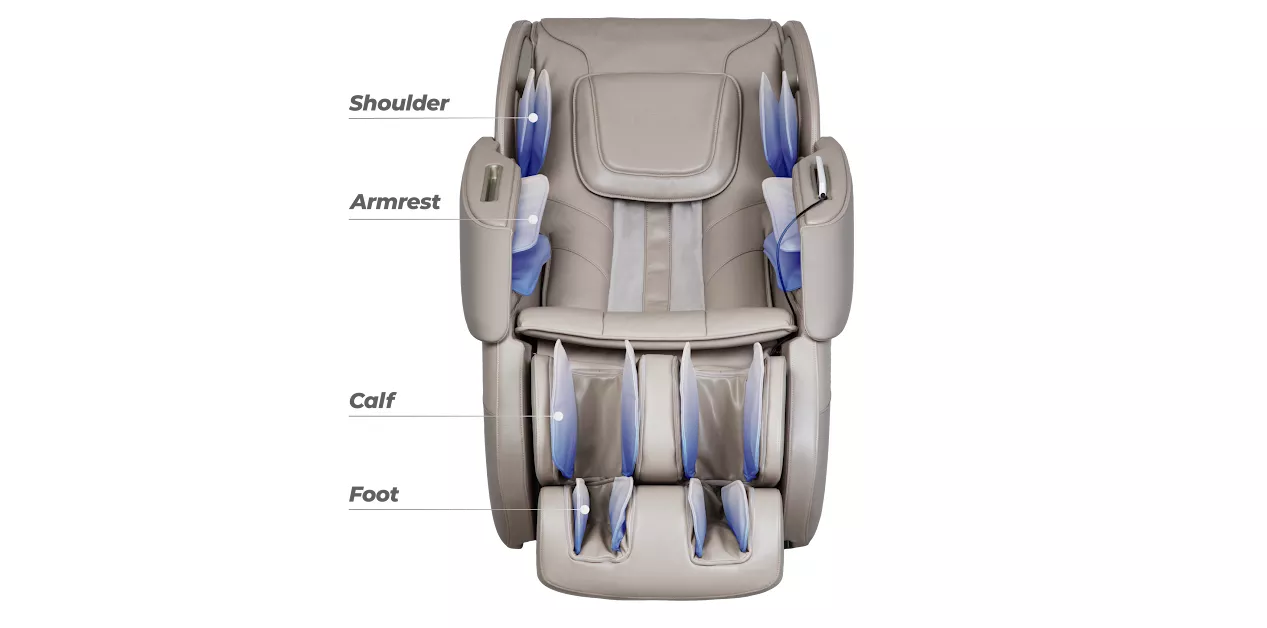
🟪 Luraco: Stands nearly alone with its split L/S-track system in the i9 Max Plus, which separates the roller tracks into independently controlled vertical and horizontal sections. This allows for true vertical spinal decompression during stretching without sacrificing glute and hamstring coverage—something fixed SL-track chairs struggle to achieve. Airbag zones are slightly fewer but far more targeted, with segmental inflation sequences that modulate compression carefully across shoulders, arms, calves, and feet. Body scanning is deeply calibrated, with precise mapping for head-to-heel alignment.
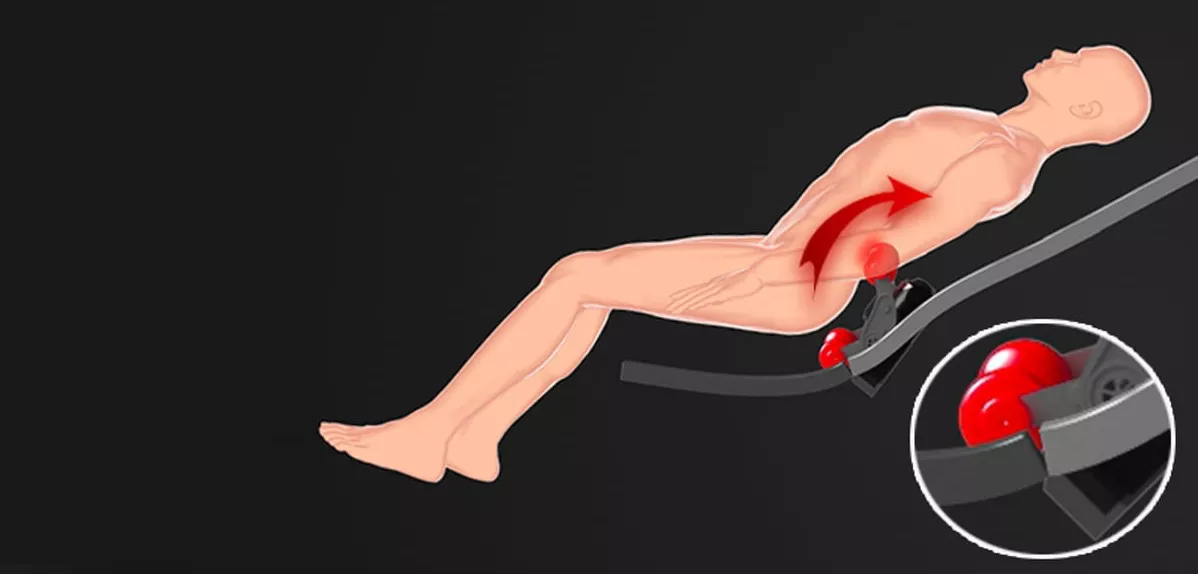
✅ Verdict: Osaki provides excellent full-body roller reach and wide airbag coverage. Luraco offers superior spinal decompression and individualized coverage precision through its unique split-track technology.
Comfort & Ergonomics
Comfort isn’t simply about soft padding—it’s about long-session usability, spinal alignment, seat ergonomics, and how the chair distributes body weight to avoid strain.
🟦 Osaki: Emphasizes plushness and comfort across most models. The Admiral II and Maestro LE 2.0 feature thick multi-layer foam, wide shoulder wings, and multiple Zero Gravity positions that tilt the body into optimal relaxation postures. Their seat bases accommodate a wide range of body sizes up to 6'5" thanks to automatic leg extensions and adjustable shoulder positioning. Even at the entry level, the OS-Champ offers lumbar heat and reasonable Zero-G recline angles, though taller users may feel cramped over longer sessions.
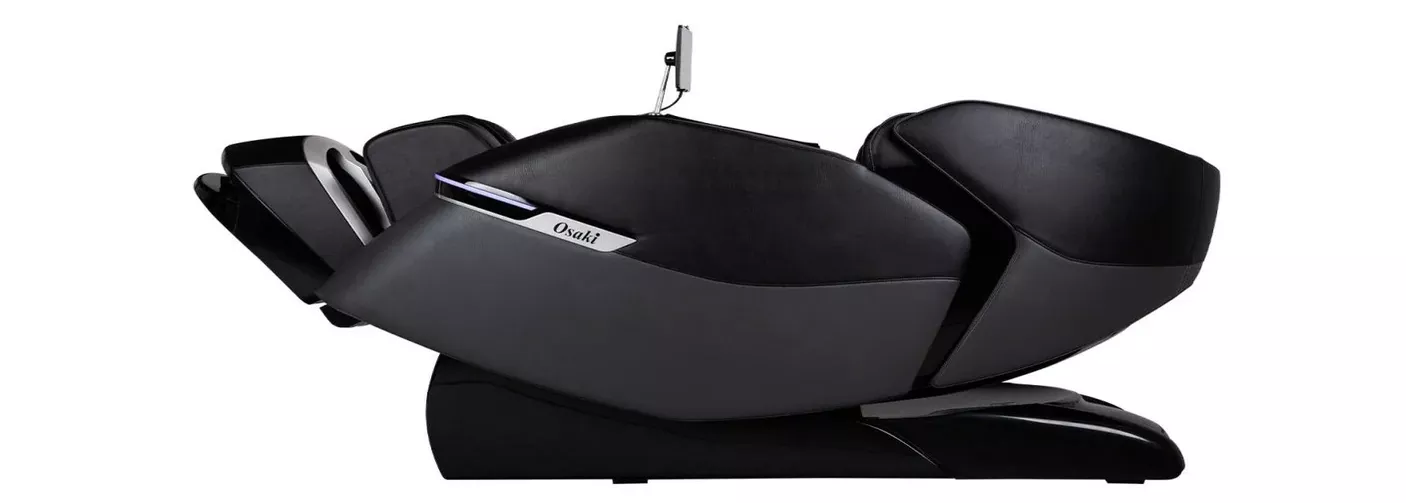
🟪 Luraco: Approaches comfort with strict orthopedic discipline. The Sofy focuses on compact ergonomic seating for smaller users but still provides well-balanced recline. The Legend Plus and especially the i9 Max Plus implement highly refined body contour mapping, with seat pans engineered for lumbar support, neutral pelvic tilt, and sustained circulation during extended sessions. Unlike many chairs that flatten the spine in Zero-G, Luraco’s positioning minimizes sacral compression and preserves cervical alignment. Cushions feel firmer than Osaki’s lounge-like designs but prevent muscular fatigue in longer therapeutic sessions.
✅ Verdict: Osaki excels in cushioned, casual lounging comfort ideal for family use. Luraco delivers superior medical-grade ergonomic posture alignment, especially beneficial for users with back issues or chronic conditions.
Quick Buyer Match Guide
🟦🟦 Choose Osaki if you
• Want maximum feature density across multiple price points.
• Prefer 4-D heated rollers, entertainment options, and voice control integration.
• Need flexibility to accommodate multiple users with different body sizes.
• Appreciate wide sale windows and deep seasonal discounts.
• Desire a mix of wellness and casual relaxation features.
🟪🟪 Choose Luraco if you
• Require serious long-term therapy with clinical-grade precision.
• Value U.S.-based engineering, modular design, and superior durability.
• Seek FDA-registered, medically reviewed massage programming.
• Want extremely quiet motors, ergonomic superiority, and spinal alignment protection.
• Expect highly personalized, direct U.S. customer service and technical support.
Conclusion
Osaki represents one of the most complete, flexible, and feature-loaded massage chair ecosystems available today, excelling at mass-market accessibility, customizable program diversity, and tech-heavy user experiences across price bands.
Luraco stands virtually alone in delivering medical-grade engineering, U.S. manufacturing, and serious long-term therapeutic capability for users who treat massage not as luxury but as daily rehabilitation.
For broad household use and maximum feature-for-dollar value, Osaki remains king of consumer flexibility.
For chronic pain management, long-session therapy, and uncompromising engineering precision, Luraco delivers industry-leading excellence unmatched by almost any other competitor



.png)