








Though both Osaki and Bodyfriend compete for visibility in the premium U.S. massage chair market, their design philosophies target very different buyer mindsets. Osaki aims for maximum versatility, stacking aggressive feature sets across dozens of models, while Bodyfriend approaches massage chairs as part of a broader luxury lifestyle and wellness ecosystem, heavily emphasizing design, elegance, and relaxation experiences alongside clinical wellness.
Osaki, with its massive product range, gives buyers access to highly affordable models like the OS-Champ, competitively priced mid-tier options such as the OS-Pro Admiral II, and 4-D flagship models like the Maestro LE 2.0 that offer heated rollers, voice control, and advanced body scanning — all at highly competitive price points for the features included.

Bodyfriend, founded in South Korea but increasingly popular in U.S. showrooms, blends chiropractic therapy, wellness diagnostics, and luxury design into its chair lineup. The brand’s positioning often revolves around premium materials, medical collaborations (including partnerships with chiropractic research teams), and distinctive designs that double as showpieces in upscale homes. While their catalog isn’t as large as Osaki’s, Bodyfriend actively competes at every tier from entry to ultra-premium.
Customer Support & Warranty
Warranty coverage and support infrastructure play a crucial role for chairs that undergo years of intense mechanical usage.
🟦 Osaki offers warranty coverage ranging from 1 to 3 years for parts and labor, with many flagship models eligible for 5 years of frame coverage depending on the seller. The company maintains large U.S.-based part warehouses, which helps expedite repairs. However, Osaki’s extensive dealer network leads to widely varied service experiences, with some customers encountering delays depending on the retailer’s responsiveness and available technician network.
🟪 Bodyfriend maintains a more vertically controlled service ecosystem with in-house technicians servicing many major U.S. metro areas directly. Their typical warranty includes 3 years of in-home labor and parts, extendable to 5 years for frame components. Bodyfriend’s more limited retail network allows tighter control over technician training, resulting in more consistent post-purchase service quality overall.
✅ Verdict: Bodyfriend offers more consistent direct service and concierge-style repairs. Osaki delivers nationwide coverage but more variable service depending on retailer.
Massage Variety
Massage variety defines whether daily sessions stay fresh, diverse, and useful across long-term therapy use.
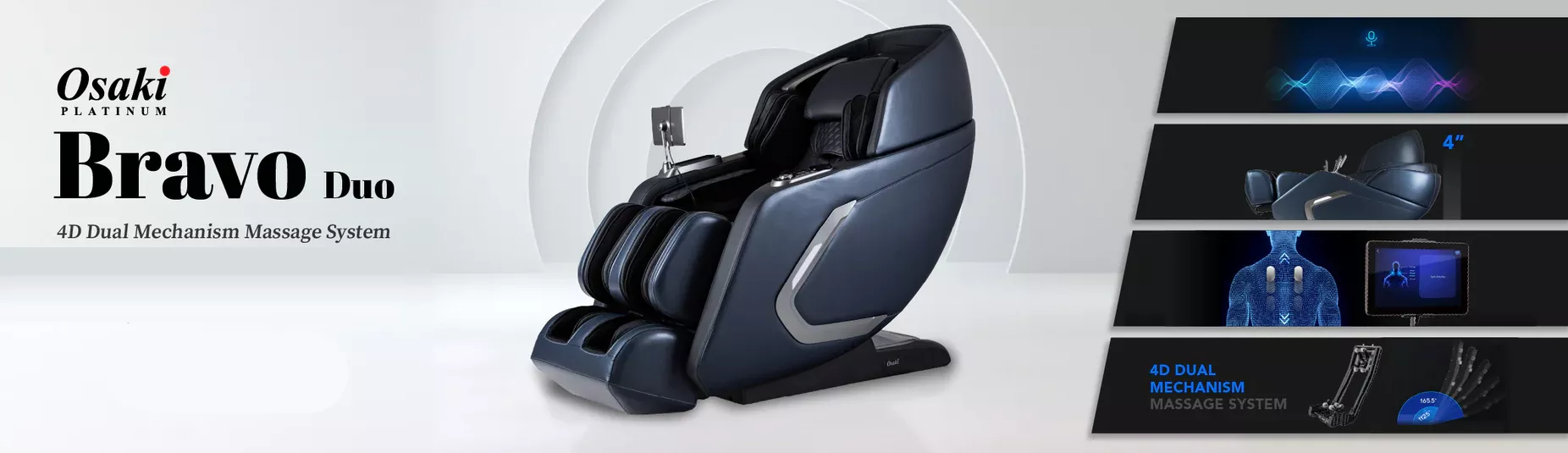
🟦 Osaki shines on total program breadth at all levels. The OS-Champ opens with five full-body massage modes covering basic kneading, tapping, rolling, and air compression combinations. The Admiral II expands into 3-D roller depth control with 15 highly varied programs, including "Thai Stretch," "Neck & Shoulder Relief," "Sports Recovery," and "Gentle Wake-Up." The flagship Maestro LE 2.0 offers heated 4-D rollers, variable mid-stroke speed adjustments, and sophisticated body-region targeting for advanced customization across multiple user profiles.
🟪 Bodyfriend leans heavily into curated wellness themes rather than maximizing program count. Even the Eliza entry model includes multi-stage air compression programs and preset body-region routines that promote spinal traction and relaxation, but roller variety remains 2-D. The mid-tier Falcon SV introduces 4-D movement with medical advisory input shaping its program library, emphasizing spinal balance, cervical focus, and stress-relief sequencing. The flagship Phantom II builds on this with deeply integrated brain massage™ programs that incorporate breathing guidance, rhythmic tempo shifts, and synchronized audio for relaxation-state enhancement. Total program count remains smaller than Osaki but highly refined toward calming, wellness-focused therapy.

✅ Verdict: Osaki leads on program volume, specialty diversity, and user customization breadth. Bodyfriend counters with more targeted wellness-driven routines emphasizing brain-body relaxation balance.
Body Coverage & Adjustability
Body coverage is measured not just in roller track length, but in how well a chair follows natural curves and adjusts for different users.
🟦 Osaki leverages extended SL-tracks for complete body coverage. The Maestro LE 2.0 provides a 53-inch track from neck to hamstrings, supported by more than 30 airbags controlling shoulders, hips, calves, feet, and arms. Roller width, speed, and depth adjust dynamically across different sessions, while automatic scanning detects shoulder height, leg length, and shoulder width at session start. Even in the mid-tier Admiral II, roller and airbag coverage remain robust, with zone-based controls available for both intensity and area targeting.
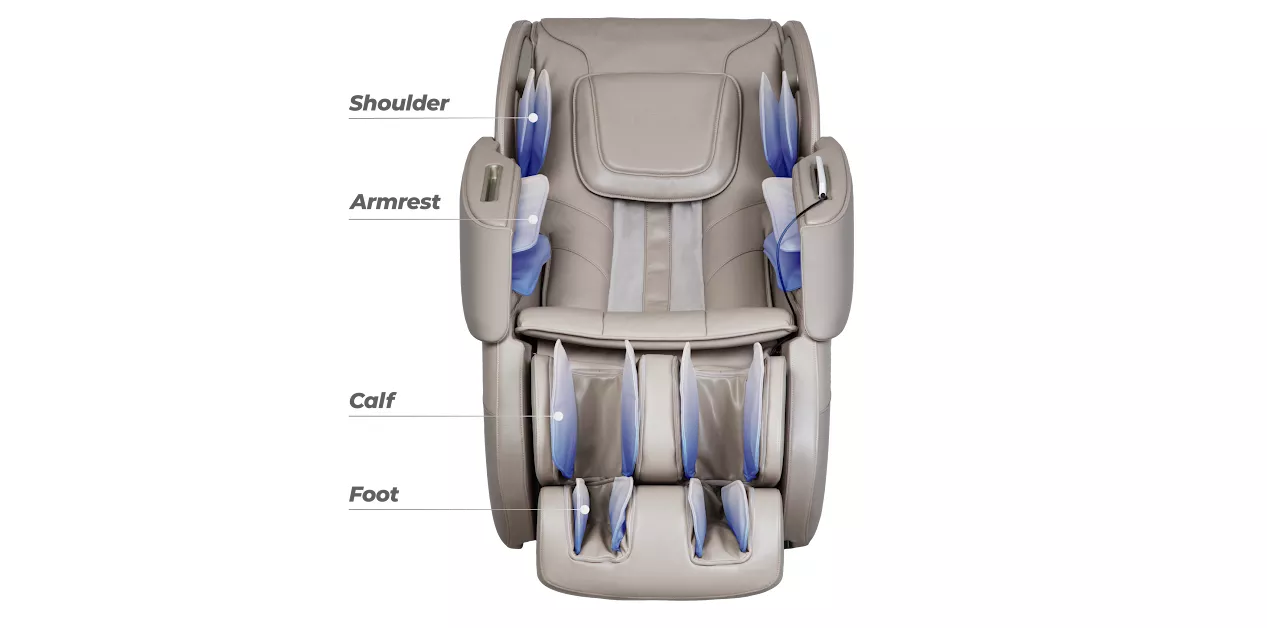
🟪 Bodyfriend uses slightly shorter but highly tuned tracks for smoother spinal alignment. The Phantom II’s 50-inch SL track follows spine curvature precisely while minimizing roller vibration and abrupt angle shifts. Airbags are distributed across shoulders, pelvis, calves, and feet with well-modulated inflation cycles rather than brute-force compression. While Bodyfriend generally employs fewer airbags than Osaki, it applies them more clinically, focusing on gentle lateral decompression for postural muscle groups rather than full-pressure squeezing.

✅ Verdict: Osaki leads with wider zone coverage, more intensity control, and broader mechanical flexibility. Bodyfriend focuses on smoother anatomical roller adaptation and gentle, progressive decompression.
Comfort & Ergonomics
Comfort isn't only about softness — it’s about spinal alignment, muscle fatigue prevention, and sustained circulation during long sessions.
🟦 Osaki favors plush padding across the lineup. The Admiral II and Maestro LE 2.0 both offer thick memory-foam seating, generously wide frames for larger users, and multi-stage Zero Gravity recline that reduces spinal compression while maintaining comfort for both short casual and long therapy sessions. The OS-Champ remains highly approachable for entry-level comfort but can feel shallower for users above 6'2".
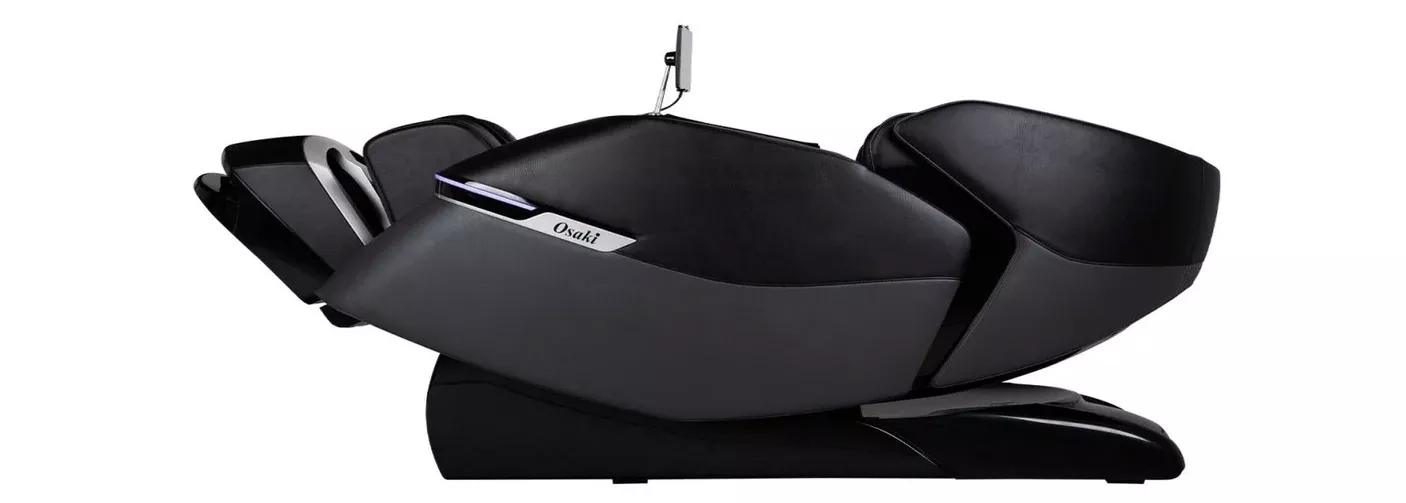
🟪 Bodyfriend approaches comfort as a wellness-luxury fusion. Across models like Falcon SV and Phantom II, posture alignment is more clinical — maintaining strong lumbar support, pelvic stability, and neutral cervical positioning while preserving blood flow across longer sessions. While seat foam feels slightly firmer than Osaki, Bodyfriend’s recline system balances decompression angles with therapeutic symmetry, helping prevent tension buildup even in longer 45+ minute sessions. Their Zero Gravity architecture provides a slightly higher leg elevation, which benefits lymphatic drainage and cardiovascular relaxation.

✅ Verdict: Osaki delivers plush, universally comfortable recline ideal for general family use. Bodyfriend excels in wellness-ergonomic posture tuning designed for long-session therapeutic relaxation and fatigue prevention.
Quick Buyer Match Guide
🟦🟦 Choose Osaki if you
• Want maximum feature density across multiple price points.
• Prefer heated 4-D rollers, voice control, and smart-home integration.
• Seek flexible budget options with frequent warehouse and seasonal sales.
• Need multi-user customization and program diversity for family use.
• Value entertainment integration alongside therapeutic functionality.
🟪🟪 Choose Bodyfriend if you
• Seek a medically inspired luxury wellness experience.
• Value unique brain massage technology and guided breathing integration.
• Prefer luxury design language that complements upscale living spaces.
• Expect smoother long-session ergonomics tuned for fatigue-free decompression.
• Want consistent concierge-level service and controlled buying experience.
Conclusion
Osaki remains one of the most complete, feature-dense, and pricing-flexible brands in the global massage chair industry — excelling in customization, tech stack integration, and access for almost any buyer profile.
Bodyfriend, meanwhile, offers a completely different take: targeting wellness-first luxury buyers with integrated brain-body relaxation programming, beautiful product design, and therapeutic features crafted to regulate full-body stress and postural fatigue across long daily sessions.
For maximum feature count, smart-home interaction, and feature-per-dollar leadership, Osaki dominates mainstream massage chair versatility.
For those seeking long-session wellness therapy, medically inspired relaxation, and high-end design curation, Bodyfriend offers a highly refined luxury alternative.