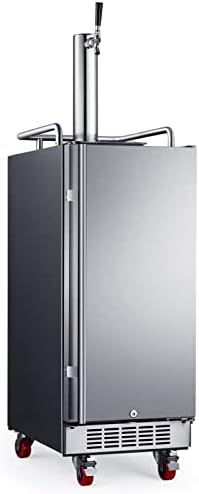
Kitma vs EdgeStar: Overview & Brand Philosophy
In the draft beverage dispensing landscape, few equipment matchups illustrate the divide between commercial utility and residential refinement as clearly as Kitma versus EdgeStar. Kitma has established itself primarily as a commercial foodservice equipment manufacturer, engineering heavy-duty cooling appliances designed to withstand the brutal pace of bars, catering services, and commercial kitchens. Their design philosophy is unapologetically industrial: maximum durability, utilitarian aesthetics, and robust mechanical refrigeration systems that prioritize rapid temperature pull-down and continuous operation under heavy use.
EdgeStar, conversely, is a household name in the residential specialty appliance sector, recognized as a pioneer in bringing draft beer dispensing into home bars, garages, and man caves. EdgeStar focuses on bridging the gap between professional-grade draft pouring and home-friendly design. Their philosophy emphasizes aesthetic versatility, quiet operation, energy efficiency, and consumer customization. While they offer commercial-rated variants, EdgeStar’s core identity revolves around accessible luxury, offering a broad spectrum of units from entry-level single-tap models to high-end built-in undercounter dispensers.
Understanding these distinct brand DNAs is critical for prospective buyers. Choosing between Kitma and EdgeStar is rarely a matter of raw specification superiority; rather, it is a strategic decision between commercial-grade brute force and residential-tuned refinement, where the ideal choice hinges directly on the intended environment, frequency of use, and tolerance for mechanical noise versus mechanical longevity.
Key Differences & Technological Comparison
The technological contrast between Kitma and EdgeStar manifests immediately in chassis engineering and materials. Kitma kegerators are heavily biased toward full stainless steel construction, featuring heavy-gauge exteriors and reinforced stainless steel floors capable of withstanding the repeated impact of loading full-sized, half-barrel kegs (160+ lbs). EdgeStar typically utilizes painted steel, black vinyl-wrapped cabinets, or stainless steel door wraps over composite liners. While EdgeStar's design is sleek and blends seamlessly into living areas, Kitma’s structural build is engineered for high-traffic environments where cosmetic scratches are secondary to structural integrity.
Refrigeration technology represents another significant divergence. Kitma units utilize commercial-grade, oversized hydrocarbon refrigeration systems (typically R290 refrigerant) with forced-air cooling designs. These systems are tuned for rapid heat displacement, allowing the kegerator to maintain sub-38°F temperatures even when opened repeatedly during peak service hours. Furthermore, Kitma frequently incorporates forced-air blower tubes directly up into the draft tower to prevent first-pour foaming. EdgeStar units, particularly their popular residential series (like the KC2000 and KC3000), use compact, low-decibel compressors designed to run quietly in home environments. While EdgeStar achieves excellent cold temperatures (often dropping into the low 30s), recovery time after opening the door is noticeably slower compared to Kitma's rapid-chill commercial systems.
Component quality and out-of-the-box readiness also showcase differing priorities. EdgeStar excels in consumer-ready bundling, offering complete kits including lightweight CO2 tanks, domestic D-system couplers, dual-gauge regulators, and standard chrome-plated brass draft hardware. Kitma models often lean toward the commercial standard, providing the refrigeration chassis, industrial casters, and robust internal air distributors, but sometimes require buyers to pay closer attention to dispensing kit specifications or source their own gas cylinders. Additionally, EdgeStar provides flexible installation configurations, including front-venting models engineered specifically for zero-clearance undercounter cabinetry, an option largely absent from Kitma’s free-standing commercial portfolio.
Pros & Cons Comparison
Kitma Kegerators
- Pros:
- Commercial-grade stainless steel construction inside and out, built for extreme durability.
- Heavy-duty forced-air refrigeration with rapid temperature recovery times.
- Reinforced interior floor plate prevents cabinet damage from heavy steel kegs.
- Pre-installed, heavy-duty industrial casters provide easy mobility for cleaning and service.
- NSF and ETL sanitation/safety certifications standard on commercial units.
- Cons:
- Significantly higher operational noise levels (compressor hum and blower fan noise).
- Industrial aesthetic does not blend well with high-end residential interior decor.
- Larger external footprints and lack of zero-clearance undercounter venting options.
- Higher baseline price point compared to entry-level residential units.
EdgeStar Kegerators
- Pros:
- Extensive catalog ranging from budget-friendly freestanding units to premium built-in models.
- Quiet compressor operation optimized for indoor, residential living spaces.
- Front-venting options allow seamless installation flush with standard kitchen counters.
- Complete, user-friendly dispensing kits included with clear consumer setup instructions.
- Aesthetically versatile designs available in sleek black, stainless steel, and panel-ready finishes.
- Cons:
- Plastic/composite interior liners can crack over time under careless keg loading.
- Slower thermal recovery times when operating in hot garages or high-ambient settings.
- Standard draft towers can experience temperature stratification without aftermarket tower coolers.
- Stock dispensing components (chrome-plated brass faucets/couplers) degrade faster than commercial stainless hardware.
Performance, Durability & Value Analysis
From a performance and durability standpoint, Kitma operates in a higher mechanical tier. Designed to satisfy rigorous commercial health codes and withstand commercial kitchen abuse, a Kitma unit will inherently outlast most residential units under high-volume stress. The combination of commercial compressors, copper tube evaporators, and R290 refrigerant ensures reliable operation even when ambient temperatures surge above 85°F. However, this level of engineering brings diminishing returns in a home setting. Kitma’s value proposition is tied to reliability under duress; if your kegerator is only tapped on weekends and opened twice an evening, you are paying for thermal capacity and industrial ruggedness that will largely go underutilized.
EdgeStar delivers exceptional value specifically optimized for the consumer home bar segment. While its mechanical components are lighter-duty, EdgeStar strikes an ideal balance between price, acoustic comfort, and practical performance. For the price of a mid-tier commercial box, EdgeStar allows consumers to purchase dual-tap or triple-tap configurations with digital temperature controls and integrated drip trays. The long-term durability of an EdgeStar unit is high within residential parameters, provided the user exercises care during keg loading to protect the interior liner. From an ROI perspective, EdgeStar maximizes feature density and livability per dollar, while Kitma maximizes service life per dollar under severe operating conditions.
Final Verdict: Which Brand Should You Choose?
Your choice between Kitma and EdgeStar ultimately rests on where the kegerator will reside, how it will be installed, and your tolerance for industrial noise.
Choose Kitma if: You are outfitting a commercial restaurant, brewery taproom, event hall, or an unconditioned garage/workshop in a warm climate. If your primary concerns are indestructible build quality, rapid cooling under frequent door openings, NSF certifications, and mechanical longevity where noise is not a factor, Kitma is the superior, heavy-duty investment.
Choose EdgeStar if: You are building out a home bar, game room, man cave, or indoor kitchen. EdgeStar is the definitive choice for homeowners who require quiet compressor operation, sleek modern styling, and the option for zero-clearance, undercounter built-in installation. For the vast majority of residential enthusiasts seeking an accessible, dependable, and customizable draft pour at home, EdgeStar remains the industry gold standard.
Features
In terms of feature sets, Kitma emphasizes the practical necessities required for commercial code compliance and rapid high-volume dispensing. Kitma units commonly feature heavy-duty self-closing doors, integrated door locks for inventory security, industrial casters pre-installed for mobility, and reinforced stainless steel floors capable of withstanding the repeated impact of heavy commercial kegs. Their dispense towers are utilitarian, usually configured for standard commercial couplers, and prioritized for rapid cleaning and sanitary maintenance. However, Kitma often omits the digital creature comforts found in consumer-first appliances, favoring simple, fail-safe mechanical thermostats or rudimentary digital controllers that do not emphasize granular micro-adjustments.
EdgeStar, on the other hand, provides a considerably more sophisticated and consumer-centric array of features designed to enhance the pouring experience. Most modern EdgeStar models come equipped with precise digital control panels that allow users to dial in exact dispensing temperatures, critical for delicate craft beers and stouts. EdgeStar also excels in configuration flexibility, offering a broad spectrum of modular draft kits, dual- and triple-tap tower options, customized draft lines, and integrated blowers that channel chilled air directly into the dispense tower to eliminate warm-line foaming. While Kitma’s features are centered around physical longevity and regulatory utility, EdgeStar focuses on beverage dispensing science, offering tailored components that cater to diverse draft preferences.
Performance
Performance dynamics reveal a stark contrast in thermal architecture and duty cycles between the two brands. Kitma leverages oversized commercial-grade compressors and high-velocity forced-air cooling systems engineered to pull temperatures down rapidly even amidst frequent door openings. This robust refrigeration assembly ensures that beer maintains standard draft temperatures (34°F to 38°F) in challenging ambient environments, making it exceptional for outdoor events or hot kitchen perimeters. The trade-off for this aggressive cooling performance is a higher level of operational noise and elevated energy consumption, both of which are standard for industrial-tier refrigeration units but potentially disruptive in an indoor domestic environment.
EdgeStar delivers a more refined, energy-conscious, and acoustically insulated thermal performance that is optimized for home and low-traffic environments. Many of EdgeStar’s premier undercounter units feature front-venting compressor layouts that deliver consistent chilling down to the low 30s while maintaining quiet operation suitable for open-concept homes. Crucially, EdgeStar’s tower cooling technology often outperforms standard commercial boxes on the first pour, as dedicated blower channels prevent the first glass from pouring pure foam—a frequent frustration with commercial kegerators that lack secondary tower circulation. While Kitma wins on raw thermal recovery and brute-force cooling capacity, EdgeStar provides the temperature consistency and delicate draft balance vital for domestic and boutique draft enjoyment.
Design
Aesthetically and structurally, Kitma embraces an uncompromising industrial design language. Featuring thick-gauge stainless steel exteriors, heavy-duty handles, and reinforced corners, Kitma kegerators are designed to resist physical wear, denting, and corrosion in high-traffic workspaces. The footprint of a Kitma unit is typically wide and deep, intentionally built to accommodate multiple full-sized half-barrel kegs with ease. While this rugged build quality is ideal for back-of-house commercial settings or dedicated garage bars, the utilitarian finish, visible commercial hardware, and sheer bulk make it challenging to integrate into sophisticated residential interior decor.
EdgeStar designs its units with modern residential architecture and ergonomic versatility in mind. The brand offers slim-profile models, elegant stainless steel door wraps, integrated flush-mount handles, and field-reversible doors that blend naturally into luxury outdoor kitchens or custom home cabinetry. EdgeStar’s interior layouts are optimized with flexible wire shelving, enabling the kegerator to double as a secondary beverage refrigerator when draft kegs are not installed. Furthermore, EdgeStar provides specialized undercounter built-in zero-clearance chassis designs, a critical aesthetic and functional advantage over Kitma’s strictly freestanding commercial formats that require substantial perimeter breathing room.