GE vs Frigidaire: Overview
Comparing GE and Frigidaire helps you determine which brand is best suited for your needs in Ice Makers. Both brands offer strong choices depending on your budget and key feature requirements.
Key Features & Comparison
Evaluate factors such as build quality, warranty, customer satisfaction, and total value before making your final purchase choice between GE and Frigidaire.
Features
Feature-wise, GE sets the standard for modern kitchen appliances by heavily integrating smart connectivity and user-centric automation. Many GE ice makers, especially the Profile Opal variants, incorporate built-in Wi-Fi via the SmartHQ mobile application. This enables users to monitor water levels, schedule production cycles to optimize energy consumption, and receive automated maintenance reminders directly on their smartphones. Furthermore, GE addresses mechanical upkeep with automated self-cleaning and descaling modes that circulate sanitizing solutions through internal valves, significantly extending the lifespan of sensitive internal components. The inclusion of integrated or modular side-tank reservoirs also ensures sustained production without requiring direct plumbing lines.
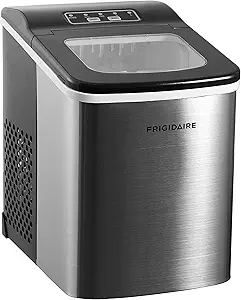
Frigidaire approaches features with a focus on simplicity, tactile usability, and mechanical directness. Most Frigidaire countertop ice makers feature intuitive LED control panels that allow users to select between multiple ice sizes (typically small, medium, or large bullet shapes) and monitor basic operational indicators like low-water warnings and ice-full bin alerts. While higher-end Frigidaire models occasionally offer self-cleaning cycles or basic programmable timers, they largely eschew Wi-Fi connectivity and complex telemetry in favor of reliable, independent operation. This deliberate lack of digital complexity minimizes potential points of electronic failure and reduces user friction, catering directly to buyers who prefer low-maintenance, plug-in-and-forget cooling appliances.
Performance
From an operational and thermodynamic perspective, GE ice makers are tuned for specialized ice texture and structural consistency. In the Opal series, the internal refrigeration system uses an auger mechanism that compacts scraped ice flakes into dense, porous cylinders of chewable nugget ice, operating at temperatures just below freezing to preserve a softer mouthfeel without melting instantly. While standard production speeds yield the first batch in approximately 10 to 15 minutes, sustained output ranges from 24 to 38 pounds per day depending on the model. GE’s thermal insulation, sound-dampening chassis design, and precision-engineered compressors also result in notably quieter operation, minimizing the audible hum typically associated with domestic refrigeration appliances.
Frigidaire ice makers, by contrast, rely predominantly on traditional evaporator-finger arrays that rapidly freeze water into hollow, cylindrical bullet ice. This methodology yields exceptionally fast cycle times, often producing a fresh batch of ice in as little as 6 to 9 minutes. Over a 24-hour cycle, Frigidaire countertop units commonly produce between 26 and 40 pounds of ice, matching or slightly exceeding similarly sized units in sheer output volume. However, because bullet ice contains more trapped air and smaller mass density than GE's compacted nuggets or solid clear ice cubes, it tends to melt noticeably faster in warm beverages. Frigidaire’s compressors and cooling fans also operate at slightly higher decibel levels, representing a minor trade-off for their rapid production capabilities.
Design
GE excels in industrial design, producing ice makers that integrate seamlessly into contemporary, high-end kitchens. Utilizing premium materials such as smudge-resistant stainless steel, brushed metallic accents, and smoked acrylic access doors, GE appliances are conceived as intentional countertop centerpieces rather than hidden utilities. Ergonomics are carefully considered; large pull-out transparent bins facilitate effortless scooping, while soft, ambient interior LED lighting illuminates the ice chamber for both aesthetic appeal and practical low-light visibility. Additionally, the footprint of GE units is engineered with rear venting and compact depth tolerances, allowing for tidy placement under standard cabinetry without compromising necessary airflow clearance.
Frigidaire emphasizes utility, portability, and versatile aesthetic options across its design footprint. Rather than strictly adhering to monochromatic stainless steel, Frigidaire offers countertop models in an array of finishes, including retro-inspired colors, glossy plastics, and matte tones that suit casual kitchens, home offices, RVs, and patio bars. The chassis designs are generally lighter and more compact than GE's heavier assemblies, often featuring integrated carry handles for true mobility. While the use of lighter polymer housings and top-hinged viewing lids prioritizes functional cost-efficiency over high-end luxury, Frigidaire’s straightforward, utilitarian layout ensures easy cleaning, simple physical access to the reservoir, and unmatched transportability.
Compare current retail pricing, active promotions, and verified stock availability directly from authorized stores: