Ninja vs Cuisinart: Overview
Comparing Ninja and Cuisinart helps you determine which brand is best suited for your needs in Food Processors. Both brands offer strong choices depending on your budget and key feature requirements.
Key Features & Comparison
Evaluate factors such as build quality, warranty, customer satisfaction, and total value before making your final purchase choice between Ninja and Cuisinart.
Features
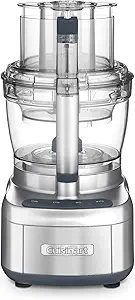
Cuisinart’s feature architecture is deeply rooted in culinary precision and functional ergonomics. Flagship models often include variable slicing discs that allow micro-adjustments without swapping parts, alongside reversible shredding plates and integrated dicing kits. One of Cuisinart's crowning features is its dual or triple-nested feed chute design, which accommodates whole produce like large potatoes or beefsteak tomatoes down to narrow items like carrots, maintaining vertical alignment for uniform cuts. Additionally, Cuisinart frequently integrates nesting accessory bowls, enabling users to switch between high-capacity 14-cup prep work and small 4.5-cup emulsifications or purees without washing the primary vessel mid-recipe.
Ninja counters with an ecosystem built around automated versatility and intuitive interface engineering. Its primary competitive advantage lies in Auto-iQ technology, which employs pre-programmed pause, pulse, and continuous-run cycles optimized for specific prep tasks, eliminating guesswork. Ninja systems frequently double as full-scale blenders and personal nutrient extractors by swapping the work bowl for specialized pitcher attachments. However, Ninja generally lags behind in feed tube mechanics, often relying on narrower chutes that mandate prior manual food chopping, and their accessories focus more on aggressive extraction and crushing rather than micro-adjustable slicing thickness.
Performance
In real-world food preparation, the engineering divergence between the two brands dictates starkly different performance profiles. Cuisinart utilizes high-torque direct-drive induction motors that operate at lower RPMs, generating steady, unyielding power without excessively aerating ingredients. This mechanical advantage shines when kneading stiff bread dough, where the motor maintains continuous rotational force without overheating or walking across the countertop. For dry tasks like grating hard cheeses or julienning vegetables, Cuisinart’s heavy stainless-steel discs deliver clean, uniform cuts with virtually no stalling or thermal degradation to delicate ingredients.
Ninja machines, powered by universal brush motors running at significantly higher RPMs, excel in speed-dependent applications such as pureeing soups, churning nut butters, and pulverizing fibrous items. However, this high-speed approach poses challenges during delicate prep work. The multi-tiered stacked blade system tends to create uneven textures during basic chopping; ingredients at the bottom can quickly turn to mush while top pieces remain untouched unless the user is exceptionally disciplined with short pulse bursts. Furthermore, while Ninja can handle lighter doughs, its high rotational speed and lighter base make it susceptible to structural strain and counter drift when processing dense artisanal doughs.
Design
From a design and material perspective, Cuisinart prioritizes commercial-grade aesthetics, tactile weight, and operational stability. Most premium Cuisinart units boast heavy, die-cast metal or brushed stainless steel bases with a low center of gravity, engineered specifically to stay anchored during rigorous processing cycles. The work bowls are molded from thick, heavy-gauge BPA-free Tritan plastic designed to withstand thermal expansion and frequent contact with sharp implements. Control interfaces favor physical paddle switches or flat, sealed capacitive touchpads that prevent flour and liquids from creeping into the internal electronics, resulting in exceptional longevity.
Ninja embraces an aggressive, modern aesthetic characterized by angular plastic housings, digital displays, and suction-cup base feet to counteract the vibration of its lightweight, high-RPM motors. While the suction cups effectively anchor the unit, they can be cumbersome when repositioning the machine on the counter. Ninja’s stacked blade assembly simplifies the removal of blended ingredients without spilling, but it introduces safety hazards during handling and cleaning, as the razor-sharp spindle easily dislodges if the container is inverted. Conversely, Cuisinart's lock-in disc system and bottom-seated S-blades present a safer, more traditional handling experience during transfer and dishwashing.