GE vs Thermomate: Overview
Comparing GE and Thermomate helps you determine which brand is best suited for your needs in Cooktops. Both brands offer strong choices depending on your budget and key feature requirements.
Key Features & Comparison
Evaluate factors such as build quality, warranty, customer satisfaction, and total value before making your final purchase choice between GE and Thermomate.
Features
In terms of feature architecture, GE emphasizes refined cooking ergonomics, safety protocols, and smart kitchen integration. Depending on the model tier (including GE Profile), users frequently encounter features such as Chef Connect—which synchronizes the cooktop with compatible range hoods or over-the-range microwaves—precision temperature control knobs, multi-ring heating elements, and integrated melt or simmer settings calibrated for delicate culinary tasks. GE’s gas platforms boast robust features like deep-recessed spill containment, high-output Power Boil burners, and dishwashable cast-iron grates, while their electric and induction models feature intuitive touch-slider interfaces, digital timers, and pan presence sensors engineered to minimize accidental operation.
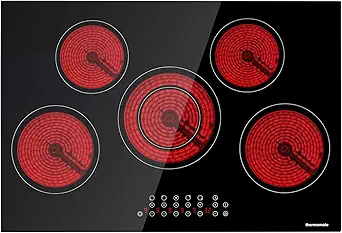
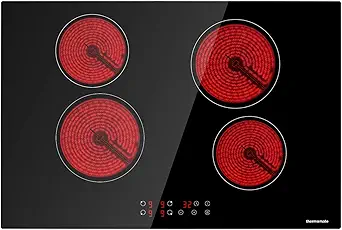
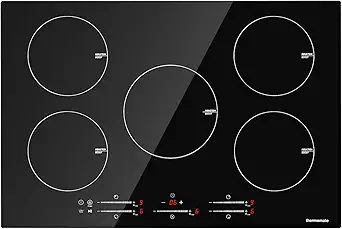
Thermomate counters this by offering surprisingly sophisticated modern features at an entry-level cost, particularly within its induction and electric portfolio. Common features include individual digital timers for every burner, child safety lockouts, boost power functions, and residual heat indicators that rival the feature lists of premium brands. However, Thermomate’s execution tends to be more utilitarian; their touch controls can be overly sensitive to moisture or greasy fingers, and their gas models typically lack high-end niceties like dual-stacked simmer rings or integrated bridge elements for griddles. While Thermomate successfully checks all the fundamental specification boxes, GE delivers a noticeably higher level of sensor precision, user-feedback refinement, and interconnectivity.
Performance
Performance benchmarks reveal the deeper thermal engineering that separates these two manufacturers. GE cooktops excel in consistent heat distribution, thermal stability, and immediate power modulation. In gas configurations, GE burners regularly exceed 15,000 to 18,000 BTUs, capable of rapid boiling while simultaneously maintaining stable, ultra-low flame heights for chocolate tempering or sauce reduction. Their radiant and induction models utilize superior power-sharing algorithms and industrial-grade magnetrons, ensuring that when multiple zones are active at maximum power, the unit avoids severe thermal throttling or abrupt power-cycling fluctuations that can disrupt delicate cooking tasks.
Thermomate provides commendable raw heating power for its price category, with induction units that boil water exceptionally fast thanks to focused magnetic coupling. Nevertheless, technical trade-offs become evident under demanding culinary workflows. Thermomate induction units frequently employ pulse-width modulation (PWM) at lower heat levels, causing the heat to cycle on and off in pulses rather than delivering a continuous low-wattage simmer, which can scorch delicate sauces. Furthermore, their gas cooktops generally operate with lower maximum BTU ratings and exhibit less refined air-to-gas mixing ratios, occasionally leading to uneven pan heating. For standard meal prep, Thermomate performs adequately, but GE clearly outclasses it in fine thermal management and heavy-duty cooking output.
Design
From an aesthetic and structural perspective, GE showcases superior industrial design, heavy-duty material selection, and ergonomic detailing. GE cooktops are built with thick-gauge stainless steel, heavy cast-iron continuous grates that allow heavy stockpots to slide smoothly across the surface, and chemically strengthened ceramic glass engineered to resist thermal shock and micro-abrasions. The tactile experience of GE knobs and touch controls reflects deliberate engineering, offering weighted feedback, clear indicator typography, and seamless edge profiles that sit flush with contemporary countertops, enhancing the overall visual cohesion of upscale kitchens.
Thermomate adopts a sleek, minimalist design language that mimics high-end European trends, often utilizing frameless black ceramic glass or clean stainless steel surfaces that look striking straight out of the box. However, a closer inspection reveals where cost efficiencies were achieved: the sheet metal chassis is noticeably lighter, knob controls frequently use molded plastic with metallic coatings rather than solid metal, and burner grates can feel lighter under heavy cookware. Additionally, the edge finishing on Thermomate glass units can be more susceptible to edge chipping if struck by heavy cookware. While Thermomate delivers an undeniably modern, clean aesthetic on a budget, GE provides a far more substantial, premium tactile feel and resilient structural integrity.