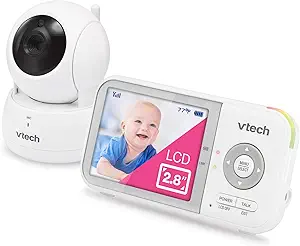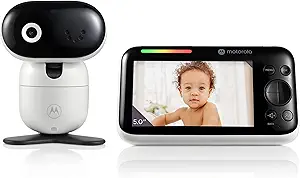









Motorola and VTech baby monitors are two leading brands in the baby monitoring technology sector, both offering a range of advanced features to help parents keep an eye on their little ones. Motorola baby monitors are known for their high-quality video and audio capabilities, with some models offering a 5-inch color screen, infrared night vision, and two-way communication. In addition, many Motorola monitors come with a room temperature display, lullaby player, and the ability to connect to multiple cameras, making them a versatile choice for parents. However, they can be on the higher end of the price spectrum compared to other brands. On the other hand, VTech baby monitors are renowned for their affordability without compromising on essential features. They offer clear audio and video monitoring, with some models featuring infrared night vision and two-way, talk-back intercom. VTech baby monitors also have sound-activated LED sensors, which illuminate to indicate the level of sound in your baby's room. While they may not have as many advanced features as Motorola baby monitors, their simplicity and cost-effectiveness make them a popular choice for many parents. However, some users have reported issues with battery life and connectivity range in certain VTech models.
Key Features Comparison
Features
VTech focuses its feature set on direct utility, sensory assurance, and user accessibility. Most VTech video monitors include essentials such as adaptive night lights, built-in ambient temperature sensors, high-fidelity two-way intercoms, and pre-programmed soothing melodies paired with white noise profiles. Premium entries in their catalog introduce wide-angle optical zoom lenses and intelligent sound-activated alerts (VOX), ensuring parent units conserve battery until a threshold of noise is detected. VTech purposefully omits overly complex biometric tracking or cloud-locked paywalls, deliberately keeping the feature framework self-contained within the localized camera-to-screen pairing to guarantee zero latency and optimal privacy.
Motorola differentiates itself by integrating deep software ecosystems and multimedia functionality through its HubbleClub companion platform. Beyond standard pan-tilt-zoom (PTZ) controls and temperature tracking, many Motorola models feature integrated light-show projectors, multi-color nightlights, and audio training programs directly on the camera head. The dual-mode feature allows continuous streaming both on a dedicated 5-inch handheld screen via 2.4GHz FHSS and concurrently on unlimited smart devices through Wi-Fi. Furthermore, Motorola's software platform incorporates AI-driven sleep analysis, cry detection algorithms, and automated milestone recording, offering an expansive suite of tracking tools, albeit with some advanced insights gated behind recurring cloud subscription tiers.
Performance
Performance benchmarks between these two manufacturers illustrate clear trade-offs between transmission stability and video processing fidelity. VTech excels remarkably in transmission range, barrier penetration, and real-time audio latency. Utilizing optimized 2.4GHz FHSS spectrum hopping, VTech monitors frequently maintain strong visual and audio signals through multiple drywall layers and across long household distances where competitor units drop frames. Their infrared night vision is sharp, balanced, and responsive, with clean noise reduction algorithms that prevent graininess in total darkness. Battery longevity on VTech parent units is another standout metric, regularly offering extensive multi-hour operation on VOX mode due to minimal background processing overhead.
Motorola delivers competitive video performance, often boasting crisp high-definition resolutions up to 1080p on its smart endpoints and vibrant colors on its dedicated parent monitors. However, its real-world performance is more variable, heavily dictated by home network topography and cloud server stability when running in Wi-Fi hybrid modes. While local FHSS performance is comparable to VTech at moderate distances, Motorola units can suffer from occasional handshake delays, interface latency, and parent-unit battery drain under heavy streaming loads. Nonetheless, Motorola counterbalances these quirks with superior visual color saturation during daylight hours and exceptional wide-angle field-of-view mechanics, accommodating expansive room coverage with minimal motor lag during manual pan-tilt adjustments.
Design
From an industrial design standpoint, VTech champions utilitarian durability and tactile ergonomics. Its parent units are engineered to endure the inevitable drops, spills, and handling mishaps common to chaotic nursery environments. Featuring physical, textured buttons, clearly demarcated navigation clusters, and robust kickstands, VTech hardware prioritizes rapid blind-operation in low-light master bedrooms. The baby units themselves present modest, unobtrusive aesthetics characterized by rounded white matte plastics, enclosed motorized housings, and soft-glow status LEDs engineered specifically to prevent infant sleep disruption. The physical execution is straightforward, focusing on functional resilience rather than high-concept consumer styling.
Motorola adopts a distinctly sleek, lifestyle-oriented design language tailored to match contemporary nursery decor. Their cameras often feature smooth, teardrop or spherical forms with contrasting metallic or pastel accents, magnetic mounting bases, and high-gloss finishes that feel premium on the shelf. The handheld monitors feature streamlined bezels, intuitive touchscreen navigation on flagship models, and clean dashboard layouts. While this minimalist aesthetic results in an undeniably attractive and modern presence, it can occasionally compromise drop resistance and tactile ease-of-use when compared to VTech’s utilitarian, button-dense remotes. Motorola successfully crafts a product that feels like an intentional design accessory, trading some degree of rugged simplicity for high-end aesthetic appeal.
Related Videos
Conclusion
Motorola and Vtech baby monitors both offer advanced technologies that help parents keep an eye on their little ones. Motorola baby monitors, such as the Motorola MBP33S, come with features like infrared night vision, room temperature display, and two-way communication. They also provide a secure and private connection to your baby, thanks to the 2.4 GHz FHSS wireless technology. However, some users have reported issues with the battery life and durability of the product. On the other hand, Vtech baby monitors, like the VTech DM221 Audio Baby Monitor, also offer features such as DECT 6.0 digital technology for crystal clear transmission, eliminating the annoying white noise you hear from analog monitors. Plus, it has a two-way, talk-back intercom and up to 1,000 feet of range, so you can soothe your child from anywhere in your home. However, it lacks video capabilities, which some parents might find essential for monitoring their baby. When compared to other brands, both Motorola and Vtech stand out for their advanced features and reliable performance, although they each have their unique strengths and weaknesses.