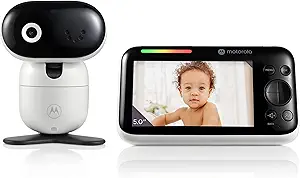
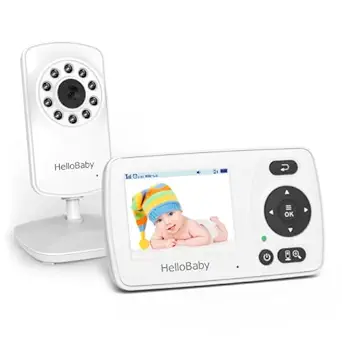
Motorola vs HelloBaby: Overview & Brand Philosophy
In the realm of nursery technology, few names carry the legacy recognition of Motorola. Long established as a telecommunications pioneer, Motorola entered the juvenile products market by leveraging its deep background in RF (radio frequency) technology and digital communications. Today, its nursery monitor line—manufactured and managed under license by Chillax Care and formerly Hubble Connected—positions itself as a premium, feature-rich ecosystem. Motorola focuses heavily on convergence: bridging local, closed-loop wireless monitoring with dual-mode Wi-Fi connectivity, cloud recording, sleep analytics, and smart-home integration.
Conversely, HelloBaby embodies the modern direct-to-consumer disruptor philosophy. Founded to cut through the complexity and high markups of legacy nursery brands, HelloBaby prioritizes dedicated, non-Wi-Fi functionality, absolute plug-and-play simplicity, and accessible price points. Rather than developing complex digital ecosystems or companion smartphone apps, HelloBaby invests in reliable, localized 2.4GHz FHSS (Frequency Hopping Spread Spectrum) hardware. Their philosophy caters directly to parents who prioritize data privacy, zero setup friction, and dependable hardware that executes the core fundamentals of audio-video monitoring without requiring an internet connection.
This fundamental divergence in brand philosophy sets up a classic consumer dilemma in the baby monitor space: do you opt for Motorola's high-tech, multi-access ecosystem with expansive smart features, or do you choose HelloBaby's streamlined, secure, and budget-friendly hardware focused strictly on local performance?
Key Differences & Technological Comparison
The technological gap between Motorola and HelloBaby reveals distinct trade-offs in wireless architecture, video fidelity, software capabilities, and user experience. Understanding these technical nuances is essential to matching a monitor to your family's parenting workflow.
- Transmission Protocols & Connectivity: Motorola frequently champions "hybrid" or "dual-mode" connectivity. Models like the Motorola Nursery VM65 Connect operate via a private 2.4GHz FHSS local connection to the dedicated parent unit, while simultaneously streaming encrypted 1080p video over Wi-Fi to smartphones running the Motorola Nursery app. HelloBaby, across its entire lineup (such as the popular HB65 and HB6550), strictly adheres to closed-circuit 2.4GHz FHSS. This completely eliminates Wi-Fi dependencies, shielding parents from network outages, firmware vulnerabilities, and cloud hacking concerns, though it sacrifices out-of-home remote viewing entirely.
- Display Quality and Camera Optics: Motorola cameras generally offer superior wide-angle optics and higher-end sensor integration. In hybrid setups, Motorola delivers full HD 1080p streams to mobile devices and up to 5-inch 720p resolution on parent units. HelloBaby concentrates on mid-tier resolution (typically 720p on modern models and 480p on entry-level units) displayed on compact 3.2-inch to 5-inch proprietary parent screens. While HelloBaby's infrared night vision is sharp enough to monitor breathing movements and sleep states, Motorola edges it out with dynamic range, color balance in low light, and advanced digital zoom capabilities.
- Pan-Tilt-Zoom (PTZ) Mechanics: Both manufacturers offer motorized pan-tilt-zoom cameras, but the execution differs. HelloBaby's motorized bases (often boasting 355-degree horizontal pan and 120-degree vertical tilt) move swiftly with near-silent brushless motors, controlled intuitively via the parent unit D-pad. Motorola's PTZ mechanisms are similarly silent but often integrate automated motion tracking and sound-activated panning, allowing the lens to track an active toddler automatically across a nursery.
- Smart Features & Ancillary Sensors: Motorola outclasses HelloBaby in software-driven intelligence. Through its app-enabled platforms, Motorola provides room temperature tracking with push alerts, sound detection thresholds, soothing light shows, preloaded audiobooks, lullabies, and sleep diary logging. HelloBaby limits its secondary features to purely functional basics: ambient room temperature sensing, basic two-way audio talkback, VOX (voice-operated switch/sound activation) power-saving modes, and rudimentary lullaby playback executed directly from the base unit.
Pros & Cons Comparison
Motorola Baby Monitors
- Pros:
- Dual-mode capability allows simultaneous monitoring via a parent unit and remote smartphone app.
- Higher optical clarity with true 1080p feeds on compatible mobile devices.
- Advanced nursery features including smart ambient lighting, sleep tracking, and audiobooks.
- Expandable system options supporting split-screen viewing for multiple cameras.
- Cons:
- Significantly higher initial hardware cost and potential subscription upsells for cloud video storage.
- Mobile app stability can be temperamental, occasionally suffering from latency and connection drops.
- Parent unit battery life drains rapidly when running high-resolution screens and continuous active feeds.
HelloBaby Baby Monitors
- Pros:
- Exceptional value for money, offering motorized PTZ at a fraction of competitors' prices.
- Zero Wi-Fi reliance eliminates internet hacking vulnerabilities and network troubleshooting.
- Instant setup out of the box with zero account registrations or pairing procedures.
- Superior battery optimization in VOX/audio-only mode, easily lasting through full night shifts.
- Cons:
- No remote viewing capabilities outside the local parent unit range (typically capped at 700-1000 ft open-air).
- Display panels on parent units show lower contrast and resolution compared to premium smartphones.
- Lacks advanced sleep analytics, smart alerts, and automated tracking technologies.
Performance, Durability & Value Analysis
From an operational standpoint, performance is dictated by what you define as critical. In terms of wireless reliability, HelloBaby often outperforms Motorola in real-world residential settings. Because HelloBaby utilizes uninterrupted, localized FHSS signaling, it suffers from virtually zero latency and avoids the buffering circles, app crashes, or router hand-off issues that plague Motorola's dual-band Wi-Fi systems. However, physical drop tests and long-term chassis durability slightly favor Motorola. Motorola's parent units use more impact-resistant ABS plastics, integrated rubberized bumpers, and robust kickstands, whereas HelloBaby's lightweight monitors feel more utilitarian and are susceptible to hinge and antenna snapping if repeatedly dropped by tired parents.
When analyzing price-to-performance ratio, HelloBaby holds an undeniable advantage. A fully motorized, pan-and-tilt HelloBaby system routinely retails for roughly half the price of an equivalent Motorola setup. If your requirement is dedicated, reliable monitoring within the walls of your home, HelloBaby delivers nearly 90% of the real-world utility of a top-tier brand for 50% of the cost. Motorola justifies its price premium exclusively through its smart infrastructure: if you commute, travel for work, or rely on family members who want to check in on the baby remotely, Motorola's hybrid software layer delivers a level of utility that HelloBaby simply cannot match.
Final Verdict: Which Brand Should You Choose?
The choice between Motorola and HelloBaby comes down to lifestyle needs, technical tolerance, and budget.
Choose HelloBaby if: You are seeking a straightforward, reliable, and secure nursery monitor that works the moment you plug it in. It is the superior choice for privacy-conscious parents who refuse to have internet-connected cameras in their bedrooms, budget-conscious buyers who want motorized camera control without paying legacy-brand premiums, and caregivers who simply need a dedicated screen on their nightstand that won't drop video feeds due to a Wi-Fi outage.
Choose Motorola if: You require the flexibility of checking your child's nursery from anywhere in the world via your smartphone, while still retaining a dedicated local screen for babysitters or overnight use. Motorola is the clear winner for tech-forward parents who want smart-home integration, sleep tracking, wide-angle optical clarity, and an all-in-one nursery device that handles soothing, lighting, and ambient room metrics through a unified digital interface.
Features
When evaluating the feature ecosystems of HelloBaby and Motorola baby monitors, the two brands cater to fundamentally different parenting philosophies regarding connectivity, utility, and user control. HelloBaby adheres to a dedicated closed-loop architecture, typically deploying non-Wi-Fi 2.4GHz FHSS technology. While this design inherently caps cloud-based functionality, HelloBaby optimizes local utility by integrating zero-latency essentials into its parent units. Standard features across their lineup include remote motorized pan-tilt-zoom (PTZ), two-way talkback, VOX (voice-operated exchange) sound-activated modes, and built-in lullabies. Their thermal sensors provide real-time ambient temperature reporting directly to the monitor's display, and multi-camera expandability allows for auto-scanning between rooms. The engineering priority here is immediate, plug-and-play responsiveness without the operational latency or configuration overhead common in digital networks, appealing to users prioritizing streamlined, standalone functionality.
Conversely, Motorola (often operating under its nursery ecosystem brand, Hubble Connected) engineers its monitors toward an IoT-centric, feature-rich paradigm that balances local parent units with smart device integration. Motorola’s technical strength lies in dual-mode connectivity, allowing parents to monitor via a dedicated handheld screen at home while simultaneously streaming an encrypted 1080p feed to smartphones via Wi-Fi. This architectural divergence unlocks an advanced suite of software-driven features, including digital sleep tracking, sound and motion detection notifications, video recording, and split-screen viewing across mobile platforms. Furthermore, Motorola cameras frequently feature higher-end acoustic filters, pre-loaded audiobooks, natural soundscapes, and customizable ambient nightlights, reflecting a broader design philosophy aimed at integrating the monitor into a comprehensive nursery management station rather than serving solely as an audio-video link.
The practical trade-offs regarding features center on the tension between feature density and system reliability. HelloBaby’s localized feature set excels in execution speed, ease of use, and signal stability; the absence of network-dependent firmware updates and app permissions means tools like VOX wake-up and camera panning operate with instantaneous physical feedback. However, it lacks smart automation, data analytics, and remote-viewing capabilities outside the home. Motorola provides expansive utility for working or traveling parents demanding remote access, but this rich feature suite comes with technical vulnerabilities: dependence on stable internet bandwidth, potential app latency, occasional software glitches, and subscription paywalls for advanced video storage and analytics. Consequently, HelloBaby delivers robust, reliable baseline functionality, while Motorola represents a sophisticated, though occasionally complex, multifunctional smart-nursery solution.
Performance
When evaluating performance, HelloBaby and Motorola diverge significantly in their engineering philosophies, specifically concerning transmission architecture and signal fidelity. HelloBaby primarily champions closed-circuit, direct-link FHSS (Frequency Hopping Spread Spectrum) 2.4GHz technology. This design prioritizes instantaneous, hack-proof connectivity and near-zero latency, delivering exceptionally reliable real-time video and audio feeds without relying on home Wi-Fi networks. In real-world environments, HelloBaby units consistently excel at wall penetration and maintain stable frame rates up to 1,000 feet in open space. Motorola, meanwhile, frequently incorporates "Connected" or hybrid infrastructure—utilizing both proprietary wireless frequencies for dedicated parent units and Wi-Fi connectivity via the Motorola Nursery app. While this dual-connectivity framework offers superior versatility for remote monitoring outside the home, it introduces performance vulnerabilities; Motorola monitors are more susceptible to network congestion, firmware lag, and intermittent app latency compared to HelloBaby’s strictly localized, robust hardware pipeline.
In terms of sensory performance—encompassing optical quality, audio sensitivity, and environmental monitoring—the trade-offs become more pronounced. Motorola leverages its legacy in telecommunications and enterprise audio to deliver superior two-way intercom clarity and advanced acoustic filtering, successfully muting background white noise while capturing subtle infant vocalizations. Its higher-end pan-tilt-zoom (PTZ) optical modules also capture richer color depth during daylight hours. Conversely, HelloBaby delivers unmatched responsiveness in power efficiency and automated features; its proprietary VOX (Voice Operated Exchange) trigger is remarkably precise, instantly waking the screen and conserving battery life far more reliably than Motorola's often overly sensitive alert algorithms. In dark environments, HelloBaby's invisible 940nm infrared night vision arrays consistently produce high-contrast, low-noise grayscale feeds without the conspicuous red glow that can disturb light-sleeping infants.
Ultimately, the performance verdict hinges on the user's operational demands and definition of reliability. HelloBaby wins on pure, frictionless consistency; its hardware boots immediately, maintains an unyielding point-to-point connection, and delivers exceptional battery endurance across sustained daily use. Motorola outclasses HelloBaby in advanced technical specifications, offering crisp multi-camera scaling, wider focal lenses, and cloud-integrated data analytics like sleep tracking. However, Motorola's reliance on software layers compromises its day-to-day stability, making HelloBaby the superior performer for parents demanding foolproof, immediate visual feedback, while Motorola better serves tech-forward households prioritizing extended reach and multi-platform accessibility.
Design
When evaluating the design philosophy of baby monitors, HelloBaby focuses on utilitarian simplicity and durability, catering to parents who prioritize immediate functionality over modern aesthetics. Their parent units and nursery cameras generally feature thick, impact-resistant matte plastics, tactile physical buttons, and a compact footprint that withstands inevitable drops and nursery clutter. HelloBaby avoids over-engineering; cameras typically utilize sturdy multi-directional ball joints or straightforward motorized pan-tilt assemblies with wide bases for stable tabletop placement. While the design can appear somewhat dated and toy-like compared to contemporary smart-home hardware, the physical ergonomics—such as dedicated volume and brightness shortcuts, kickstands with solid hinges, and lanyard loops—make these monitors exceptionally practical for one-handed operation in low-light environments.
Conversely, Motorola leverages its legacy in consumer telecommunications to deliver a significantly sleeker, more refined industrial design that integrates seamlessly into modern home decor. Motorola baby monitors—particularly within their Nursery and Connected lines—feature smooth, aerodynamic contours, glossy finishes, and minimalist profiles reminiscent of premium smart-home security cameras. Their parent units often boast larger, high-resolution color displays framed by slim bezels, and the brand frequently incorporates capacitive touch interfaces alongside traditional buttons. From an engineering standpoint, Motorola cameras are built for versatile installation, often featuring integrated wall mounts, flexible star-grip attachments, and sophisticated concealed motorized gimbals that operate nearly silently to avoid disturbing light-sleeping infants.
The technical and practical trade-offs between the two brands ultimately come down to rugged practicality versus modern sophistication. HelloBaby’s button-centric design excels in tactile feedback, allowing exhausted parents to adjust critical settings blindly in the dark without navigating convoluted menus, though it lacks the visual polish and multi-angle mounting versatility of its competitor. Motorola offers a far more visually appealing and feature-forward aesthetic, but the reliance on touch-sensitive panels or smaller flush buttons can be frustrating to navigate quickly, and their sleek, glossy casings are more prone to visible scratches and fingerprint smudges. For consumers seeking a resilient, no-nonsense tool built strictly for nursery rigors, HelloBaby’s functional design wins out, whereas Motorola remains the superior design choice for those demanding aesthetic harmony and sophisticated hardware engineering.