Infant Optics vs Nanit: Overview & Brand Philosophy
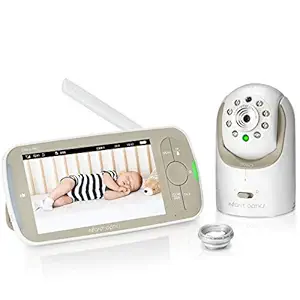
The modern baby monitor market is defined by a fundamental divide in philosophy: dedicated, closed-circuit local systems versus cloud-connected, data-driven smart nurseries. Infant Optics and Nanit stand as the premier flagships representing these two diametrically opposed schools of thought. Infant Optics built its reputation on absolute simplicity, privacy, and plug-and-play reliability. By utilizing dedicated 2.4GHz FHSS (Frequency-Hopping Spread Spectrum) wireless transmission, the brand avoids the internet entirely, offering parents a zero-latency, hack-proof feed directly to a proprietary handheld monitor without relying on home Wi-Fi networks.
In contrast, Nanit approaches infant monitoring from a high-tech computer vision and pediatric data perspective. Founded by technology entrepreneurs and sleep researchers, Nanit views the overhead nursery camera not merely as an audio-video transmitter, but as a biometric tracking device. By processing real-time video feeds through proprietary machine learning algorithms, Nanit turns the crib into a connected sleep laboratory. The system tracks sleep cycles, breathing motion without wearable electronics, and parental visitations, pushing HD streams and analytical telemetry directly to parents' smartphones via the cloud.
Choosing between these two powerhouses is not simply an evaluation of camera specs; it is a lifestyle and risk-tolerance decision. Infant Optics appeals to parents who value physical controls, immediate responsiveness, and an air-gapped system that eliminates cybersecurity concerns. Nanit caters to the modern, data-conscious caregiver who demands remote viewing from outside the home, granular tracking of developmental sleep stages, and the convenience of integrating infant care into their existing smart home ecosystem.
Key Differences & Technological Comparison
The core distinction between Infant Optics (headlined by the DXR-8 PRO) and Nanit (anchored by the Nanit Pro) lies in connectivity and processing architecture. Infant Optics uses a localized, encrypted wireless connection paired with a physical parent unit. This delivers instant, interference-free video streaming that functions during internet outages. Nanit requires a robust 2.4GHz or 5GHz Wi-Fi network and routes its stream to iOS and Android applications. While Nanit includes a local Wi-Fi fallback mode if the wide-area internet drops, any interruption to your home router disrupts the stream.
Optics and video delivery represent another major divergence. Infant Optics champions physical camera mechanics and modular hardware. Its cameras feature mechanical pan, tilt, and a physical optical lens-swapping mechanism (allowing parents to switch between wide-angle and zoom lenses without digital pixel degradation). The DXR-8 PRO outputs a crisp 720p HD feed with dedicated Active Noise Reduction (ANR) chips to filter out ambient background noises like fans and humidifiers. Nanit, however, utilizes a fixed, high-mounted 1080p camera with digital zoom. Instead of moving the camera physically, Nanit covers the entire crib footprint from an overhead perch, relying on high native sensor resolution to zoom digitally without significant clarity loss.
Where Nanit completely pulls away in capability is biometric analysis. Using its high-resolution sensor and custom-patterned fabric accessories (Breathing Wear), Nanit tracks infant respiratory motion in real-time, alarming parents if zero movement is detected—all without electronic sensors touching the baby's skin. Furthermore, Nanit’s software automatically logs sleep onset, wake-ups, sleep efficiency percentages, and video highlight reels of night events. Infant Optics provides zero biometric tracking or data analytics; it is strictly a live, manual surveillance tool.
Monetization and ownership costs also differ starkly. Infant Optics operates on a transparent, one-time hardware purchase model. Every feature built into the unit is accessible indefinitely with zero recurring fees. Nanit leverages a software-as-a-service (SaaS) architecture. While basic streaming and 2-day historical data are included upfront, deep sleep analytics, video history retention, and developmental milestone tracking require an ongoing annual "Nanit Insights" subscription, materially increasing the total cost of ownership over time.
Pros & Cons Comparison
Infant Optics
- Pros:
- Air-gapped, zero-Wi-Fi security eliminates hacking, data breaches, and privacy risks.
- No recurring subscriptions; 100% of features available right out of the box.
- Physical, high-capacity handheld parent unit does not drain smartphone batteries.
- True mechanical pan-tilt-zoom (PTZ) with interchangeable optical lenses.
- Hardware-level Active Noise Reduction effectively removes background nursery hums.
- Cons:
- Zero remote access; parents cannot check the feed while away from the home.
- No biometric tracking, breathing movement detection, or automated sleep logging.
- Parent unit has a limited physical transmission range (typically 700–1,000 feet line-of-sight, lower through walls).
- Video resolution caps at 720p, falling short of modern smartphone display fidelity.
Nanit
- Pros:
- Non-wearable, camera-based breathing motion monitoring provides peace of mind.
- Pristine 1080p HD video feed with exceptional night vision directly to smartphones.
- Ubiquitous access: check in from work, travel, or anywhere with a cellular connection.
- Comprehensive, automated sleep tracking, metric reports, and developmental advice.
- Flexible mounting options including floor stands, wall mounts, and travel flex stands.
- Cons:
- Advanced sleep analytics and long-term video history locked behind annual subscriptions.
- Wholly dependent on stable, high-bandwidth home Wi-Fi infrastructure.
- Ties up your smartphone screen or battery unless using a dedicated secondary tablet.
- Potential cloud latency or app connection drops during external AWS or server outages.
Performance, Durability & Value Analysis
From an operational standpoint, Infant Optics delivers remarkable durability and mechanical longevity. The parent unit is built to withstand inevitable drops onto hardwood floors, and the internal modular 3.6V lithium-ion battery can be replaced cheaply by the user once it degrades after hundreds of recharge cycles. Latency is virtually non-existent; audio and video arrive at the parent unit in less than 100 milliseconds. Its hardware-centric approach delivers unmatched plug-and-play reliability for babysitters, grandparents, and caregivers who do not want to download apps, configure user accounts, or learn complex mobile interfaces. However, the physical radio-frequency hardware can struggle in large modern homes with dense concrete, plaster walls, or excessive 2.4GHz spectrum congestion.
Nanit’s long-term value, by contrast, is tied directly to its software refinement and your willingness to invest in its digital ecosystem. The hardware itself is solidly engineered, particularly the overhead floor stand and wall mount, which securely conceal cables to mitigate strangulation hazards. Nanit’s value shines brightest during the turbulent first 12 to 18 months, where infant sleep regressions make granular data, wake-window tracking, and breathing alerts invaluable to sleep-deprived parents. However, the ongoing cost of Nanit Insights ($50 to $200+ annually depending on tier) combined with the necessity of buying proprietary Nanit Breathing Wear sleep sacks dramatically inflates total cost compared to the static investment of an Infant Optics setup.
Final Verdict: Which Brand Should You Choose?
Selecting between Infant Optics and Nanit depends on your technical comfort, your privacy stance, and your specific parenting anxieties:
- Choose Infant Optics if: You value security, simplicity, and immediate utility above all else. If you are deeply uncomfortable with streaming nursery video over the internet, live in a home with inconsistent Wi-Fi, rely heavily on outside caregivers or grandparents, or simply refuse to pay monthly software subscriptions, the Infant Optics DXR-8 PRO remains the gold standard of dedicated, zero-fuss baby monitoring.
- Choose Nanit if: You are an analytical, data-forward parent who wants real-time peace of mind via breathing motion tracking and detailed sleep analytics. If you travel frequently or work out of the house and want remote nursery access, have a rock-solid mesh Wi-Fi network, and do not mind paying an annual subscription for predictive sleep science, the Nanit Pro is the premier smart nursery monitor available today.
Features
When evaluating the feature ecosystems of Infant Optics and Nanit, consumers are choosing between a dedicated, closed-circuit hardware solution and an advanced, data-driven IoT platform. Infant Optics—exemplified by its flagship DXR-8 PRO—focuses strictly on mechanical control and localized performance. Its primary engineering strength lies in its active pan-tilt-zoom (PTZ) camera architecture and physical optical zoom lens system, complemented by Active Noise Reduction (ANR) chips. This hardware-centric approach processes audio directly on the unit to filter out ambient background noises, such as hums from air purifiers or fans, while delivering lag-free 720p video to a standalone, 5-inch parent monitor. Because it bypasses the internet, the feature set is immediate and self-contained: push-to-talk two-way audio, localized temperature sensing, and tactile remote-camera mobility without the need for smart devices, accounts, or software patches.
Conversely, Nanit approaches baby monitoring through a computer-vision and predictive software framework, primarily demonstrated by the Nanit Pro Camera. Instead of utilizing motorized hardware to track movement, Nanit relies on a high-mounted overhead design with a fixed, wide-angle 1080p camera to observe the entire crib space. Its technical strengths are computational: the system pairs with sensor-free, patterned fabric bands to track micro-movements of a child's chest, delivering real-time breathing-motion monitoring and wake/sleep analytics directly to the Nanit smartphone app. Additionally, Nanit integrates smart software features that Infant Optics entirely lacks, such as automated developmental tracking, time-lapse video recaps, split-screen viewing for multiple cameras on mobile devices, and background audio streaming that functions even when a smartphone is locked.
The practical trade-offs between these feature sets hinge on connectivity demands versus data depth. Infant Optics offers superior real-time physical control and total privacy; parents can actively scan a room as their child becomes mobile, unburdened by cloud vulnerabilities, home network outages, or smartphone battery drain. However, its capabilities stop at basic surveillance—it cannot track sleep patterns, log breathing rates, or provide historical health insights. Nanit delivers unmatched analytics and continuous parental peace of mind through metrics, but its feature suite depends heavily on a stable Wi-Fi connection and mobile operating systems, frequently locking advanced sleep-tracking insights behind recurring annual subscriptions. Ultimately, Infant Optics leads in robust, localized mechanical features, while Nanit excels in data-rich biometric and digital tracking.
Performance
When evaluating performance, Infant Optics and Nanit represent two fundamentally different engineering philosophies: dedicated closed-loop hardware versus smart, cloud-connected computer vision. Infant Optics, anchored by its flagship DXR-8 PRO, delivers exceptionally reliable real-time performance utilizing a secure, localized 2.4GHz FHSS wireless transmission. This architecture guarantees virtually zero latency, a clean signal unaffected by household bandwidth congestion, and total immunity to internet outages or external hacking vulnerabilities. In terms of raw acoustic performance, Infant Optics stands out with its Active Noise Reduction (ANR) chipset, which actively filters out background hums from white noise machines or air purifiers so caregivers only hear meaningful vocalizations. However, its visual performance maxes out at a standard 720p resolution; while clear on its dedicated parent handheld, it lacks the optical fidelity found in high-definition digital streams.
Conversely, the Nanit Pro is engineered as a performance powerhouse for the data-driven parent, leveraging a 1080p camera sensor paired with advanced machine-learning algorithms. Because it streams directly to smartphones via high-speed Wi-Fi, Nanit offers significantly superior visual clarity, exceptional digital zoom capabilities, and an expansive overhead field of view. Its true technical prowess lies in its computer vision engine, which monitors micro-movements to provide real-time breathing tracking without wearable electronics, automated sleep cycle analytics, and instantaneous ambient temperature and humidity alerts. The trade-off, however, is a direct dependency on continuous internet connectivity. Nanit’s latency is inherently higher than Infant Optics’ direct RF link, and any network degradation or cloud-server downtime can compromise streaming reliability, rendering the monitor temporarily inoperable unless restricted to local network fallback modes.
In a practical consumer trade-off analysis, the superior performer depends entirely on what a caregiver values most: uninterrupted reliability or comprehensive analytical depth. Infant Optics wins decisively on zero-lag responsiveness, physical battery performance of its dedicated monitor unit, and plug-and-play consistency that operates flawlessly anywhere, including hotels or homes without robust Wi-Fi. Nanit outperforms on technological sophistication, offering actionable sleep medicine insights, high-definition video capture, and unlimited distance range via mobile apps. For absolute baseline dependability and low-latency acoustic fidelity, Infant Optics is the superior mechanical performer, but for advanced behavioral tracking and visual precision, Nanit operates in an elite technical class of its own.
Design
When evaluating baby monitor design, Infant Optics and Nanit embody two fundamentally divergent engineering philosophies: utilitarian hardware independence versus modern, ecosystem-driven smart technology. Infant Optics, best exemplified by the DXR-8 PRO, prioritizes functional ergonomics and standalone reliability. Its physical aesthetic leans heavily toward traditional consumer electronics, featuring a robust, handheld parent unit with physical push-buttons, an antenna, and active noise reduction toggles. The camera unit itself showcases ingenious mechanical engineering through its interchangeable optical lens system, which physically shifts focal lengths between wide-angle and zoom. However, this tactile, utilitarian design results in a bulkier visual footprint, and the reliance on a proprietary 5-inch monitor limits viewing flexibility strictly to dedicated hardware, which, while durable enough to survive inevitable drops, lacks modern industrial polish.
Conversely, Nanit approaches design through an architectural and minimalist smart-home lens, deliberately eliminating the traditional handheld monitor in favor of an app-based smartphone interface. The Nanit Pro camera is a masterclass in modern product design, characterized by an ultra-compact, puck-style form factor with soft, rounded contours that integrate seamlessly into contemporary nursery aesthetics. From an engineering standpoint, Nanit excels in overhead, top-down perspective delivery; its floor stand and wall-mount variants feature meticulously integrated cable-management channels that prioritize infant safety and visual elegance. The camera's diffused down-firing night light, integrated climate sensors, and custom sensor array required for tracking breathing bands highlight a holistic industrial design that marries aesthetic restraint with advanced biometric monitoring.
The practical trade-offs between the two designs reveal distinct user priorities. Infant Optics provides exceptional plug-and-play usability; its camera includes mechanical pan-and-tilt capabilities operated directly from the parent unit, offering dynamic physical coverage of the nursery without network setup. Nanit utilizes a fixed, high-angle wide-field lens that eschews motorized moving parts entirely, relying instead on digital pinch-to-zoom and pristine 1080p resolution to monitor the entire crib environment. While Nanit’s design is indisputably sleeker, safer regarding cord concealment, and far more data-rich, it inherently relies on stable Wi-Fi and device battery life. Infant Optics sacrifices smart aesthetics and modern design finishes to deliver a practically indestructible, mechanically versatile tool optimized for zero-latency, tactile operation.
Compare current retail pricing, active promotions, and verified stock availability directly from authorized stores: