Eufy vs Infant Optics: Overview
Comparing Eufy and Infant Optics helps you determine which brand is best suited for your needs in Baby Monitors. Both brands offer strong choices depending on your budget and key feature requirements.
Key Features & Comparison
Evaluate factors such as build quality, warranty, customer satisfaction, and total value before making your final purchase choice between Eufy and Infant Optics.
Features
Feature sets diverge sharply between these two brands, reflecting their distinct technical architectures. Eufy packs its units—such as the SpaceView and Smart Safe series—with modern digital enhancements, including integrated high-accuracy temperature sensors, automated sound-activated VOX modes with multiple sensitivity thresholds, customizable lullabies, two-way audio intercoms, and software-based pan-tilt-zoom (PTZ) controls. Several Eufy models also bridge the gap between traditional monitors and smart monitors by offering simultaneous monitoring via a dedicated 5-inch handheld screen alongside an encrypted Wi-Fi app, allowing parents to monitor locally or remotely on their mobile devices without sacrificing on-screen responsiveness.
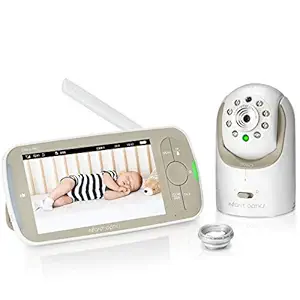
Infant Optics champions a distinct, hardware-first feature philosophy, most notably characterized by its patented optical lens system. Rather than relying solely on digital zoom—which inherently degrades image clarity—Infant Optics enables parents to physically swap between normal, wide-angle, and optical zoom lenses to adapt the camera to the room's physical dimensions. While its feature set is deliberately leaner to avoid software bloat, models like the DXR-8 PRO include advanced active noise reduction (ANR) chipsets that dynamically filter out constant ambient sounds such as humidifiers and white noise machines, isolating only the infant's vocalizations—a tangible, everyday feature that many digitally focused monitors fail to replicate.
Performance
In real-world performance, the difference in video fidelity and audio transmission dynamics is palpable. Eufy dominates in raw visual performance; its cameras transmit a native 720p to 2K feed onto large, vibrant parent units with deep contrast and impressive low-light infrared clarity, allowing parents to clearly observe subtle movements, such as a newborn’s breathing cadence. Furthermore, Eufy's 2.4GHz FHSS signal provides consistent, low-latency transmission across typical suburban floor plans, although high levels of localized Wi-Fi congestion can occasionally introduce signal stutter or slight transmission degradation when multiple smart devices compete on the same radio bands.
Infant Optics counters with unmatched audio precision and connection stability. Although the visual resolution of their displays—typically capped at standard 720p on the PRO version—lacks the crispness of Eufy’s high-resolution panels, Infant Optics delivers industry-leading audio responsiveness with zero latency. The proprietary Active Noise Reduction technology noticeably reduces listening fatigue for sleep-deprived parents. In terms of wireless range, Infant Optics’ dedicated 2.4GHz FHSS closed system offers remarkable wall penetration and immune-to-hackers isolation, ensuring that the link remains steadfast without the intermittent drops that sometimes plague feature-heavy operating systems.
Design
Aesthetic and industrial design philosophies further distinguish the two manufacturers. Eufy adopts a contemporary, minimalist Scandinavian design language characterized by clean matte plastics, smooth rounded edges, and compact camera housings that blend seamlessly into modern nursery decors. Eufy’s parent units feature expansive, edge-to-edge displays with intuitive on-screen menus controlled via directional thumb pads. The handheld units boast robust, weighted kickstands and high-capacity internal lithium batteries that yield exceptional operational uptime between charges, reinforcing Anker’s pedigree in power management engineering.
Infant Optics prioritizes utilitarian ergonomics, functionality, and field-repairability over sleek aesthetics. The camera housings are designed around modular optical lens mounts, giving them a distinctively mechanical, utilitarian look that feels sturdy if slightly utilitarian. The handheld monitors are built with textured, easy-grip plastics and dedicated tactile physical buttons for immediate adjustments like volume and brightness, avoiding the need to navigate nested digital menus in the middle of the night. A standout design consideration for Infant Optics is the inclusion of an easily accessible, user-replaceable battery pack, which drastically extends the product's usable lifecycle across multiple children.