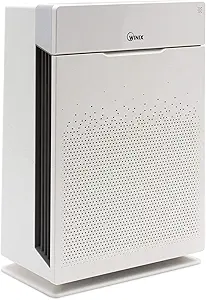






Winix vs Rabbit Air: Overview & Brand Philosophy
The residential air purification market is defined by two fundamentally different consumer priorities: utilitarian, cost-effective performance on one end, and premium, design-integrated precision engineering on the other. Winix and Rabbit Air embody these opposing philosophies perfectly. Winix, an established South Korean appliance manufacturer, has spent decades democratizing high-efficiency indoor air treatment. The brand’s philosophy centers on functional accessibility, delivering exceptional Clean Air Delivery Rate (CADR) per dollar without unnecessary lifestyle markups. Winix builds workhorse appliances designed to blend quietly into background domestic routines while maximizing particulate throughput.
In contrast, Rabbit Air was founded in California with a mission to transform the air purifier from an unsightly plastic necessity into a bespoke element of home interior design. Rabbit Air approaches air quality through the lens of longevity, acoustic dampening, and advanced personalization. Rather than flooding the market with dozens of fast-iteration SKUs, the company refines a tightly curated lineup featuring modular filter options, ultra-quiet brushless motors, and wall-mountable profiles. Their brand philosophy is built around high-touch customer support, extended product lifespans, and medical-grade attention to aesthetic subtlety.
For discerning consumers, the choice between Winix and Rabbit Air is rarely about whether an air purifier works; both brands consistently achieve high marks for basic particulate capture. Instead, the evaluation rests on whether you view an air cleaner as a cost-efficient appliance to replace every few years, or an architectural investment engineered to provide quiet, customized protection for a decade or more.
Key Differences & Technological Comparison
To understand how these brands diverge in daily operation, it is essential to examine their filtration architecture, proprietary technologies, form factors, and internal mechanics.
1. Filtration Architecture & Media Quality
Winix typically employs a standard 3- to 4-stage filtration process: a fine mesh pre-filter, an activated carbon sheet or pellet cassette, and a True HEPA filter rated to capture 99.97% of airborne particles down to 0.3 microns. Rabbit Air elevates this process to a comprehensive 5- or 6-stage system. Beyond standard HEPA and carbon stages, Rabbit Air introduces a medium filter to capture larger dust and pet hair before it reaches the main HEPA stage, prolonging filter life. Furthermore, Rabbit Air features proprietary BioGS HEPA technology, which not only traps allergens and particulates but actively reduces the buildup of bacteria and microbial growth on the filter media itself.
2. Proprietary Air Treatment: PlasmaWave vs. Customized Filtration
The most significant technological divergence lies in how both brands tackle odors, chemicals, and microbes. Winix integrates its proprietary PlasmaWave technology—an active bipolar ionization mechanism that generates positive and negative ions to break down volatile organic compounds (VOCs), bacteria, and odors at a molecular level. While certified by the California Air Resources Board (CARB) as ozone-safe, it remains an active electronic air treatment that some sensitive users choose to switch off. Rabbit Air approaches the problem passively through bespoke customization. Consumers can tailor their Rabbit Air unit (such as the MinusA2 or A3) by selecting an application-specific filter layer: Pet Allergy, Germ Defense, Toxin Absorber, or Odor Remover. This mechanical specialization eliminates the need to rely on active electronic discharge.
3. Acoustic Engineering and Motor Durability
While both brands utilize DC motors in modern units, Rabbit Air leads the industry in silent operation. Utilizing high-end brushless direct current (BLDC) motors paired with custom fluid-dynamic fan blades, models like the MinusA2 operate as low as 20.8 decibels on silent mode—virtually imperceptible in a bedroom environment. Winix units, while acceptably quiet on lower fan speeds, generate a noticeable mechanical hum and turbulent airflow noise as they ramp up to higher stages or Turbo mode to clear heavy particulate loads.
4. Form Factor and Placement Flexibility
Winix builds conventional floor-standing towers and consoles fabricated from standard injection-molded ABS plastics. They require substantial floor clearance (typically 12 to 24 inches from walls) to maintain intake efficiency. Rabbit Air designs its units with front-facing intakes, allowing units to sit flush against walls or be directly mounted onto drywall using included hardware. Rabbit Air also offers the Artists Series, replacing the stark front panel with iconic works of art (such as Van Gogh or Monet) or minimalist decorative motifs, resolving the common complaint of air purifiers cluttering residential living spaces.
Pros & Cons Comparison
Winix
- Pros:
- Exceptional CADR-to-price ratio, offering class-leading particulate removal at accessible price points.
- Widely available, affordable replacement filters (both OEM and high-quality third-party options).
- Reliable auto modes with responsive onboard air quality sensors (particle and dual particle/odor on higher-end models).
- PlasmaWave technology offers accelerated breakdown of volatile organic compounds and stubborn odors.
- Cons:
- Build materials lean heavily on lightweight plastics with utilitarian aesthetics.
- Turbulent, louder fan profiles when operating at maximum or Turbo speeds.
- Limited warranty coverage (typically 1 to 2 years depending on the retailer and model).
- Floor-only placement requiring notable clearance from walls for optimal airflow.
Rabbit Air
- Pros:
- Industry-leading build quality, minimalist design, and wall-mounting capability.
- Ultra-quiet acoustic profile across all low-to-medium operating tiers.
- BioGS HEPA filter prevents bacterial colonization and lasts up to 2 years under typical daily usage.
- Customizable filter suites (Pet Allergy, Germ Defense, Toxin Absorber, Odor Remover).
- Exceptional 5-year comprehensive warranty supported by 24/7 domestic customer service.
- Cons:
- Significantly higher initial capital outlay compared to Winix.
- Proprietary replacement filter packs represent a higher recurring expense.
- Lower pure CADR output per dollar invested compared to budget-focused competitors.
Performance, Durability & Value Analysis
From a raw performance perspective, Winix is remarkably hard to outperform on short-term particulate drawdown. In standard residential testing rooms, a Winix 5500-2 or C545 clears dense airborne concentrations of smoke, pollen, and PM2.5 at speeds comparable to machines costing three times as much. However, this raw performance comes with trade-offs in long-term operational durability. Winix units feature simpler mechanical housings and standard fan bearings that, over three to five years of continuous usage, can develop minor rattles, bearing hums, or degraded optical sensor accuracy. Filter replacement is required every 6 to 12 months, which, while individually inexpensive, requires frequent user vigilance.
Rabbit Air shifts the value proposition from short-term transaction value to total lifecycle ownership. The engineering tolerances in the MinusA2 and A3 are demonstrably superior: heavy gauge internal plastics, magnetic faceplate latches, precision-balanced BLDC motors, and optical sensors that require infrequent recalibration. Because Rabbit Air’s BioGS filter media is engineered for longevity, filter cycles routinely span 18 to 24 months based on 12-hour daily operation, softening the higher upfront cost of filter replacements. When amortized over Rabbit Air’s standard 5-year warranty period, the cost disparity between maintaining a premium Rabbit Air and replacing a degrading budget unit narrows considerably, particularly for consumers who value peace of mind and sustained acoustic silence.
Final Verdict: Which Brand Should You Choose?
The right choice depends on your installation environment, acoustic sensitivity, and budget:
Choose Winix if:
- You want the absolute highest particulate cleaning power (CADR) for the lowest upfront financial investment.
- You are outfitting secondary spaces, basements, rental properties, or workshops where visual design and silent operation are secondary concerns.
- You prefer low-cost annual filter replacements and do not mind buying an entirely new appliance every few years should the motor wear down.
Choose Rabbit Air if:
- You are placing the purifier in a master bedroom, nursery, or executive home office where near-silent operation is mandatory.
- Floor space is limited and you require a wall-mountable unit that looks like contemporary decor rather than a bulky home appliance.
- You have specific air quality vulnerabilities (such as volatile organic compounds, heavy pet dander, or immune sensitivities) that require customized 6-stage mechanical filtration.
- You prefer to invest in a premium, highly durable product backed by an industry-leading 5-year warranty and dedicated customer service.
Features
When evaluating core feature architectures, Winix and Rabbit Air reflect fundamentally different engineering philosophies, dividing utilitarian performance from bespoke, luxury design. Winix centers its technical appeal around its proprietary PlasmaWave technology, an active bipolar ionization feature that works alongside standard True HEPA and activated carbon stages to break down airborne pollutants at a molecular level without producing harmful ozone. This is complemented by smart particle and odor sensors that drive responsive Auto and Sleep modes, effectively automating indoor air quality management. In contrast, Rabbit Air elevates filtration customization into a primary product feature. Units like the MinusA2 and A3 boast a six-stage mechanical filtration system featuring proprietary BioGS HEPA technology—which bio-chemically prolongs filter life by preventing bacterial and viral colonization on the fiber matrix—alongside an optional, specialized filter tray allowing users to select tailored media for Pet Allergies, Germ Defense, Odor Absorption, or VOC/Toxin mitigation. While Winix delivers an exceptionally potent out-of-the-box system tailored for generalized domestic pollutants, Rabbit Air’s modular filtration ecosystem provides a superior degree of technical adaptability for specific ambient environments.
The divergence in their feature sets is equally pronounced in physical form, ergonomic integration, and ambient control. Winix prioritizes accessible convenience, offering intuitive control panels, multi-stage fan speed adjustments, auto-dimming light sensors, and, on higher-tier models like the C545, reliable Wi-Fi app integration compatible with Amazon Alexa. However, Winix units retain a conventional, floor-bound plastic tower or console chassis. Rabbit Air, conversely, integrates lifestyle-oriented industrial engineering, highlighted by an ultra-slim profile and standard wall-mounting capability that frees up floor space while optimizing convective airflow. Rabbit Air also employs high-efficiency brushless DC motors that provide exceptionally fine-tuned, whisper-quiet operation across five speeds, paired with ambient light sensors that automatically transition the unit into silent dark modes, and subtle LED mood lighting. While Rabbit Air offers an undeniably more refined, quiet, and architecturally integrated feature experience, the practical trade-off is an elevated price tag; Winix captures the vast majority of the essential automated air-cleaning features and active molecular mitigation at a fraction of the initial capital investment.
Performance
When evaluating performance between Winix and Rabbit Air, the fundamental divergence lies between high-throughput mechanical clearance and precision-engineered, multi-tier air scrubbing. Winix has established an industry benchmark for raw Clean Air Delivery Rate (CADR) per dollar, utilizing robust fan assemblies paired with True HEPA media and their proprietary PlasmaWave technology. In medium-to-large living spaces, units like the Winix 5500-2 excel at rapid particulate turnover, aggressively pulling dust, pollen, and airborne allergens through a straightforward three-stage system. Winix's PlasmaWave adds an active layer of performance by releasing positive and negative ions to form hydroxyls that neutralize viruses and chemical vapors at a molecular level without producing harmful levels of ozone. Conversely, Rabbit Air takes an ultra-refined, passive-filtration approach typified by their MinusA2 and A3 platforms. Utilizing medical-grade BioGS HEPA technology—which traps and reduces airborne particulates down to 0.1 microns while inhibiting bacterial growth directly on the filter media—Rabbit Air models prioritize hyper-efficient, non-turbulent laminar airflow powered by highly efficient brushless direct-current (BLDC) motors that maintain steady throughput with noticeably lower static pressure drag.
The technical handling of volatile organic compounds (VOCs), gaseous pollutants, and specialized household contaminants further differentiates the two brands. Winix provides adequate chemical and odor mitigation through activated carbon filters—ranging from coated mesh in entry models to granular carbon in premium trims—supplemented by the oxidative breakdown provided by PlasmaWave. While this setup reacts rapidly to acute odor events like cooking smoke, it has limitations against persistent, heavy gaseous loads. Rabbit Air, by contrast, deploys an elaborate five-to-six-stage filtration pathway that can be tailored to specific environmental challenges. Their customizable filter slot allows consumers to insert specialized media formulated for Pet Allergy, Germ Defense, Toxin Absorption, or Odor Remediation. Combined with a significantly denser, pelletized activated carbon matrix, Rabbit Air systematically outperforms Winix in trapping complex industrial chemicals, formaldehydes, and stubborn domestic off-gassing, achieving high-efficiency sorption without relying on ion emission.
In everyday operational environments, performance must also be weighed against acoustic output, sensor calibration, and long-term filtration efficacy. Winix prioritizes reactive performance: its infrared particulate sensors respond aggressively to sudden changes in air quality, revving fans into high-volume circulation that is effective but distinctly audible. Rabbit Air engineers for sustained, whisper-quiet baseline efficiency. Operating as low as 20 decibels on lower settings, Rabbit Air units manage consistent continuous air quality without the intrusive acoustic profile of Winix, making them vastly superior for bedrooms, offices, and quiet spaces. Furthermore, Rabbit Air filters boast longevity ratings of up to two years under typical duty cycles, compared to Winix’s standard one-year replacement cycle. Ultimately, Winix delivers superior brute-force particulate remediation and high-volume clearance speed for cost-conscious consumers, whereas Rabbit Air captures the performance crown for comprehensive VOC elimination, custom-tailored filtration profiles, and ultra-quiet engineering precision.
Design
From an aesthetic and spatial integration standpoint, Rabbit Air and Winix represent polar philosophies in air purifier industrial design. Rabbit Air approaches its devices as high-end interior furnishings, famously epitomized by the ultra-slim MinusA2 and A3 series. Engineered with a flat, minimalist profile, Rabbit Air models can be freestanding or wall-mounted—a standout mechanical feature that frees up valuable floor space while transforming the appliance into a piece of contemporary decor, especially through their Artist Series front panels featuring licensed art from Monet, Van Gogh, and contemporary designers. In contrast, Winix adheres strictly to a conventional, appliance-centric design language. Units like the Winix 5500-2 and C545 are traditional, floor-bound consoles and towers with perforated plastic front grilles and standard top-mounted exhaust vents. While clean and functional enough to blend into modern living spaces, Winix purifiers are undeniably utilitarian machines engineered to sit on the floor with mandatory clearance on all sides to maintain intake efficiency.
When evaluating engineering quality and material execution, Rabbit Air operates in a distinctively higher tier of fit and finish. The brand utilizes high-density, matte-finished composite polymers, seamless magnetic latching mechanisms for front panels, and discreetly concealed peripheral air intake channels that maintain pristine visual lines without choking volumetric airflow. Furthermore, Rabbit Air integrates customized brushless DC (BLDC) motors into acoustically isolated chambers, yielding near-silent operation and exceptionally low vibration. Winix utilizes standard consumer-grade ABS plastics that, while resilient and crack-resistant, exhibit noticeable flex, wider panel gaps, and a lightweight, hollow feel. However, Winix’s straightforward internal geometry is an engineering triumph of pragmatic simplicity; by placing broad, unobstructed intake grilles directly in front of the filter carriage, Winix achieves class-leading Clean Air Delivery Rates (CADR) per dollar without requiring the complex serpentine air ducting seen in slimmer luxury units.
User-interaction design and practical maintenance ergonomics further highlight these divergent priorities. Winix leans into direct, unpretentious physical ergonomics, featuring tactile push buttons or simple capacitive pads alongside bright, immediate LED air quality halos that prioritize legibility over subtlety. Accessing the filter bay on a Winix is a quick, tool-free snap-off operation, making routine upkeep effortless for everyday users. Rabbit Air, by comparison, incorporates sophisticated ambient light sensors that automatically suppress control lighting and slow the fan when room illumination drops, eliminating the bedroom light pollution often criticized in Winix models. However, Rabbit Air’s emphasis on design elegance introduces practical trade-offs: servicing its multi-stage, modular five-to-six-layer filtration cassette is slightly more tedious, and the specialized chassis design demands a substantial price premium. Ultimately, Winix delivers an honest, highly functional design suited for budget-conscious utility, while Rabbit Air provides an architecturally refined, whisper-quiet luxury solution designed to elevate high-end interior spaces.
Compare current retail pricing, active promotions, and verified stock availability directly from authorized stores: