Levoit vs Winix: Overview
Comparing Levoit and Winix helps you determine which brand is best suited for your needs in Air Purifiers. Both brands offer strong choices depending on your budget and key feature requirements.
Key Features & Comparison
Evaluate factors such as build quality, warranty, customer satisfaction, and total value before making your final purchase choice between Levoit and Winix.
Features
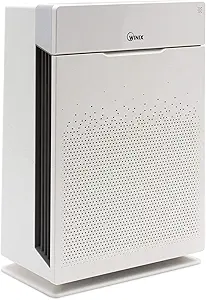
In terms of feature sets, the core differentiator lies in Winix's proprietary PlasmaWave technology versus Levoit’s advanced smart-home connectivity. Winix equips most of its fleet with PlasmaWave, an active bipolar ionization feature designed to break down molecular pollutants, volatile organic compounds (VOCs), and odors at a cellular level without producing harmful levels of ozone. Additionally, Winix typically includes physical infrared particle sensors, dynamic dual-smart sensor arrays (dust and odor), sleep modes that dim indicators automatically based on ambient light, and in classic models like the 5500-2, convenient physical remote controls. However, their smart-app capabilities on Wi-Fi-enabled models remain relatively basic compared to industry innovators.
Levoit, on the other hand, excels in digital ergonomics, user interface design, and intelligent automation. Through the VeSync companion app, Levoit users gain access to granular scheduling, real-time PM2.5 numerical readouts, comprehensive filter-life tracking based on run time and particulate load, and hands-free voice control. Hardware-wise, Levoit relies exclusively on 100% ozone-free mechanical filtration, deliberately eschewing ionizers or UV-C lights to appeal to strictly ozone-sensitive consumers. Levoit units often feature precision laser dust sensors that provide instantaneous, accurate readings rather than the broader, stepped light rings found on many entry-to-mid-tier Winix devices.
Performance
Evaluating raw performance requires looking at Clean Air Delivery Rate (CADR), particulate capture efficiency, and acoustic output. Winix is renowned for high CADR outputs in medium-to-large spaces, moving substantial volumes of air through a deep, multi-stage stack: a washable fine-mesh pre-filter, a thick pelletized activated carbon filter (in models like the 5500-2), and a True HEPA filter. The inclusion of genuine carbon pellets rather than a thin, carbon-coated sheet gives Winix a notable technical advantage in capturing heavy pet odors, cooking grease, and household VOCs. However, when pushed to their highest fan or "Turbo" speeds to achieve maximum CADR, Winix units can be acoustically intrusive, exhibiting higher decibel levels and a more pronounced mechanical hum.
Levoit counters with superior fluid-dynamic engineering via its 360-degree cylindrical air intake and patented QuietKEAP technology. By drawing air omnidirectionally through custom cylindrical HEPA filters and exhausting it with aerodynamically optimized fan blades, Levoit achieves remarkable airflow efficiency with minimal turbulence, making its units exceptionally quiet on lower and medium settings. Levoit also offers specialized filter replacements (such as dedicated pet allergy or toxin-absorbing variations with extra carbon), though their standard carbon layers are generally thinner than Winix's pelletized trays. For ultra-fine particulate reduction (smoke, pollen, dust mite allergens), Levoit’s high-end Core 400S and 600S match or exceed Winix in CADR efficiency while maintaining a superior acoustic footprint.
Design
Design architecture presents a stark contrast between Winix’s utilitarian, appliance-style aesthetic and Levoit’s contemporary, minimalist industrial language. Winix purifiers largely adhere to traditional rectangular, front-intake box profiles with top-vented exhaust grilles. While functional and easy to place against walls without choking the intake, this design is visibly utilitarian, characterized by matte plastics, bulky silhouettes, and utilitarian button-heavy control panels. The materials are durable and built to withstand years of physical wear, but they are clearly designed to be functional home appliances rather than decorative conversation pieces.
Levoit has distinguished itself by pioneering clean, cylindrical and rounded-column forms that blend seamlessly into modern Scandinavian or minimalist interiors. The 360-degree perforation pattern serves both an aesthetic purpose and a structural one, ensuring uninterrupted airflow from any angle in a room, though it necessitates placing the unit away from walls to optimize performance. Levoit's control interfaces are notably more refined, featuring capacitive touch displays, intuitive ring lights with ambient status dimming, and clean typography. For consumers who view home air care as an extension of interior decor, Levoit’s industrial design is markedly more sophisticated, lightweight, and space-conscious.