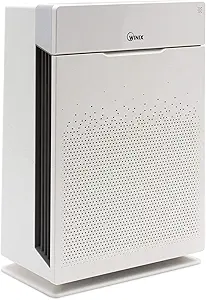
Winix vs Coway Airmega : Overview
Comparing Winix and Coway Airmega helps you determine which brand is best suited for your needs in Air Purifiers. Both brands offer strong choices depending on your budget and key feature requirements.
Key Features & Comparison
Evaluate factors such as build quality, warranty, customer satisfaction, and total value before making your final purchase choice between Winix and Coway Airmega .
Features
From a functional standpoint, Winix distinguishes itself through its PlasmaWave technology, a secondary bipolar ionization feature designed to break down odors, chemical vapors, and indoor pollutants at the molecular level without generating harmful ozone. Alongside this, modern Winix units typically incorporate smart sensor suites that detect both ambient airborne particulates and ambient light, automatically transitioning the machine into a low-noise, display-dimmed sleep mode when the room darkens. Their interface panels are straightforward and tactile, providing rapid access to multi-speed fan selections, auto modes, and timer settings. Certain connected models also integrate with the Winix Smart app for remote scheduling and outdoor air quality monitoring, though software polish can be variable compared to dedicated IoT ecosystems.
Coway Airmega, conversely, approaches the feature landscape with an emphasis on hyper-reactive automation and intuitive, color-coded visual feedback. The iconic real-time air quality indicator ring found on models like the AP-1512HH Mighty and larger dual-suction Airmega units provides instantaneous particulate assessment via particle sensors that boast fine sensitivity adjustments. Coway’s standout engineering feature is its specialized 'Eco Mode': when the unit detects clean air for 30 consecutive minutes, the fan completely shuts off to conserve electricity, instantly awakening if air quality degrades. For smart-enabled models, the Coway IoCare platform offers deeply granular scheduling, filter lifespan tracking based on actual volume treated rather than simple runtime timers, and seamless integration with voice assistants, presenting a more polished and modern user experience.
Performance
In pure mechanical filtration and Clean Air Delivery Rate (CADR) metrics, both manufacturers consistently post elite benchmarks, but they achieve their efficacy through distinct airflow strategies. Winix heavily leverages true HEPA filters rated to capture 99.97% of airborne particles down to 0.3 microns, paired with substantial granular activated carbon filters in its flagship mid-tier models. The inclusion of genuine carbon pellets rather than carbon-coated sheets allows Winix to outperform many entry-level competitors in handling persistent volatile organic compounds (VOCs), heavy cooking fumes, and pet smells. When operating at peak turbo speeds, Winix machines generate formidable volumetric circulation, rapidly clearing medium-to-large spaces, albeit with a noticeable acoustic footprint that makes high-speed operation impractical for light sleepers.
Coway Airmega counters with proprietary Green True HEPA filtration, which combines high-efficiency mechanical trapping with an antimicrobial coating engineered to deactivate trapped viral and bacterial pathogens. Where Coway truly excels is in its fluid dynamic efficiency; the brand's curved intake grilles and balanced centrifugal fan assemblies produce exceptional static pressure while maintaining remarkably low decibel levels on low and medium settings. In standard everyday usage, a Coway Airmega can run almost imperceptibly while moving significant volumes of air, making it ideal for bedrooms and home offices. While its entry-level activated carbon pre-filters are thinner than Winix's pellet trays, Coway’s dual-sided suction systems on premium models like the 300 and 400 series aggressively scrub large open-concept rooms with minimal turbulence and superior overall particulate extraction.
Design
Design architecture is perhaps the sharpest differentiator between the two brands. Winix prioritizes utilitarian, functional form factors that clearly present themselves as domestic appliances. Dominated by neutral grays, whites, and perforated plastic intake grilles, Winix units are robust and stable, featuring integrated carry handles that prioritize transportability over discreet aesthetics. The structural footprint of Winix purifiers tends to be somewhat boxy and deep, requiring a deliberate allocation of floor space and clear perimeter clearance to ensure unimpeded front-to-top laminar airflow. While the plastic molds are durable and resistant to wear, the overall finish is distinctly utilitarian, blending into utility spaces better than curated living environments.
Coway Airmega views industrial design through an intentional lifestyle lens, creating statement pieces that often resemble mid-century modern hi-fi equipment or minimalist art installations rather than mechanical appliances. The classic AP-1512HH, with its glossy, compact turntable-inspired profile, fits comfortably into tight corners, while the larger tower units—like the Airmega 250 and 400—feature clean rectilinear lines, matte fabric-like textured grilles, and elegant pedestal legs. Beyond outward styling, Coway’s internal industrial engineering is top-tier: magnetic filter covers, front-accessible washable pre-filters that snap out effortlessly without moving the base chassis, and cable management channels all showcase a meticulous attention to everyday user interaction and spatial harmony.
Compare current retail pricing, active promotions, and verified stock availability directly from authorized stores:
Compare current retail pricing, active promotions, and verified stock availability directly from authorized stores: