







Shark vs Winix: Overview & Brand Philosophy
In the rapidly expanding indoor air quality market, Shark and Winix approach environmental purification from fundamentally different angles. Shark, a household name renowned for floorcare and small domestic appliances, brings its signature design language of high-tech consumer convenience, intuitive interfaces, and aesthetic modernism to the air purifier category. Shark’s philosophy focuses heavily on the user experience: units are equipped with real-time digital readouts of particulate matter (PM ratings), multi-fan arrays (such as their Clean Sense IQ and Multi-Fan Technology), and lifestyle-oriented features like built-in odor neutralizers. They position their purifiers as smart, responsive home additions meant to blend into contemporary decor while automating the filtration process entirely.
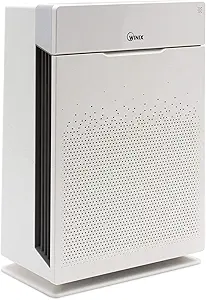
Conversely, Winix is a dedicated South Korean air treatment specialist with decades of engineering heritage focused almost exclusively on atmospheric regulation—including air purifiers, humidifiers, and dehumidifiers. Winix prioritizes traditional industrial execution, mechanical reliability, and bio-chemical breakdown over consumer-facing flash. Best known for their iconic 5500-2 and Zero series, Winix champions certified True HEPA filtration integrated with their proprietary PlasmaWave® technology. Rather than courting the high-end smart-home market, Winix focuses on rugged, cost-effective workhorses designed for uninterrupted operation, clinical-grade airborne pathogen reduction, and universally accessible replacement parts.
Key Differences & Technological Comparison
The primary technological divergence between Shark and Winix lies within their filtration stages and air manipulation methods:
- Filtration Architecture: Winix leans on a traditional, laboratory-tested four-stage filtration stack. This includes a fine mesh pre-filter, a genuine True HEPA filter (capturing 99.97% of particles down to 0.3 microns), an activated carbon sheet or pellet-based filter for volatile organic compounds (VOCs), and their proprietary PlasmaWave® emitter. Shark utilizes a multi-stage approach, typically branded as "Anti-Allergen HEPA" or "Nanoseal," designed to capture 99.98% of large, small, and micro-sized particles. Shark models also frequently integrate an Odor Neutralizer cartridge—a scented puck that actively masks stale odors rather than purely capturing them via carbon adsorption.
- PlasmaWave® vs. Pure Mechanical Capture: Winix’s differentiator is PlasmaWave®, which creates hydroxyls (OH radicals) via electrical discharge to neutralize viruses, bacteria, and chemical vapors at a molecular level without producing harmful ambient ozone. Shark, by contrast, relies almost exclusively on strictly sealed mechanical filtration. For purists who prefer zero electrical ionization or secondary emissions, Shark offers total peace of mind; for those dealing with persistent biological contaminants or stubborn smoke, Winix’s active neutralization provides an edge.
- Airflow & Fan Engineering: Shark differentiates itself via its multi-fan array in models like the Air Purifier 6 (HP200 series). Instead of relying on a single large radial fan, Shark arranges several smaller fans across a flat vertical profile. This disperses clean air evenly and runs quietly at low-to-mid speeds, though it requires a broader footprint. Winix utilizes traditional, aerodynamically optimized drum or squirrel-cage blowers. These can pull high volumes of air through a deep filter bed rapidly, resulting in superior CADR (Clean Air Delivery Rate) ratings per dollar.
- Sensors & Telemetry: Shark leads decisively in granular user feedback. Most Shark units display real-time air purity percentages, categorized PM1, PM2.5, and PM10 particle counts, and dynamic LED rings. Winix models generally provide simpler feedback via 3-stage colored LED light bars (Blue/Amber/Red) driven by basic infrared dust and optical odor sensors, reserving advanced digital readouts only for their top-tier, Wi-Fi-enabled models.
Pros & Cons Comparison
Shark Air Purifiers
- Pros:
- Exceptional real-time diagnostics displaying PM1, PM2.5, and PM10 particle levels.
- Multi-fan arrays create quiet, low-vibration, widely dispersed airflow.
- Fully sealed HEPA system prevents dust leakage around the filter housing.
- Integrated Odor Neutralizer technology effectively masks pet and cooking odors.
- Modern, sleek industrial design suitable for contemporary living spaces.
- Cons:
- Higher initial purchase price relative to CADR output.
- Replacement filters are significantly more expensive than third-party market averages.
- Carbon filters are comparatively thin on mid-range models, limiting VOC capacity.
Winix Air Purifiers
- Pros:
- Industry-leading CADR ratings per dollar, providing high-volume room coverage cheaply.
- PlasmaWave® technology breaks down molecular pollutants and biological agents.
- Many models (e.g., 5500-2) feature washable carbon and pre-filters, extending operational life.
- Affordable, widely available OEM and high-quality third-party replacement filters.
- Durable, simple internal components built for continuous 24/7/365 operation.
- Cons:
- Basic aesthetic design; plastic housings can look utilitarian and dated.
- Air quality indicators are often limited to basic multi-colored LEDs rather than numeric data.
- PlasmaWave® emits an audible clicking sound occasionally when active.
Performance, Durability & Value Analysis
From an absolute performance and air scrubbing perspective, Winix frequently punches above its weight class. In standard smoke, dust, and pollen CADR testing, models like the Winix 5500-2 and C535 consistently outperform units nearly twice their price. The heavy-duty activated carbon pellet cassettes found in mid-tier Winix units offer genuine absorption of formaldehyde and VOCs, outlasting the thin, carbon-coated mesh sheets used by entry-level competitors. Structurally, Winix purifiers are simple, robust appliances; the lack of complex touchscreens or intricate mechanical diverters works to their advantage, meaning fewer points of failure over five to ten years of continuous usage.
Shark prioritizes a refined consumer experience with superior particulate telemetry. While Shark's CADR numbers are solid, you are paying a premium for the engineering of their quiet, balanced multi-fan assemblies and real-time analytical electronics. Where Shark loses ground against Winix is Total Cost of Ownership (TCO). A standard Winix purifier can be maintained for years using economical replacement filters, whereas Shark's proprietary filter cartridges and integrated scent pods introduce high recurring costs. However, for users who need concrete validation that their air is clean via exact numerical readouts—or who suffer from acute olfactory sensitivities—Shark's build quality, air-tight seal, and immediate interface response deliver tangible everyday value.
Final Verdict: Which Brand Should You Choose?
Your choice between Shark and Winix should come down to your tolerance for ongoing maintenance costs versus your desire for cutting-edge features and aesthetics:
Choose Winix if: You want the highest possible filtration performance per dollar, require robust odor/chemical absorption via true carbon pellets, and plan to run your machine continuously in a bedroom, basement, or large living room. Winix is the undisputed champion for budget-conscious buyers, allergy sufferers seeking verified medical-grade performance, and those who prefer a "set-and-forget" appliance with cheap replacement filters.
Choose Shark if: You value sleek, modern aesthetics, demand detailed real-time data about your home's air quality, and prioritize whisper-quiet operation across multiple fan speeds. Shark is the ideal fit for modern apartments, tech-forward households, and pet owners who benefit from active odor-neutralizing scent technology and completely sealed, zero-emission HEPA filtration.
Features
From a feature and technology perspective, Shark differentiates itself through its multi-stage Clean Sense IQ system and innovative airflow mechanics. Many flagship Shark purifiers abandon the traditional single-barrel turbine in favor of an array of micro-fans that adapt individually to particulate levels, offering quiet air movement across a broader surface area. Shark's Clean Sense IQ continuously tracks particle matter (PM1, PM2.5, and PM10), relaying real-time air purity percentages and microgram counts via an ambient light ring and an LED numerical screen. Furthermore, newer Shark iterations incorporate specialized odor-neutralizing cartridges that emit a subtle scent while actively breaking down volatile organic compounds (VOCs), addressing both olfactory comfort and particulate filtration simultaneously.
Winix counters with an intensely filtration-centric feature suite headlined by its proprietary PlasmaWave technology. Unlike passive HEPA filtration alone, PlasmaWave creates hydroxyl radicals that neutralize viruses, bacteria, VOCs, and chemical vapors at a molecular level without producing harmful ambient ozone levels. Winix systems, such as the popular 5500-2 and AM80, also integrate smart auto modes powered by dual particulate and odor sensors, ambient light sleep modes that dim displays automatically, and intuitive timer setups. While Winix units generally lack the granular PM1.0 digital readouts seen on Shark displays—relying instead on tri-color LED bars to indicate air status—their feature set is deeply tuned toward biological and odor mitigation rather than lifestyle data presentation.
Performance
In rigorous performance benchmarking, both brands excel at airborne particulate reduction, yet their filtration architectures demonstrate different strengths. Shark utilizes multi-stage True HEPA filtration coupled with dense carbon layers, capturing 99.98% of micro-particles down to 0.1 to 0.2 microns. In real-world testing involving smoke, pet dander, and fine dust, Shark units demonstrate rapid draw-down times in medium to large rooms, largely due to the high volume of intake surface across their multi-fan grills. However, when faced with persistent industrial VOCs or intense cooking fumes, passive carbon sheets can saturate over time, requiring timely filter changes to prevent odor breakthrough.
Winix purifiers consistently earn high marks in independent CADR ratings, often outperforming similarly priced competitors in raw particulate throughput for smoke, pollen, and dust. The inclusion of washable AOC (Advanced Odor Control) granular carbon filters in many Winix models provides superior mass and surface area for gaseous adsorption compared to thin carbon-coated pre-filters. When coupled with the active ionization-like effects of PlasmaWave, Winix displays a measurable edge in neutralizing microscopic pathogens and stubborn biological odors. On maximum output settings, Winix models push substantial volumes of air with intense velocity, though they can generate more acoustic white noise at peak fan speeds than Shark's multi-fan arrays.
Design
Design-wise, Shark prioritizes modern consumer aesthetics, ensuring their appliances seamlessly blend into upscale interior decors. With cylindrical, floor-standing tower, and sleek console form factors, Shark utilizes smooth matte finishes, brushed metallic accents, and integrated cable management. The interface design is sophisticated, featuring flush, capacitive touch buttons and high-contrast digital displays that clearly communicate environmental data without appearing utilitarian. Even the intake and exhaust grilles are designed to minimize the industrial look typical of older air purifiers, making Shark a preferred choice for placement in prominent living areas, open-concept spaces, and executive home offices.
Winix adopts a more utilitarian, form-follows-function industrial design characterized by robust, injection-molded plastics, perforated front intake panels, and top-facing exhaust louvers. While units like the Winix Zero or A-series have modernized the brand's aesthetic with softer contours, the majority of the lineup maintains a clean, appliance-like presence that favors durability over architectural elegance. Control layouts on Winix devices are tactile, straightforward, and intentionally simplified, prioritizing quick manual overrides and instant status comprehension. While Winix may not win lifestyle design awards against Shark’s contemporary flair, its housing is engineered for optimal aerodynamic flow, easy disassembly for pre-filter vacuuming, and rugged resilience against physical wear.
Compare current retail pricing, active promotions, and verified stock availability directly from authorized stores:
Compare current retail pricing, active promotions, and verified stock availability directly from authorized stores: