Samsung vs Winix: Overview & Brand Philosophy
When shopping for indoor air treatment solutions, Samsung and Winix represent two distinct design philosophies. Samsung, a global consumer electronics powerhouse, approaches air purification as an extension of the modern smart home ecosystem. Their air purifiers emphasize sleek, minimalist aesthetics, advanced multi-layered filtration, and seamless integration with the Samsung SmartThings platform. Samsung designs for the tech-forward homeowner who values lifestyle design, whisper-quiet motor engineering, and comprehensive automation alongside robust particle filtration.
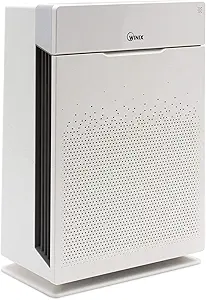
Conversely, Winix is a dedicated South Korean air quality specialist with decades of hyper-focused engineering in air treatment. Rather than treating purifiers as lifestyle accessories, Winix prioritizes utilitarian, high-throughput mechanical filtration backed by specialized secondary purification technologies. Best known for budget-friendly workhorses like the 5500-2 and the Zero series, Winix focuses heavily on high Clean Air Delivery Rates (CADR) per dollar spent, intuitive physical controls, and proprietary odor-and-microbe reduction tech tailored to everyday households dealing with pets, smoke, and seasonal allergens.
The core distinction lies in their market positioning. Samsung treats air purifiers as premium architectural fixtures optimized for connected living, whereas Winix operates as an accessible air quality specialist that democratizes high-performance filtration without inflating costs through unnecessary cosmetic flourishes.
Key Differences & Technological Comparison
The primary technological divide between Samsung and Winix centers on air treatment methodology, smart functionality, and industrial design:
Filtration Architecture: Samsung relies on high-grade True HEPA filtration combined with activated carbon deodorization filters and washable pre-filters. Most Samsung units (such as the AX3500 or Bespoke series) focus entirely on mechanical capture, boasting a 99.97% efficiency rate for particles down to 0.3 microns, occasionally implementing electrostatic precipitators on higher-end units. Winix pairs its True HEPA filters with its proprietary PlasmaWave technology. PlasmaWave generates positive and negative ions that combine with ambient water vapor to form hydroxyl radicals, neutralizing viruses, bacteria, and volatile organic compounds (VOCs) at a molecular level before reforming into harmless water molecules.
Smart Connectivity & Automation: Samsung dominates the smart appliance category. Integrated Wi-Fi connects directly to SmartThings, allowing granular scheduling, real-time indoor air quality (IAQ) indexing (PM1.0, PM2.5, PM10 numerical readouts), voice assistant integration (Bixby, Alexa, Google Assistant), and geofencing. While Winix does offer Wi-Fi-enabled models (such as the Winix AM90 or C545), their proprietary companion app offers basic scheduling and remote toggling, lacking the advanced sensor reporting and smart-home cross-device communication found in Samsung’s ecosystem.
Airflow & Form Factor: Samsung purifiers frequently feature multi-directional airflow systems, drawing air from the front and exhausting it via top and side vents (such as their 3-Way Air Flow architecture), allowing units to be placed flush against walls. Winix models generally employ a traditional bottom/front-intake, top-exhaust setup, requiring greater clearance from walls to ensure optimal air cycling.
Pros & Cons Comparison
Samsung Air Purifiers
- Pro: Modern, high-end aesthetics that blend into luxury interiors and compact spaces.
- Pro: Best-in-class smart connectivity via the robust Samsung SmartThings ecosystem.
- Pro: Precise multi-point laser sensors capable of detecting PM1.0, PM2.5, and PM10 particulates.
- Pro: Multi-directional air distribution allows placement flush against walls.
- Con: Higher upfront investment and more expensive OEM replacement filters.
- Con: Smaller product lineup in North America compared to dedicated global regions.
Winix Air Purifiers
- Pro: Outstanding performance-to-price ratio with class-leading CADR ratings.
- Pro: PlasmaWave technology provides active neutralization of airborne pathogens and odors.
- Pro: Widely available, cost-effective OEM and third-party replacement filters.
- Pro: Proven durability and simple, accessible physical controls that require zero app setup.
- Con: Utilitarian plastic chassis designs that lack modern, architectural flair.
- Con: Smartphone apps and smart-home integration can be finicky and feature-limited.
Performance, Durability & Value Analysis
From an empirical performance standpoint, both brands easily earn AHAM (Association of Home Appliance Manufacturers) certifications and provide verified CADR metrics. In rapid-clearing trials for smoke, dust, and pollen, equivalent-sized models from both manufacturers clear standard 300-to-400-square-foot rooms within 15 minutes. However, Winix often edges out Samsung in pure air throughput on its highest "Turbo" settings, though this comes at the cost of higher acoustic levels. Samsung engineers superior brushless DC motors that operate significantly quieter under mid-to-high loads, making them superior for bedroom environments where decibel output is a primary concern.
In terms of long-term ownership costs and durability, Winix represents the superior pure-value proposition. A typical Winix unit provides four-stage filtration (washable pre-filter, pellet-based carbon, True HEPA, and PlasmaWave) at a sub-$200 retail tier, with annual replacement filters rarely exceeding reasonable consumable budgets. Samsung commands a higher initial price point, and replacement multi-stage filter cartridges carry a premium. However, Samsung purifiers counter this with superior build tolerances, heavier casing materials, and advanced automated motor controls that reduce wear-and-tear by precisely scaling fan speed to real-time micro-particulate counts.
Final Verdict: Which Brand Should You Choose?
Choose Winix if your primary objective is maximizing air purification efficiency per dollar. It is the premier choice for budget-conscious buyers, pet owners battling persistent dander and odors, and consumers who prefer simple "set-it-and-forget-it" Auto Modes without dealing with Wi-Fi setups. Models like the Winix 5500-2 provide exceptional, lab-grade air cleaning power at an accessible price point, making it the practical choice for everyday households.
Choose Samsung if you desire a modern, beautifully designed appliance that complements upscale interior decor and integrates seamlessly into an automated smart home. If you want accurate, granular air quality data via your smartphone, require ultra-quiet night operation, or need a space-saving unit that can sit flush against a wall, Samsung justifies its higher price tag through refined engineering, superior acoustics, and best-in-class software integration.
Features
In terms of feature sets, Samsung sets a high benchmark with its connectivity and environmental monitoring technologies. Most Samsung air purifiers integrate natively with the SmartThings ecosystem, allowing users to track real-time particulate density (frequently measuring PM1.0, PM2.5, and PM10 metrics) directly on an intuitive digital display and through a smartphone app. Samsung also offers advanced automation profiles, such as multi-directional airflow toggling, filter lifespan calculators based on actual usage rather than mere timers, and seamless voice control via Bixby, Google Assistant, or Alexa. These smart capabilities allow the machine to ramp up intuitively in response to ambient cooking fumes or outdoor pollution spikes without requiring manual intervention.
Winix takes a more utilitarian yet highly functional approach to its feature packaging, prioritizing practical efficacy over comprehensive smart metrics. While select modern Winix units now feature Wi-Fi integration, the brand's standout engineering signature remains its proprietary PlasmaWave technology. This system creates dual-polarity active ions that neutralize airborne bacteria, viruses, and volatile organic compounds (VOCs) at a molecular level without generating harmful ozone levels. Winix also incorporates responsive smart sensors with intuitive color-coded LED rings that dynamically adjust fan speeds via Auto Mode, as well as light sensors that trigger ultra-quiet, unlit Sleep Modes automatically when ambient room lighting dims.
Performance
Performance testing reveals that both brands achieve exceptional particle removal, though their air delivery mechanics differ. Samsung models typically feature robust multi-directional airflow systems, drawing in ambient air through front-facing perforated panels and discharging clean air upwards and sideways. Outfitted with true HEPA-grade multi-layered filters, Samsung units routinely capture 99.97% of airborne ultrafine particles down to 0.3 microns, with some premium configurations engineered to capture micro-particles as small as 0.01 microns. Furthermore, Samsung's heavy-duty activated carbon layers are formulated to handle heavy odor loads and gaseous pollutants efficiently, maintaining strong CADR (Clean Air Delivery Rate) figures even in large, open-concept living spaces.
Winix, on the other hand, consistently punches above its weight in pure filtration velocity and allergen clearing. Powered by well-calibrated centrifugal fans, popular models like the Winix 5500-2 and Zero series deliver immense airflow that rapidly clears pollen, pet dander, and smoke particles from mid-to-large bedrooms and living areas. The combination of an antimicrobial true HEPA filter, a washable advanced granular carbon filter (on higher-tier variants), and active PlasmaWave ionization yields rapid particulate clearance metrics that often match or exceed Samsung's mid-range units. However, Winix units can become audibly louder at their highest turbo settings, whereas Samsung's aerodynamic engineering often delivers superior noise suppression at medium-to-high fan speeds.
Design
Samsung approaches air purifier design with an architectural, appliance-grade sensibility that mirrors contemporary Scandinavian and modern industrial trends. Their units often feature crisp geometric silhouettes, micro-perforated front grilles, and hidden casters that allow easy mobility without breaking the visual lines of a room. Premium lines, such as the Samsung Bespoke Cube, elevate air treatment into high-end home decor, offering modular stackability and customizable front panel finishes that blend into stylish living environments. Even the physical interface on Samsung machines is discreetly integrated, employing soft capacitive touch panels and subtle numerical readouts that avoid the utilitarian appearance typical of budget purifiers.
Winix embraces a more traditional, function-forward industrial aesthetic. Constructed from durable, matte plastics, Winix purifiers are engineered for straightforward utility, featuring exposed top vents, mechanical or membrane-style push buttons, and prominent air quality indicator lights. While models like the Winix AM90 or A230 adopt softer, circular form factors to appeal to modern tastes, the brand generally favors pragmatic durability over high-concept design. Filter access in Winix units is exceptionally user-friendly, relying on magnetic or snap-in panels that facilitate effortless pre-filter vacuuming and replacements, reinforcing the brand's identity as a dependable, low-maintenance appliance rather than a visual centerpiece.