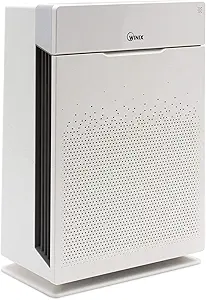








Philips vs Winix: Overview & Brand Philosophy
When selecting a residential air purifier, consumers routinely encounter Philips and Winix—two industry heavyweights approaching indoor air quality from distinctly different engineering perspectives. Philips, a diversified European health technology conglomerate, treats air purification as an extension of preventative healthcare and smart living. Their design philosophy emphasizes sophisticated sensor suites, aerodynamically optimized cylindrical flow systems, and seamless integration with connected home ecosystems. Philips purifiers are crafted for consumers who value precision metrics, modern European aesthetics, and data-driven indoor climate management.
Conversely, Winix is a dedicated South Korean climate-control specialist renowned for utilitarian, performance-first engineering. Rather than prioritizing ultra-minimalist designs or complex app ecosystems across their entire fleet, Winix directs its resources toward multi-stage chemical and biological neutralization. The brand has built an intensely loyal following through its proprietary PlasmaWave technology, commercial-grade filtration stages, and competitive direct-to-consumer value. Winix approaches the market with a straightforward promise: maximum Clean Air Delivery Rate (CADR) per dollar spent, wrapped in durable, functional housings.
Understanding the fundamental divide between these brands comes down to choosing between high-tech clinical monitoring and workhorse mechanical efficiency. While Philips seeks to be an intelligent, unobtrusive wellness hub in a modern smart home, Winix positions itself as the dependable, heavy-duty filtration powerhouse designed to tackle severe allergens, wildfire smoke, and persistent pet odors without unnecessary premium markups.
Key Differences & Technological Comparison
The operational divergences between Philips and Winix manifest most clearly across four technological verticals: filtration architecture, secondary ionization, air sensing precision, and smart connectivity.
- Filtration Architecture: Philips predominantly uses high-efficiency NanoProtect HEPA filters configured in 360-degree cylindrical barrels. These pleated composite filters capture particles as small as 0.003 microns—substantially smaller than the standard 0.3-micron threshold of traditional True HEPA. Winix utilizes a traditional flat-panel, multi-stage stack: a washable fine-mesh pre-filter, an activated carbon sheet or pellet cassette, and a medical-grade True HEPA filter capturing 99.97% of particulates down to 0.3 microns. Winix filters offer higher carbon mass in mid-tier models (such as the Winix 5500-2), whereas Philips optimizes airflow dynamics to achieve lower operational noise at high CADR outputs.
- Bipolar Ionization vs. Mechanical Only: Winix equips most of its units with PlasmaWave technology, an active bipolar system that creates both positive and negative ions to break down volatile organic compounds (VOCs), bacteria, and odors at a molecular level without producing harmful ambient ozone (CARB-certified). Philips strictly adheres to passive mechanical filtration, deliberately eschewing ionizers to eliminate any risk of trace ozone or secondary chemical emissions, catering to medical environments and hypersensitive respiratory patients.
- Sensors and Real-Time Telemetry: Philips units feature proprietary AeraSense technology, an optical/laser sensor array that benchmarks real-time PM2.5 levels, indoor allergen indices (IAI), and ambient gas/VOC levels, projecting exact numerical metrics on integrated digital displays or color-coded ambient rings. Winix generally relies on dual smart sensors (particle and odor) linked to simple color-coded LED indicators (Blue/Amber/Red), offering less granular diagnostic feedback in favor of automated fan response.
- Smart Home Integration & Usability: Philips heavily standardizes smart functionality via the Air+ app, allowing users to map historical air trends, customize schedules, and link units to Amazon Alexa and Apple HomeKit. Winix limits Wi-Fi functionality to select variants (e.g., the C545 or AM90), using basic Wi-Fi connectivity that focuses on remote toggling rather than predictive air analysis.
Pros & Cons Comparison
Philips Air Purifiers
- Pro: Industry-leading filtration down to 0.003 microns, significantly outperforming standard True HEPA on ultra-fine combustion and viral particles.
- Pro: AeraSense particle counters provide precise numerical PM2.5 readouts, taking the guesswork out of indoor air metrics.
- Pro: Exceptionally quiet operation, featuring ultra-low decibel outputs on Sleep modes with automated light dimming.
- Con: Higher upfront purchase price and expensive OEM replacement filter cartridges.
- Con: Lower-tier and mid-tier models often use thin, carbon-coated matrices rather than granular activated carbon pellets for heavy VOC elimination.
Winix Air Purifiers
- Pro: Exceptional CADR-to-price ratio, offering class-leading square-footage coverage in budget and mid-range tiers.
- Pro: PlasmaWave technology provides active neutralization of stubborn pet dander, mold spores, and lingering household odors.
- Pro: Readily available, affordable replacement filters with washable pre-filters that extend True HEPA lifespan.
- Con: Industrial, boxy aesthetic with higher plastic tolerances that do not blend as discreetly into modern decor.
- Con: Air quality sensors are slower to detect sudden ambient particulate spikes compared to Philips' laser arrays.
Performance, Durability & Value Analysis
From an operational standpoint, both brands deliver verified performance backed by AHAM (Association of Home Appliance Manufacturers) certifications, but their lifecycles reflect their disparate engineering priorities. Winix purifiers are mechanical workhorses; units like the legendary 5500-2 often run continuously for five to eight years with zero mechanical degradation, provided filters are swapped regularly. Winix motors are heavy-duty induction builds designed for constant resistance against dense filter beds. Their operating costs remain exceptionally low, supported by inexpensive genuine filter replacements and widespread third-party supply chains, cementing Winix as one of the best value-per-square-foot investments on the market.
Philips delivers superior aerodynamic efficiency, meaning its brushless DC motors extract high volumes of clean air with significantly lower wattage and acoustic intrusion. In long-term testing, a Philips purifier running on medium often matches the CADR of a Winix unit on high, but at nearly half the subjective noise level. However, the ownership cost over a 3- to 5-year timeline is distinctly higher for Philips due to premium replacement cylindrical filters and the brand's proprietary digital filter-life monitoring chips. Durability is high, but the heavy reliance on sophisticated touchscreens and Wi-Fi modules introduces more potential electronic failure points compared to Winix’s tactile button configurations.
Final Verdict: Which Brand Should You Choose?
Your choice between Philips and Winix hinges on specific environmental challenges, aesthetic standards, and budget allocations.
Choose Philips if: You want cutting-edge design, sleep in the same room where the purifier operates, or require clinical-grade filtration down to 0.003 microns without the use of active ionization. Philips is ideal for parents of infants, severe asthmatics sensitive to any form of plasma tech, and smart-home enthusiasts who demand granular PM2.5 data, scheduled automations, and ultra-quiet operation.
Choose Winix if: Your primary goals are high-volume odor remediation, pet dander control, and maximum square-footage coverage on a strict budget. Winix is the definitive choice for pet owners, homes affected by seasonal wildfire smoke, and practical buyers who want a proven, durable appliance that costs minimal money to purchase and maintain year over year.
Features
The feature landscape highlights Philips' dedication to digital telemetry versus Winix’s reliance on practical, set-and-forget operational modes. Philips units frequently integrate the AeraSense optical and laser sensor arrays, delivering real-time numerical PM2.5 feedback, allergen indices, and indoor gas indicators directly on ambient digital displays and through the Air Matters / Philips Air+ companion apps. Their automation algorithms are highly sensitive, adjusting fan curves incrementally to mitigate minor shifts in ambient pollution. Conversely, Winix outfits most models—such as the popular 5500-2 and Zero series—with standard infrared dust and VOC sensors that utilize simple multi-stage LED color rings, offering less analytical precision but sufficient operational cues for typical domestic monitoring.
Where Winix carves out a unique technical advantage is through its PlasmaWave bipolar ionization system, which creates hydroxyl radicals to neutralize airborne bacteria, viruses, and odors at a molecular level without emitting harmful levels of ozone. Philips strictly adheres to mechanical HEPA and activated carbon filtration, deliberately avoiding additive ionization to maintain zero-ozone certification. Winix models often include physical remote controls and light-sensing sleep modes that automatically extinguish display LEDs when ambient light drops. While Philips offers superior scheduling, voice assistant compatibility (Google Assistant, Amazon Alexa), and filter life algorithms based on actual particulate exposure, Winix counters with rugged, accessible controls that require minimal technical acclimation.
Performance
In terms of baseline purification performance, both brands excel across typical residential room volumes, but Philips claims a distinct technical edge in ultra-fine particle capture. Philips employs proprietary NanoProtect HEPA filters that claim mechanical capture of particulates down to 0.003 microns—significantly smaller than standard HEPA thresholds of 0.3 microns. This makes Philips particularly potent against airborne viruses, combustion soot, and microscopic aerosolized allergens. Its aerodynamically optimized 360-degree intake grilles and vortex discharge vents minimize static pressure drag, translating to rapid room turnovers and sustained CADR metrics even as the filter accumulates particulate mass.
Winix counters with robust multi-stage filter cassettes featuring true HEPA media (99.97% capture at 0.3 microns) backed by granular carbon or carbon-coated mesh for gaseous adsorption. In practical scenarios involving pet dander, pollen, and coarse dust, Winix models perform on par with units costing twice as much, clearing medium-to-large spaces rapidly when operating on high or turbo settings. However, Winix units generally register higher acoustic output at maximum flow rates compared to the fluid dynamics of Philips' Silent Delivery technology. While Winix relies on PlasmaWave to accelerate volatile organic compound (VOC) breakdown, Philips achieves comparable chemical reduction through densely packed, high-surface-area activated carbon beds, avoiding active byproduct generation entirely.
Design
From an industrial design standpoint, Philips treats air purifiers as contemporary architectural accents, employing rounded cylindrical forms, subtle fabric finishes, and discrete ambient lighting. Models like the Philips Series 1000i, 2000i, and 3000i showcase Scandinavian-inspired minimalism, designed to blend seamlessly into modern living rooms and executive spaces. The user interfaces feature capacitive touch controls flush with the top chassis, and the ambient air quality light ring functions as both a functional telemetry display and a subdued visual accent. The structural plastics are high-density and resistant to vibration rattles, reflecting the brand’s premium engineering pedigree.
Winix adopts a more conventional, appliance-grade design language characterized by angular towers and monolithic front-intake plastic grilles. While utilitarian and easy to maintain, the plastics feel lighter and more prone to aesthetic wear compared to Philips' premium finishes. Winix units often favor a front-to-top airflow trajectory, which necessitates specific placement away from walls to optimize circulation, whereas Philips' cylindrical designs pull air from 360 degrees, allowing greater flexibility in spatial positioning. Winix prioritizes accessibility with easy-pull front panels for rapid filter changes, while Philips utilizes magnetized or twist-lock bottom chassis mechanisms that maintain structural sleekness at the expense of slightly more involved maintenance steps.
Compare current retail pricing, active promotions, and verified stock availability directly from authorized stores:
Compare current retail pricing, active promotions, and verified stock availability directly from authorized stores: