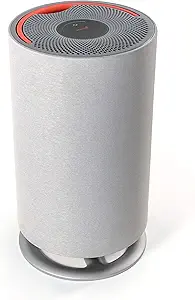








Philips vs Oransi: Overview & Brand Philosophy
When selecting a high-performance air purifier, consumers often find themselves torn between massive global electronics conglomerates and specialized, engineering-focused boutique brands. Philips represents the former. As a Dutch multinational with more than a century of consumer health and electronic innovation, Philips approaches air purification through a lens of high-tech integration, smart automation, and mass-market consumer accessibility. Their air purifiers are designed to slot effortlessly into modern, connected smart homes, boasting cutting-edge particle sensing, sleek European aesthetics, and multi-stage filtration engines backed by rigorous international medical testing standards.
Conversely, Oransi is a dedicated American air quality company founded by industry veterans with an engineering-first mindset. Rather than chasing every consumer electronics trend, Oransi’s philosophy centers on industrial-grade build quality, uncompromising filter depth, and mechanical simplicity. Originally focused on commercial, medical, and high-allergen environments, Oransi purifiers eschew glossy touchscreens and app connectivity in favor of heavy-duty German-engineered motors, massive carbon payloads, and thick, high-efficiency HEPA media. Where Philips positions itself as an intuitive, digital-first wellness companion, Oransi builds utilitarian workhorses designed for maximum airflow, low operational noise, and exceptional longevity.
The philosophical divide between these two brands illustrates the modern consumer's core dilemma in the indoor air quality (IAQ) market. Buyers must weigh Philips' sophisticated real-time air quality metrics, proprietary NanoProtect HEPA technology, and ecosystem connectivity against Oransi's heavy-gauge casing, oversized mechanical filters, and superior Clean Air Delivery Rates (CADR) per watt. Both brands carry substantial credibility, but their engineering pathways cater to fundamentally different consumer priorities.
Key Differences & Technological Comparison
To accurately evaluate Philips and Oransi, one must examine their distinct approaches to filtration mechanics, motor design, and user interfaces:
- Filtration Media and Efficiency: Philips utilizes its proprietary NanoProtect HEPA filtration, an electrostatic-mechanical hybrid system designed to capture particles down to 0.003 microns—smaller than standard True HEPA thresholds (0.3 microns). This allows Philips units to trap ultrafine viruses, aerosols, and allergens while maintaining lower air resistance. Oransi, particularly with its flagship models like the Mod and EJ120, relies on dense, medical-grade True HEPA (often rated H13 or H14) and massive beds of activated carbon. Oransi uses pure mechanical filtration without electrostatics, ensuring that filtration efficiency does not degrade as the filter ages.
- Motor Technology: Oransi sets an industry benchmark by incorporating high-efficiency, German-made backward-curved EC (electronically commutated) motors. These motors move vast volumes of air through dense filter media while consuming minimal power and generating less mechanical hum. Philips utilizes high-efficiency brushless DC motors that are exceptionally quiet at lower fan speeds, though they may face greater impedance drop-off when paired with heavily loaded carbon filters.
- Smart Features & Air Sensing: This is the most pronounced functional divergence. Philips integrates its AeraSense technology, a professional-grade optical/laser sensor array that provides real-time digital feedback on PM2.5 levels, indoor allergen indexes, and gas levels, complete with full Wi-Fi integration via the Air+ companion app. Oransi deliberately minimizes onboard electronics. Models like the Oransi Mod feature a singular, intuitive glass touch interface with a sliding fan control, deliberately omitting Wi-Fi, apps, and automated particulate sensors to eliminate points of electronic failure.
- Design and Build Quality: Philips purifiers feature clean, aerodynamic lines and lightweight, premium consumer plastics that blend into contemporary living rooms. Oransi employs thicker, durable ABS plastics and commercial-inspired chassis designs built to endure years of continuous, high-volume operation in homes, schools, and medical clinics.
Pros & Cons Comparison
Philips Air Purifiers
- Pro: Captures ultrafine particles down to 0.003 microns via NanoProtect HEPA technology.
- Pro: Advanced AeraSense system provides immediate, highly accurate numeric and color-coded air quality feedback.
- Pro: Seamless smart home integration via the Air+ app, offering remote scheduling and voice control compatibility.
- Pro: Ultra-quiet sleep modes that dim lights and operate virtually silently for bedroom use.
- Con: Activated carbon stages are typically thinner, making them less effective for heavy chemical, VOC, or wildfire smoke remediation.
- Con: Reliance on sophisticated electronic sensors creates more potential points of long-term failure compared to analog controls.
Oransi Air Purifiers
- Pro: Premium German EC motors provide superior CADR, energy efficiency, and high static pressure tolerance.
- Pro: Substantial True HEPA and activated carbon filter depth offers superior long-term capture of gases, odors, and dense particulate matter.
- Pro: Simplified, robust mechanical controls guarantee user privacy and virtually eliminate electronic malfunctions.
- Pro: Excellent long-term warranties (often up to 10 years on select models), reflecting heavy-duty construction.
- Con: Lack of automated smart sensors means the unit cannot dynamically adjust its fan speed based on real-time air quality spikes.
- Con: Distinct lack of smartphone app integration or smart home automation for consumers who favor connected devices.
Performance, Durability & Value Analysis
From an empirical performance standpoint, Oransi purifiers hold an edge in raw, high-volume air turnover and heavy-duty remediation. When dealing with severe environmental challenges—such as dense wildfire smoke, intense pet dander, or strong chemical off-gassing (VOCs)—Oransi’s deep-bed filters and high-torque EC motors maintain high CADR ratings without straining. In terms of durability, Oransi products are built like commercial appliances; the absence of complex circuit boards, Wi-Fi chips, and motorized louvers means there are far fewer components prone to degradation over a decade of continuous use. For buyers who view an air purifier as a long-term mechanical investment, Oransi delivers high tangible value per dollar spent on pure hardware.
Philips, on the other hand, excels in everyday residential environments where automated, dynamic responsiveness is paramount. Because most homeowners do not run their purifiers on maximum speed continuously, Philips’ automated sensor suite provides superior real-world efficiency by ramping up fan speeds only when cooking fumes, dust, or outdoor pollutants are actively detected. Furthermore, replacement filters for Philips units are widely available globally at competitive price points, whereas Oransi replacement filters carry a higher upfront cost due to their physical size and carbon volume. Philips delivers exceptional value for users who prioritize low power consumption, quiet ambient operation, and smart feedback over industrial-grade remediation capacity.
Final Verdict: Which Brand Should You Choose?
Choosing between Philips and Oransi ultimately depends on whether you value intelligent automation or mechanical brute-force filtration:
Choose Philips if: You want a sophisticated, modern appliance that seamlessly integrates into your smart home ecosystem. Philips is the clear winner for bedrooms, nurseries, and suburban homes where whisper-quiet operation, real-time air quality monitoring, and app-based scheduling are high priorities. It is also the ideal choice for those focused on trapping microscopic biological matter—such as viruses and fine allergens—without needing to manually manage fan speeds.
Choose Oransi if: Your primary concern is serious, heavy-duty air purification without unnecessary tech gimmicks. Oransi is the superior choice for individuals suffering from severe asthma, chemical sensitivities, or those living in regions prone to heavy seasonal wildfire smoke. If you prioritize industrial-grade German motors, substantial carbon filters, extended warranty coverage, and straightforward, app-free controls that run reliably 24/7, Oransi is worth the investment.
Features
Philips holds a distinct advantage in smart capabilities and sensor-driven automation. Utilizing their proprietary AeraSense technology, Philips air purifiers continuously scan the environment for particulate matter (down to PM2.5), volatile organic compounds (VOCs), and allergens, displaying real-time metrics via numeric LED readouts and intuitive color rings. Through the Philips Air+ app, users enjoy comprehensive scheduling, historical air quality tracking, filter lifespan countdowns based on actual usage rather than mere timers, and compatibility with voice assistants such as Amazon Alexa and Google Assistant. These automated features allow Philips units to dynamically modulate fan speeds in response to sudden air quality changes without requiring human intervention.
Oransi intentionally diverges from this hyper-connected approach, adopting a functional, minimalist feature set focused on reliability and mechanical integrity. Most Oransi models, such as the Mod and Max series, utilize straightforward touch interfaces, tactile slider controls, and multi-speed manual settings rather than complex wireless ecosystems. While modern Oransi iterations have incorporated basic filter replacement alerts and timer functions, they generally lack Wi-Fi integration, auto-modulating optical sensors, and detailed smartphone telemetry. For consumers who view app connectivity and micro-sensors as potential points of electronic failure, Oransi’s streamlined, non-intrusive operational design is a deliberate benefit, though modern smart-home enthusiasts will find it somewhat austere.
Performance
Performance benchmarks reveal contrasting technical strengths, largely dictated by motor design and filter medium density. Philips utilizes optimized multi-layer NanoProtect HEPA filters paired with specialized active carbon coats, achieving exceptional Clean Air Delivery Rates (CADR) relative to their energy footprint. Their systems are finely tuned to capture ultra-fine particles as small as 0.003 microns—significantly smaller than standard HEPA thresholds—making them remarkably effective against viral aerosols, fine dust, and pet dander. Furthermore, Philips excels in acoustic performance, with whisper-quiet sleep modes that keep noise levels near 15 to 20 dB(A), making them practically imperceptible in bedroom environments.
Oransi counters Philips' fine-tuned consumer efficiency with industrial-grade airflow and high-mass media filtration. Powered by premium German-made EC (electronically commutated) motors, Oransi units generate high static pressure, allowing them to force air through exceptionally thick, medical-grade True HEPA and granular carbon filters without overheating or straining. This mechanical advantage allows Oransi to achieve sustained high air changes per hour (ACH) in larger, open-concept spaces and effectively mitigate heavy smoke, chemical fumes, and stubborn odors that quickly saturate thinner filters. While Oransi can produce higher decibel levels at maximum velocity, its deep acoustic baffle designs ensure the pitch remains a low, unobtrusive white noise rather than a high-pitched motor whine.
Design
In terms of physical design, Philips produces sleek, contemporary appliances tailored to harmonize with upscale interior decor. Their units often feature soft-touch cylindrical or tower silhouettes, premium fabric finishes, and discrete ambient lighting that doubles as an air-quality indicator. Every aspect of the user touchpoint is ergonomically considered, from seamless magnetic filter access doors to recessed carry handles that preserve clean aesthetic lines. Philips purifiers are typically lightweight and compact relative to their output, making them easy to reposition throughout living areas while maintaining an unobtrusive footprint.
Oransi adopts a distinctly Scandinavian-inspired, minimalist, and utilitarian aesthetic characterized by solid structural lines, neutral matte finishes, and robust exterior plastics. Models like the Oransi Mod feature cylindrical bodies with engineered handle straps and top-facing glass touch surfaces that reflect durability rather than delicate luxury. Because Oransi prioritizes internal airflow dynamics and motor cooling over extreme compactness, their units generally possess a larger, denser presence within a room. However, this bulk is a direct consequence of accommodating thicker filter media and heavy-duty blowers, resulting in an aesthetic that communicates industrial purpose and longevity over decorative trendiness.
Compare current retail pricing, active promotions, and verified stock availability directly from authorized stores:
Compare current retail pricing, active promotions, and verified stock availability directly from authorized stores: