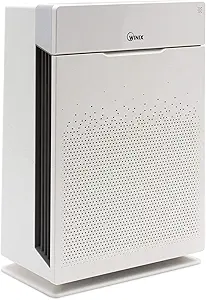
LG vs Winix: Overview & Brand Philosophy
The residential air purification market is defined by two primary engineering philosophies: the pursuit of premium design with advanced technological integration, and the optimization of cost-to-performance efficiency. LG and Winix sit at the forefront of these respective ideologies. LG, the South Korean electronics conglomerate, treats air purifiers as luxury home architectural elements and connected IoT appliances. Through its PuriCare line, LG integrates commercial-grade multi-directional airflow systems, whisper-quiet inverter motors, and high-end aesthetics designed to complement contemporary living spaces without compromising on particulate capture efficiency.
In contrast, Winix, also based in South Korea, has built an enduring legacy as an accessible, utilitarian workhorse brand. Founded on specialized air-treatment technologies, Winix prioritizes mechanical purity, consumer accessibility, and industry-standard Clean Air Delivery Rates (CADR) at aggressive price points. Winix models, such as the ubiquitous 5500-2 and C545, are engineered to provide maximum cubic feet per minute (CFM) of purified air per dollar spent, intentionally omitting costly luxury finishes and complex displays in favor of reliable, everyday operation.
For consumers navigating this space, the distinction is fundamentally an evaluation of priorities: LG caters to buyers seeking sophisticated particulate tracking, expansive coverage, whisper-quiet operation, and upscale design, whereas Winix serves the value-driven consumer who demands proven, medical-grade True HEPA filtration without recurring maintenance premiums.
Key Differences & Technological Comparison
While both manufacturers utilize standard mechanical filtration stages—combining pre-filters, activated carbon, and True HEPA media—their execution, supplemental sanitization technologies, and mechanical designs diverge significantly across several core metrics:
- Filtration Architecture and Supplemental Technology: Winix distinguishes itself with its proprietary PlasmaWave technology. PlasmaWave creates hydroxyl radicals that neutralize viruses, bacteria, and volatile organic compounds (VOCs) at a molecular level without generating harmful ozone levels (certified CARB-compliant). LG relies on pure mechanical filtration paired with its high-surface-area 360-degree True HEPA and deodorization filtration system. Rather than ionization, LG focuses on physical air turnover, using active Clean Boosters that rise and oscillate to project purified air up to 24 feet across open-concept layouts.
- Sensors and Metrics: LG purifiers feature precision PM1.0 laser sensors capable of detecting microscopic particles down to 1.0 micrometer (including smoke, fine combustion particles, and ultra-fine dust), paired with real-time numeric readouts on digital displays. Winix purifiers typically deploy optical PM2.5 or combined particle/gas SmartSensors, communicating air quality via simple LED color rings (Blue/Amber/Red) rather than granular numerical concentrations.
- Build Quality and Industrial Design: LG leverages high-grade plastics, brushed metallic textures, cylindrical aerodynamic enclosures, and multi-functional designs (such as the AeroTower or AeroFurniture). Winix purifiers utilize functional, lightweight, injection-molded plastic chassis in conventional boxy configurations. While Winix units blend unobtrusively into bedrooms and offices, LG units are engineered to serve as aesthetic centerpieces in modern living rooms.
- Smart Home Integration: LG deploys its unified ThinQ ecosystem, providing deep integration, filter life percentages, remote scheduling, voice assistant compatibility (Google Assistant and Amazon Alexa), and detailed historical air quality logs. Winix offers Wi-Fi connectivity on select variants (such as the C545 and AM90), but the accompanying Winix Smart app is comparatively rudimentary, with sporadic cloud connectivity reported during firmware updates.
Pros & Cons Comparison
LG Air Purifiers
- Pros:
- Superior 360-degree air intake with motorized Clean Booster for rapid whole-room air distribution.
- Advanced PM1.0 laser particle detection with real-time numeric air quality feedback.
- Exceptional build quality, contemporary industrial styling, and premium finishes.
- Energy-efficient Smart Inverter motor backed by long-term manufacturer reliability.
- Robust, seamless smart home integration via the LG ThinQ mobile platform.
- Cons:
- Substantially higher initial capital outlay compared to competitors with similar CADR numbers.
- OEM replacement filter sets are expensive, raising ongoing maintenance costs.
- Units are generally larger, heavier, and less portable between rooms.
Winix Air Purifiers
- Pros:
- Industry-leading CADR-to-price ratio, offering exceptional value for mid-to-large rooms.
- PlasmaWave technology adds an active molecular-level purification layer against pathogens and odors.
- Highly affordable OEM and third-party replacement filters, lowering long-term total cost of ownership.
- Select models (e.g., 5500-2) feature washable advanced odor control (AOC) carbon filters, extending service life.
- Intuitive, uncomplicated controls that make deployment simple straight out of the box.
- Cons:
- Utilitarian, dated plastic exterior aesthetics that may not suit high-end decor.
- Smart app connectivity is inconsistent on Wi-Fi-enabled models.
- Lacks numerical particulate readouts, providing only generalized color-coded air status.
Performance, Durability & Value Analysis
From an empirical performance standpoint, both brands easily achieve greater than 99.97% removal rates for airborne particulates down to 0.3 microns, including pollen, pet dander, mold spores, and smoke. Winix consistently outclasses the competitive field in raw volumetric airflow relative to retail price. The Winix 5500-2, for instance, frequently processes air at rates comparable to purifiers twice its price, making it exceptionally reliable for high-pollution events such as wildfire season or homes with multiple pets. In terms of mechanical durability, Winix utilizes proven, uncomplicated fan motors that often run continuously for five or more years with minimal intervention beyond timely filter swaps.
LG, conversely, targets performance through aerodynamic precision and continuous low-noise operation. Its brushless Smart Inverter motor technology allows LG purifiers to operate at whisper-level decibels (often under 25 dB on low settings) while sustaining laminar airflow. In terms of value, LG yields lower mechanical CADR per dollar, but delivers greater lifestyle value: better materials, quieter motors, comprehensive indoor environmental data, and multi-year motor warranties (up to 10 years on select Smart Inverter units). Over a five-year lifecycle, a Winix setup will demand significantly less expenditure due to inexpensive filter replacements, while LG demands a luxury-tier investment from initial unboxing through every subsequent OEM filter replenishment.
Final Verdict: Which Brand Should You Choose?
Your choice between LG and Winix hinges on whether you view an air purifier as a vital utilitarian appliance or an integrated element of home technology and interior design.
Choose Winix if:
- You want the absolute best purification performance, reliability, and CADR ratings per dollar spent.
- You need an efficient unit for bedrooms, basements, or home offices where high-end design is secondary.
- You are mindful of ongoing maintenance costs and prefer widely available, affordable replacement filters.
- You want active molecular odor and VOC reduction via switchable PlasmaWave technology.
Choose LG if:
- You are outfitting a visible, open-concept living area and require an appliance with modern, elegant industrial design.
- You require hyper-accurate, real-time diagnostic data on ultra-fine dust (PM1.0) and comprehensive smart-home automation via LG ThinQ.
- You are sensitive to ambient mechanical noise and prioritize near-silent operation on low fan speeds.
- You have the budget to support higher initial hardware costs and premium annual filter replacements.
Features
When evaluating the feature ecosystems of LG and Winix, the two brands represent fundamentally different design philosophies: LG approaches air purification as an extension of high-tech, luxury smart home integration, while Winix emphasizes pragmatic, set-and-forget utility. LG’s flagship PuriCare lineup sets an engineering benchmark with mechanical innovations such as the "Clean Booster"—a pop-up, oscillating fan head that actively propels purified air up to 24 feet across a room—alongside 360-degree filtration and advanced UVnano technology to sanitize the internal fan blades. Furthermore, LG incorporates laboratory-grade PM1.0 ultrafine particulate sensors alongside gas sensors, delivering real-time, highly granular air quality metrics through multi-colored LED displays and digital microgram readouts that surpass typical consumer-grade monitoring.
Conversely, Winix focuses on practical air-treatment capabilities centered around its proprietary PlasmaWave technology, which creates hydroxyl radicals to neutralize bacteria, VOCs, and viruses at the molecular level without generating harmful ozone. While Winix models like the 5500-2 and C545 omit the kinetic mechanics of LG, they excel in day-to-day functional automation. Winix purifiers feature integrated ambient light sensors that automatically transition the unit into an ultra-quiet, unlit Sleep Mode when darkness is detected, eliminating the need to manually toggle settings before bed. Filtration maintenance features are also thoughtfully deployed, offering washable Advanced Odor Control (AOC) carbon filters alongside straightforward filter-life counters, though Winix’s smart connectivity through the Winix Smart app remains basic and primarily utilitarian compared to LG’s robust ThinQ ecosystem.
Ultimately, the practical trade-off between these brands comes down to technical sophistication versus cost-effective simplicity. LG justifies its premium price tag with comprehensive smart home features—including voice assistant integration via Amazon Alexa and Google Assistant, detailed air cleanliness history logging, and even hybrid designs like the AeroFurniture with integrated wireless charging. Winix, on the other hand, delivers high-utility, reliable features that prioritize essential purification and effortless operation at a fraction of the cost. Consumers seeking an interactive, design-forward smart appliance will find LG’s feature suite superior, whereas those wanting robust, hands-off operation with specialized odor neutralization will be well served by Winix’s streamlined toolset.
Performance
When evaluating performance, LG and Winix approach indoor air decontamination through distinctly different engineering philosophies, despite both anchoring their systems around True HEPA filtration. LG’s PuriCare lineup utilizes an advanced 360-degree cylindrical intake paired with an integrated Clean Booster—an oscillating, direct-drive fan mounted on top of the chassis that actively propels purified air up to 24 feet across a room. This unique aerodynamic design virtually eliminates stagnant air pockets in expansive, open-concept spaces and rapidly accelerates room air changes per hour (ACH). In contrast, Winix relies on a more conventional front-intake, top-exhaust laminar airflow path, exemplified by workhorse models like the Winix 5500-2. Winix compensates for its traditional airflow dynamics through its proprietary PlasmaWave technology, an active bipolar ionization stage that breaks down volatile organic compounds (VOCs), odors, and microbial pathogens at the molecular level without producing harmful levels of ozone, adding a potent chemical and biological remediation layer that standard mechanical filtration cannot achieve alone.
In terms of sensor responsiveness and Clean Air Delivery Rate (CADR) efficiency, both brands demonstrate high technical competency with key trade-offs in precision versus value. LG equips its higher-tier purifiers with industrial-grade PM1.0 particulate sensors alongside separate gas and odor sensors, allowing the system to detect and respond to ultra-fine aerosols and microscopic allergens down to 1.0 micron with exceptional agility. The variable-speed inverter motor seamlessly scales RPMs to match contamination spikes, ensuring precise filtration management without unnecessary energy expenditure. Winix machines, conversely, lean into brute-force CADR output that frequently outperforms their price class in AHAM-verified testing for smoke, dust, and pollen. While Winix models typically employ standard PM2.5 infrared optical sensors—which are slightly less sensitive to the finest micro-particulates than LG's laser sensors—their automatic throttling is aggressive and highly effective at clearing heavy ambient dust and pervasive cooking odors quickly.
Acoustic performance and operational consistency further delineate the two manufacturers under sustained workloads. LG’s investment in aerodynamic fan blades and brushless DC motor technology yields superior acoustic dampening, allowing units to cycle significant volumes of air while remaining whisper-quiet (often below 25 dB on low settings) and unobtrusive even at moderate fan speeds. Winix units deliver exceptional air-clearing performance on their highest settings, but the turbo modes generate noticeable wind shear and motor hum, making them better suited for rapid, unoccupied air scrubbing rather than quiet continuous operation in bedrooms. Ultimately, LG provides superior whole-room air circulation dynamics, micro-particulate detection, and acoustically refined power, whereas Winix delivers outstanding direct filtration throughput per dollar, enhanced by active molecular neutralization that makes it formidable against stubborn biological and chemical contaminants.
Design
From an architectural and aesthetic standpoint, LG and Winix approach air purifier design from opposite ends of the consumer spectrum. LG champions an avant-garde, luxury-forward philosophy characterized by sculptural silhouettes, premium matte and metallic finishes, and seamless smart-home integration. Flagship models within LG’s PuriCare and AeroTower lineups double as contemporary interior statements, employing cylindrical, conical, and even side-table (AeroFurniture) forms that move away from the traditional appliance look. In contrast, Winix adheres strictly to a pragmatic, utilitarian design language. Units such as the Winix 5500-2 and C535 prioritize unobtrusive, boxy profiles rendered in durable, textured plastics that are engineered to blend into the background rather than draw attention. While LG’s structural engineering emphasizes high-end fit, finish, and bespoke build quality, Winix focuses on manufacturing cost-efficiency and sturdy simplicity, resulting in a design that feels distinctly appliance-grade yet robust and reliable.
The aerodynamic and mechanical engineering of each brand’s chassis directly dictates how they manage airflow and routine maintenance. LG relies heavily on 360-degree cylindrical intakes paired with proprietary airflow dispersers, such as the direct-drive "Clean Booster" fans found on higher-tier PuriCare models that rise and oscillate to project purified air up to 24 feet across a room. This omnidirectional engineering maximizes air intake surface area, though it inherently demands dedicated, centralized floor space and makes the units relatively heavy and difficult to maneuver. Winix utilizes a more traditional front-to-top airflow trajectory, drawing particulate-laden air through a perforated front grille and expelling scrubbed air through a top-mounted exhaust. From a usability perspective, Winix’s straightforward chassis allows for instantaneous filter changes via a quick-release magnetic or snap-fit front panel, complemented by integrated molded carry handles for effortless room-to-room transport—a practical touch that LG’s heavier, mechanically complex enclosures often sacrifice.
Interface ergonomics and ambient feedback mechanisms further highlight the divergent technical priorities of the two manufacturers. LG integrates refined, multi-stage LED air quality displays, concealed capacitive touch controls, and sophisticated ambient lighting rings that interpret real-time PM1.0, PM2.5, and PM10 particulate levels with pinpoint visual clarity. Winix opts for a more Spartan interface, utilizing mechanical or basic membrane tactile buttons paired with a simple three-to-five-color LED light bar to signal overall air quality. Winix’s primary design strength lies in its low visual footprint and practical wall-adjacent placement compatibility, making it ideal for budget-conscious consumers seeking pure functionality. Conversely, LG justifies its substantial price premium through cutting-edge industrial design, modular assembly, and superior aesthetic engineering, creating machines intended to serve as prominent, technologically advanced focal points within modern living spaces.