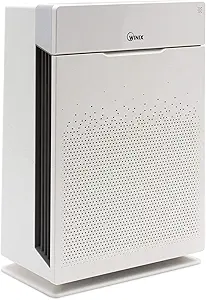
Daikin vs Winix: Overview & Brand Philosophy
In the competitive residential air purification market, Daikin and Winix approach indoor air quality from distinctly different engineering philosophies. Daikin, a Japanese multinational conglomerate founded in 1924, is globally recognized as the world's largest heating, ventilation, and air conditioning (HVAC) manufacturer. Their air purifier lineup directly benefits from decades of industrial-grade thermodynamic research, commercial aerodynamic design, and advanced atmospheric treatment technologies. Daikin views the standalone air purifier not as a disposable household gadget, but as an integral, heavy-duty climate appliance engineered for long-term air hygiene, biological neutralization, and continuous duty cycles.
Conversely, Winix is a South Korean consumer electronics company established in 1973 that carved out significant market share in North America and Europe by mastering the formula of accessible, high-performance home wellness appliances. Winix focuses heavily on delivering certified Clean Air Delivery Rate (CADR) metrics at an aggressive price-to-performance ratio. Their philosophy is centered on democratization—bringing multi-stage True HEPA filtration, active plasma-based sanitation, and intuitive smart-home integration to budget-conscious households seeking rapid allergen relief without substantial upfront capital expenditure.
While both brands routinely top independent test charts for particulate capture, the choice between them represents a fundamental decision between Daikin’s industrial durability and proprietary chemical decomposition versus Winix’s consumer-centric design, aggressive cost efficiency, and certified mechanical filtration throughput.
Key Differences & Technological Comparison
The primary technical differentiator between Daikin and Winix lies in their secondary air treatment mechanisms. While both deploy industry-standard multi-stage mechanical filtration—consisting of washable pre-filters, carbon deodorization, and True HEPA substrates—their active purification technologies diverge sharply.
Daikin's technological cornerstone is its proprietary Streamer Technology. This is a patented high-voltage cold plasma discharge system that generates high-speed electrons. These electrons strike oxygen and nitrogen molecules in the air, creating potent oxidative radicals that actively break down hazardous chemical compounds, volatile organic compounds (VOCs), formaldehyde, mold spores, and trapped allergens directly on the filter surface. Unlike standard passive filters where captured pathogens remain viable on the media, Daikin’s design decomposes biological pollutants, effectively self-sanitizing the filter matrix and drastically extending the operational lifespan of the core electrostatic HEPA elements—in some commercial models, up to ten years.
Winix counters with its proprietary PlasmaWave® Technology. PlasmaWave works by creating both positive and negative ions that combine with ambient airborne water vapor to form Hydroxyl radicals (OH-). These short-lived hydroxyls target airborne bacteria, viruses, and odors at a molecular level, neutralizing them before rapidly reforming into harmless water vapor. Winix has prioritized third-party safety verifications, ensuring PlasmaWave operates well below California Air Resources Board (CARB) ozone emission thresholds. While highly effective at neutralizing airborne viral loads, Winix systems rely more heavily on traditional, replaceable HEPA and carbon cassettes that require strict 6-to-12-month replacement cycles to maintain filtration efficiency.
From an aerodynamic and acoustic standpoint, Daikin leverages its HVAC heritage. Their units often feature unique vertical tower structures with dual or multi-directional intake ports and custom-balanced centrifugal fan blades. This allows Daikin units to operate at whisper-quiet sound pressure levels (often as low as 19 dB(A) in quiet mode) even with significant static pressure resistance. Winix relies on optimized, high-volume axial fan assemblies commonly found in budget to mid-range tower and console models. Winix models like the 5500-2 and Zero series excel at rapid air cycling in medium-to-large bedrooms, though their fan pitch at maximum "Turbo" speeds is noticeably more audible and industrial in character compared to Daikin's dampened output.
Pros & Cons Comparison
Daikin: Pros
- Superior Component Longevity: Built to commercial HVAC standards with industrial-grade fans and ultra-durable, long-life filter matrices.
- Streamer Radical Decomposition: Actively destroys VOCs, toxins, and biological contaminants on the filter rather than merely trapping them.
- Acoustic Engineering: Exceptionally quiet low-speed operations down to sub-20 dB(A), making them premier options for noise-sensitive bedrooms.
- Electrostatic HEPA Integration: Uses electrostatically charged fibers that resist clogging and maintain high airflow rates longer than purely mechanical filters.
Daikin: Cons
- High Capital Cost: Initial purchase price is substantially higher than comparable capacity models from budget brands.
- Conservative Aesthetics: Industrial, utilitarian exterior styling that lacks the sleek, modern design trends of modern consumer tech.
- Limited Budget Range: Scant presence in the entry-level consumer bracket (under $150).
Winix: Pros
- Market-Leading Value: Unmatched CADR-per-dollar ratio, providing exceptional smoke, dust, and pollen removal at a highly accessible entry price.
- PlasmaWave Safety & Efficacy: Proven active ion-hydroxyl neutralization without exceeding strict ozone-free certifications.
- Ubiquitous Replacement Media: Replacement filters are widely available, affordable, and easy to swap with official and verified third-party options.
- Intuitive Automation: Fast, responsive onboard smart particle sensors that modulate auto-mode fan curves accurately based on dynamic indoor air conditions.
Winix: Cons
- Recurring Ownership Costs: Requires consistent annual or bi-annual filter replacements, which can accumulate to exceed the unit's base price over time.
- High-Speed Acoustic Signature: Higher turbulence and audible motor hum on maximum/turbo modes compared to premium competitors.
- Plastic Enclosure Finish: Build quality relies extensively on standard lightweight ABS plastic rather than premium acoustic-dampening composites.
Performance, Durability & Value Analysis
When assessing raw cleaning performance, both brands reliably achieve 99.97% single-pass efficiency for particulates down to 0.3 microns via their True HEPA layers. However, long-term durability metrics heavily favor Daikin. Daikin manufactures its high-performance brushless DC motors and aerodynamic impellers to withstand non-stop operation over multi-year periods without bearing degradation or off-axis rotational wobble. The inclusion of the Streamer discharge module prevents the foul, stale odors that commonly plague air purifiers when bacteria and trapped dander rot inside traditional carbon filters. While Daikin's upfront retail price often sits in the premium consumer tier ($300 to $700+), the longevity of its primary filters and lower chassis vibration rates translate to lower operational maintenance and extended product lifespans spanning well past seven to ten years.
Winix represents the undisputed champion of immediate consumer value. A standard Winix flagship console (such as the Winix 5500-2 or C545) provides room-clearing volumetric throughput that often matches or outperforms appliances twice its price. For dealing with acute seasonal allergies, pet dander, or episodic wildfire smoke events, Winix delivers extraordinary performance out of the box. However, because Winix models rely on conventional physical absorption without continuous radical breakdown, their granular and pelletized carbon filters saturate rapidly in high-VOC environments, demanding proactive replacements. Over a five-year ownership window, the lower initial cost of a Winix machine balances out against recurring filter cartridge replacements, placing it on roughly equal total-cost-of-ownership footing with higher-tier brands.
Final Verdict: Which Brand Should You Choose?
The decision between Daikin and Winix ultimately comes down to your primary indoor environmental challenges, your budget constraints, and your desired product lifecycle.
Choose Daikin if: You are seeking a high-end, near-commercial grade air sanitation investment. Daikin is the superior choice for households dealing with complex indoor pollutants such as mold remediation, persistent chemical odors, heavy VOCs, or off-gassing from new construction and furniture. It is also the ideal choice for individuals who prioritize near-silent operation in a master bedroom and prefer long-lasting mechanical components backed by one of the most venerable engineering firms in global HVAC history.
Choose Winix if: You want maximal particulate removal efficiency at an unbeatable, budget-friendly price point. If your primary concerns are seasonal pollen, common household dust, pet dander, light cooking odors, or immediate protection from seasonal wildfire smoke, Winix provides the best return on investment. Its responsive auto-mode, accessible filter ecosystem, and reliable PlasmaWave technology make it the go-to recommendation for everyday homeowners, renters, and families seeking whole-room air filtration without a substantial initial financial commitment.
Features
The feature battle centers around how each brand deploys secondary active purification technologies alongside traditional HEPA filtration. Daikin's hallmark feature is its proprietary Streamer Technology, a plasma discharge mechanism that emits high-speed electrons to oxidize and decompose allergens, bacteria, and hazardous volatile organic compounds (VOCs) within the unit rather than merely trapping them. Daikin systems also boast Electrostatic HEPA filters, which capture particles using static charges to lower airflow resistance, alongside sophisticated three-way air intake designs and multi-sensor arrays measuring dust, PM2.5, and odors with industrial accuracy.
Winix counters with its patented PlasmaWave technology, which generates positive and negative ions that combine with ambient water vapor to form Hydroxyls, neutralizing airborne contaminants at a molecular level without producing harmful levels of ozone. Winix heavily emphasizes consumer conveniences, featuring widely praised Smart Sensors that automate fan speeds through a responsive auto mode, ambient light sensors for whisper-quiet Sleep Modes, and, in modern iterations, seamless Wi-Fi integration compatible with smart home ecosystems like Alexa and Google Assistant. While Winix delivers more approachable, everyday automated convenience, Daikin provides deeper technical control and active pathogen destruction engineering.
Performance
In terms of raw particulate capture and airflow efficiency, both brands deliver exceptional results, but through distinct mechanical philosophies. Daikin purifiers utilize broad, electrostatic filtration surfaces combined with specialized centrifugal fan designs that maintain high static pressure while consuming minimal wattage. Because electrostatic fibers allow for wider filter pores without sacrificing particle capture efficiency, Daikin units excel in delivering high volume airflow with virtually imperceptible motor hum. Their systems show superior long-term performance against VOCs, persistent odors, and biological contaminants due to the decomposing power of the Streamer unit preventing secondary pollutant off-gassing from saturated filter media.
Winix purifiers are absolute powerhouses when it comes to particulate CADR ratings in small-to-large residential spaces, quickly clearing smoke, pollen, and pet dander via dense True HEPA filtration. The typical Winix 4-stage setup—comprising a fine mesh pre-filter, activated carbon, True HEPA, and PlasmaWave—yields rapid air turnover in high-traffic rooms. However, Winix carbon filters are often thin, coated sheets rather than pellet-based beds, meaning their adsorption capacity for heavy chemical odors saturates faster than Daikin's robust catalytic systems. For rapid airborne allergen and dust clearance, Winix is remarkably potent, while Daikin delivers a more balanced, comprehensive scrubbing of fine particulate and gaseous pollutants over time.
Design
Aesthetic and structural design reveals contrasting product philosophies tailored to different interior integration styles. Daikin purifiers frequently feature a functional, tower or boxy industrial aesthetic that prioritizes fluid dynamics over sleek minimalism. Many Daikin models employ a vertical, low-profile footprint with front and side suction vents designed to maximize floor-level intake where dust and pet hair settle. The construction utilizes thick, impact-resistant plastics with low-resonance internal ducting, reflecting Daikin's HVAC pedigree. While they may appear utilitarian or clinical to some consumers, their physical interfaces and physical modularity make internal maintenance and filter swaps exceptionally straightforward.
Winix opts for a modern, lifestyle-oriented appliance aesthetic characterized by gentle curves, contemporary fabric grilles in select models, and sleek, minimalist control panels. Their popular console designs, such as the 5500-2 and Zero series, seamlessly blend into modern living rooms and bedrooms without drawing undue attention. Winix focuses heavily on consumer ergonomics, providing lightweight chassis, integrated carry handles, and intuitive LED air quality indicator lights that shift color in real-time. Daikin’s design prioritizes fluid-mechanical efficiency and acoustic engineering from the inside out, whereas Winix successfully crafts an aesthetically friendly, consumer-centric device that enhances the visual appeal of modern living spaces.
Compare current retail pricing, active promotions, and verified stock availability directly from authorized stores: