


Top Espresso Machines Brands Based In united states Brands
Here's what we recommend for:

1


4.94/5
Boiler Performance
7.5/5
Cuisinart delivers reliable performance for Boiler Performance in Espresso Machines.
Extraction Quality
8.2/5
Cuisinart delivers reliable performance for Extraction Quality in Espresso Machines.
Steam System
8.9/5
Cuisinart delivers reliable performance for Steam System in Espresso Machines.
Product Selection
3.1/5
2


4.18/5
Boiler Performance
7.2/5
Rapid thermoblock heating enables fast warm-up times from a cold start, though thermal stability can falter slightly across consecutive brewing cycles.
Extraction Quality
7/5
The standard 15-bar pump system delivers balanced shots with decent crema, but limited pressure and temperature micro-adjustments restrict specialty-grade extraction.
Steam System
6.8/5
Single-heating architecture introduces a transition delay between brewing and steaming, producing adequate steam power for casual milk drinks but struggling with true microfoam texture.
Product Selection
2.3/5
3

4.84/5
Boiler Performance
6.8/5
The thermoblock heating system delivers rapid warm-up times, but it struggles with temperature stability during consecutive brewing cycles.
Extraction Quality
7/5
Equipped with a standard 58mm portafilter and pre-infusion capability, it produces decent espresso, though shot consistency can be finicky due to variable water temperatures.
Steam System
6.5/5
The steam wand generates adequate pressure for basic lattes, but slow throughput and limited articulation make producing silky microfoam for latte art difficult.
Product Selection
3.8/5
4


3.23/5
Affordability
5/5
Hamilton Beach espresso machines are among the most affordable in the market, with prices ranging from around $50 to $250. While they are basic and lack advanced features, they are highly budget-friendly and offer decent espresso for casual coffee drinkers. For beginners on a tight budget, Hamilton Beach provides one of the most cost-effective options, though the performance may not meet the needs of more experienced users.
Build Quality & Durability
3.5/5
Hamilton Beach machines are built with more basic materials, which affects their long-term durability. While they are reliable for casual home use, they may not stand up as well to frequent usage compared to more premium brands. The machines are generally less resistant to wear and tear but can still perform well over time with regular maintenance.
Range of Machines
2.8/5
Hamilton Beach offers affordable semi-automatic and automatic espresso machines aimed at casual users and beginners. They provide straightforward brewing with a focus on simplicity and ease of use. While the brand lacks premium options or extensive variety, it appeals to those seeking a basic and budget-friendly machine. Their lineup is best suited for occasional espresso drinkers or first-time buyers.
Design & Appearance
3/5
Hamilton Beach machines have a simple, plastic-heavy design aimed at budget-conscious consumers and acceptable for casual or transitional kitchen designs. While functional and compact, their appearance lacks the refinement of higher-end brands. These machines prioritize practicality over aesthetic appeal, making them suitable for casual users

Beginner Friendly Design: Straightforward operations
Space-Efficient: Fitting seamlessly into small spaces
Budget Friendly: Most affordable espresso machines
Plastic-Heavy Build: Less durable compared to competitors
Basic Extraction and Steam System: Acceptable quality for casual use
5


3.33/5
Affordability
4.8/5
Mr. Coffee is one of the most budget-friendly brands, with prices typically ranging from $50 to $200 for their home espresso machines. While they lack the advanced features of premium brands, Mr. Coffee’s entry-level models offer good value for those seeking basic espresso capabilities at an affordable price. These machines are ideal for casual users or beginners who want a no-frills option, though their performance may not meet the expectations...
Build Quality & Durability
3.2/5
Mr. Coffee machines are built with basic materials that prioritize affordability over long-term durability. While they offer decent reliability for casual use, they tend to show signs of wear and tear sooner than more premium brands. These machines are suitable for occasional use, but may not hold up as well over time with daily heavy usage.
Range of Machines
3.2/5
Mr. Coffee focuses on providing affordable and beginner-friendly espresso machines that are perfect for casual users or those new to espresso-making. Their lineup includes Café Barista and One-Touch CoffeeHouse, both offering simple, automatic, one-touch brewing. These machines are compact, easy to maintain, and prioritize convenience over advanced customization. While they lack the precision and durability of higher-end brands, Mr. Coffee excels at making espresso accessible to a wide audience.
Design & Appearance
3.2/5
Mr. Coffee machines have a practical and straightforward design, using mostly plastic materials with some metallic accents. While not premium in appearance, their compact and functional layouts make them suitable for everyday use, simple and functional. Their designs appeal more to casual users than style-conscious buyers.
Integrated One-Touch Recipes: Perfect for first-time espresso makers
Budget Friendly Pricing: Best performance for the budget
Compact Practical Design: Space-saving and suitable for small kitchens
Basic Build Quality: Constructed primarily with plastic materials
Limited Features: Lacking advanced technologies
Compare Brands
Other Espresso Machines Brands



8.3 /5

3.8 /5
8.3 /5

3.9 /5
8.3 /5

4.2 /5
8.3 /5


4.4 /5
8.3 /5

4 /5
Everything You Need to Know
About Home Espresso Machines
Love that first sip of espresso in the morning? Why not bring the café experience to your kitchen? A good home espresso machine can turn your home into your personal barista station, and we’re here to help you find the perfect one! This guide breaks down everything you need to know about home espresso machines—from how they work to the key features you should keep in mind when picking your new coffee companion. Get ready, we’ve got tips to help you make the perfect espresso right at home.
How Espresso Machines Work
An espresso machine is designed to brew coffee by forcing pressurized water through finely-ground coffee beans. The process results in a concentrated shot of coffee, known as espresso.
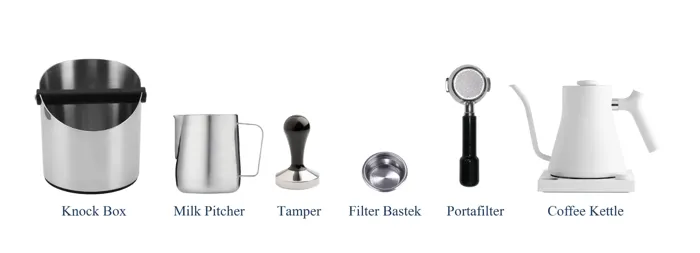
Here’s a quick overview of the key components involved in the brewing process:
Portafilter: The handle and basket where the coffee grounds are placed.
Boiler: Heats the water to the ideal brewing temperature.
Pump: Creates the pressure required to force hot water through the coffee grounds.
Group Head: Where the portafilter attaches to the machine, directing the pressurized water through the coffee grounds.
By controlling these components, espresso machines ensure a perfect cup of espresso.
Types of Espresso Machines
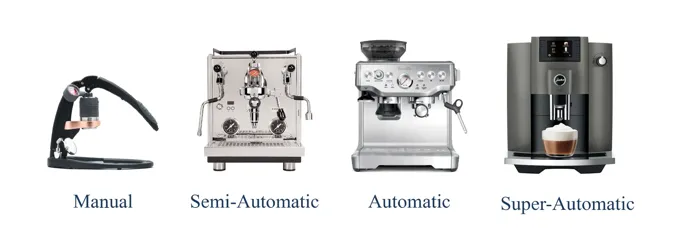
There are four main types of espresso machine, each offering different levels of control, automation, and price. Here's a breakdown:
Manual Espresso Machines
As the most traditional type of machine, manual espresso machines are not the focus of our discussion. They use a lever to apply pressure, which the user must operate by hand, and they don’t consume electricity.
Semi-Automatic Espresso Machines
Similar to the machines commonly found in cafés, they offer a balance between control and convenience. The user is responsible for grinding, tamping, and adding coffee to the portafilter, while the machine automatically handles temperature, pressure, water flow, and the brewing process. These machines allow you to customize your espresso experience.
Automatic Espresso Machines
With automatic machines, you need to prepare the portafilter and press a few buttons. The machine handles the tamping, brewing, timing, and sometimes even the milk frothing.
Super-Automatic Espresso Machines
Super-automatics are the most advanced. You only need to press a button. They grind the beans, tamp, brew, froth milk, and even clean themselves. It gives you the most comfort but no customization or control.
Key Features to Look For
When shopping for an espresso machine, there are several important features to consider to ensure you’re getting the best machine for your needs:
Pressure and Pump Systems
Espresso requires a consistent pressure of around 9 bars to extract the perfect shot. Look for machines with a high quality pump to ensure reliable performance.
Temperature Control
Consistent water temperature is key to brewing espresso. Most machines maintain a steady temperature around 200°F. Machines with PID (Proportional-Integral-Derivative) controllers offer more precise control over temperature.
Steam Wand and Frothing Milk
If you enjoy lattes or cappuccinos, a steam wand is essential. It allows you to froth milk to the perfect texture for your favorite drinks. Some machines offer automatic milk frothing features for added convenience.
Grinder and Grind Settings
A built-in grinder provides fresh coffee grounds every time you brew, but it’s important to look for machines with adjustable grind settings to suit different coffee beans and personal preferences.
Drip Tray, Portafilter Size, and Build Quality
A durable build is essential for longevity. Look for machines with stronger materials like stainless steel for better durability. A larger drip tray and portafilter size are also important for larger cups or mugs.
Frequently Asked Questions (FAQs)
What is a hybrid espresso machine?
Hybrid espresso machines offer both manual control and automation, giving users the flexibility to take charge of certain aspects of the brewing process while also offering automated features when you need just convenience.
What’s the difference between milk frothing systems?
Manual Frothing: This system requires the user’s full control and attention, as it works with a steam wand. It needs a learning curve and some skill, but gives the best froth and foam texture.
Semi-Automatic Frothing: These systems allow you to choose the amount of the milk, temperature and foam level but automatically perform the operation and froth the milk. They give you a bit more control over the final result.
Fully Automatic Frothing: Just fill up the milk container! These systems fully automate the frothing process based on the beverage type and pre-programmed functions. It doesn’t offer much customization but ensures consistency and ease of use.
What is a bean-to-cup machine?
Bean-to-cup machines aren't a separate category, but rather a feature that can be found in some automatic espresso machines. These machines are equipped with a built-in grinder that grinds the beans, then automatically transfers the ground coffee to the portafilter and starts the brewing process.
How often should I clean my espresso machine?
Regularly cleaning your espresso machine is essential for maintaining its performance.
Cleaning the group head, rinsing the portafilter or wiping the steam wand is necessary after each use. However deep cleaning, such as descaling or backflushing, should be done every few months or according to your machine's manual.
Do I need to use filtered water for my espresso machine?
We strongly recommend using filtered or bottled water in your espresso machine. It improves the flavor of your espresso while also preventing mineral buildup inside the machine and keeps your machine in good condition. Hard water can lead to scaling, which can reduce your machine’s efficiency and lifespan.
How do I know when it’s time for a deep cleaning of my espresso machine?
For deep cleanings, such as descaling or backflushing, most machines have a reminder or indicator light that alerts you when it's time. Typically, this should be done every 2-3 months, depending on water hardness and usage frequency, though you can also follow the guidelines in the machine's manual.
What is PID control in espresso machines?
PID (Proportional-Integral-Derivative) control is a system that precisely manages the temperature, and ensures water remians consistently stable.
If the temperature drops below the ideal level, the PID system prevents brewing operation, and activates the heating elements until the water reaches the optimal range.
Sometimes delays the brewing but this helps prevent poor extraction.
Can I use capsules in espresso machines?
In some espresso machines, commonly known as all-in-one machines, using capsules is an option, but most machines do not support this, as they operate on different systems. For more details on capsule-based machines, check out our Single-Serve Espresso Machines page.
KEEP READING