LG vs Kenmore: Overview & Brand Philosophy
In the modern laundry appliance sector, LG Electronics has emerged as an undisputed titan of innovation and consumer satisfaction. The South Korean manufacturer shifted the paradigm of home laundry over two decades ago by pioneering the direct-drive motor system, dramatically cutting vibration and mechanical failure points. LG’s brand philosophy centers on high-tech engineering, smart connectivity, and superior energy efficiency. Regularly dominating reliability indexes from consumer research firms, LG targets households looking for cutting-edge laundry tech that maximizes fabric care while reducing operational resource costs.
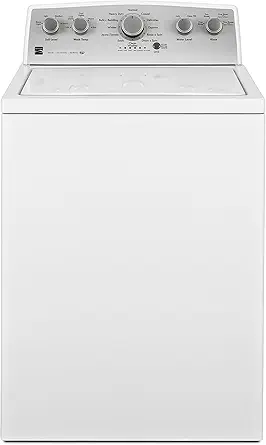
Kenmore occupies a distinct, historic space in American domestic history. Long serving as the flagship private-label appliance badge of Sears, Kenmore built a century-old reputation on rugged dependability, intuitive designs, and working-class value. Unlike LG, Kenmore has never been an original equipment manufacturer (OEM); rather, Kenmore-branded washers have historically been contracted out to major appliance builders, including Whirlpool, Frigidaire, and notably, LG itself. Today, Kenmore focuses on providing straightforward, dependable laundry utility that emphasizes traditional mechanical simplicity and accessible price points, although its retail footprint has evolved significantly away from Sears to broader online marketplaces.
Comparing these two brands requires understanding their fundamentally divergent strategies. LG consistently innovates from the front, developing proprietary software, modern aesthetics, and sophisticated inverter motors in-house. Kenmore, by contrast, relies on proven, outsourced design platforms engineered to provide familiar ergonomics, durable mechanical structures, and uncomplicated user experiences. Whether you prefer LG's forward-looking tech or Kenmore’s utilitarian heritage will largely dictate which brand belongs in your laundry room.
Key Differences & Technological Comparison
The core technological distinction between LG and Kenmore lies in motor architecture and control philosophy. LG standardizes its proprietary Inverter Direct Drive motor across almost its entire front-load and modern top-load catalog. By mounting the motor directly to the drum without belts or pulleys, LG drastically minimizes wearable parts and unlocks its 6Motion technology, which rotates the drum in multi-directional sequences tailored to specific fabrics. While higher-end Kenmore models (particularly the Kenmore Elite series made by LG) share this direct-drive architecture, entry- and mid-tier Kenmore top-loaders typically utilize traditional belt-driven, vertical-action agitator systems manufactured by companies like Whirlpool, offering a familiar, deep-water wash style rather than computerized fabric tumbling.
In terms of smart functionality and diagnostics, LG holds a decisive advantage with its ThinQ ecosystem. LG washers leverage artificial intelligence (AI DD) to sense fabric weight and softness, dynamically adjusting water levels and cycle patterns in real time. Wi-Fi integration allows for remote starting, energy tracking, and Proactive Customer Care diagnostics. Kenmore's approach to technology is noticeably conservative. While Kenmore Smart models exist, their smart platform is comparatively spartan, focusing primarily on basic cycle notifications and troubleshooting codes rather than advanced, algorithmic cycle optimization.
Cycle versatility and design aesthetics also draw a sharp contrast. LG washers feature sleek, modern digital control panels integrated directly into glass doors, minimalist knobs, and advanced cycles such as TurboWash 360, which utilizes five high-pressure spray jets to achieve deep cleaning in under 30 minutes. Kenmore prioritizes functional ergonomics with tactile push-buttons, robust rotary dials, and high-capacity wash baskets designed for bulky items. Features like Kenmore's Accela Wash mimic fast-cycle innovations, but Kenmore generally shines through its heavy-duty deep-fill options that prioritize water immersion over high-efficiency water conservation.
Pros & Cons Comparison
LG Washing Machines
- Pro: Industry-Leading Reliability: Consistently ranks at the top of third-party reliability and customer satisfaction studies for both front-load and top-load configurations.
- Pro: Advanced Inverter Direct Drive: Fewer moving parts, ultra-quiet operation, minimal vibration, and a 10-year standard motor warranty.
- Pro: Cutting-Edge Feature Set: Superior smart features via ThinQ, steam sanitize cycles, and fast-cleaning TurboWash capabilities.
- Con: Higher Initial Investment: Premium feature sets and sleek aesthetics come with higher baseline purchase prices.
- Con: Complex Electronics: Sophisticated electronic control boards can be more costly to diagnose and replace out of warranty.
Kenmore Washing Machines
- Pro: Straightforward Operation: Intuitive, no-nonsense control interfaces that appeal to users who dislike complex digital menus.
- Pro: Accessible Value: Competitive initial retail pricing makes them attractive for budget-conscious buyers and rental properties.
- Pro: Familiar Wash Action: Offers robust top-load options with traditional dual-action agitators that satisfy consumers wanting high-water-volume washes.
- Con: Sourced Manufacturing Ambiguity: Because machines are manufactured by various third parties, component quality and parts availability vary widely by specific model series.
- Con: Diminished Distribution & Service Network: The decline of Sears has reduced the accessibility of dedicated service technicians and physical showroom viewing.
Performance, Durability & Value Analysis
When measuring cleaning efficacy, LG models consistently outperform Kenmore's baseline units. LG's combination of variable-motion drum patterns, automatic load-balancing, and targeted steam penetration delivers exceptional stain removal with minimal fabric wear. Kenmore machines, particularly standard agitator models, clean thoroughly by sheer mechanical force and deep water submersion; however, this approach leads to accelerated fabric degradation and significantly higher water and electricity bills over the machine's lifespan. If you wash delicate fabrics or prioritize fabric longevity, LG holds the engineering edge.
Durability and long-term value present a nuanced dynamic. LG washers routinely demonstrate an operational lifespan of 10 to 15 years with minimal maintenance, supported by widespread parts availability and a massive network of certified technicians. Kenmore's durability depends heavily on which OEM built the specific model: an LG-sourced Kenmore Elite will demonstrate exceptional longevity, whereas budget Kenmore top-loaders may encounter suspension and transmission issues earlier in their life cycles. Furthermore, with the traditional Sears service infrastructure diminished, sourcing certified Kenmore service can occasionally require navigating third-party warranty networks, diminishing the overall lifetime value equation.
Final Verdict: Which Brand Should You Choose?
Choose an LG washing machine if your budget permits an investment in class-leading efficiency, quiet performance, and advanced fabric care. LG is the superior choice for tech-forward households, families processing high volumes of laundry who need rapid cycle times, and consumers seeking front-load or high-efficiency impeller top-load machines backed by undisputed independent reliability ratings.
Choose a Kenmore washing machine if you value traditional mechanical utility, simple dial interfaces, and lower upfront equipment costs. Kenmore remains a solid, functional choice for budget-conscious buyers, landlords, or homeowners who prefer a classic top-loader with a vigorous center agitator and deep-water wash modes, provided you verify the underlying OEM and confirm local service support prior to purchase.
Energy Efficiency
When evaluating energy efficiency in the washing machine sector, LG consistently ranks as an industry vanguard, driven by its proprietary Inverter Direct Drive motor technology. By eliminating belts and pulleys, LG minimizes mechanical friction and energy dissipation, allowing its machines to achieve exceptional kilowatt-hour (kWh) and water consumption ratings. Most LG front-load and advanced top-load washers far exceed Tier 2 and Tier 3 ENERGY STAR specifications, utilizing intelligent AI DD (Artificial Intelligence Direct Drive) sensors. These sensors detect fabric weight and density to dynamically modulate the wash cadence, water volume, and cycle length in real time. Combined with its TurboWash technology—which utilizes high-pressure nozzles to reduce cycle times by up to 30 minutes without compromising cleaning performance—LG substantially curbs both thermal and electrical energy expenditure over the appliance's lifespan.
Kenmore approaches energy efficiency from a more varied standpoint, primarily because it functions as a badge-engineered brand rather than an original equipment manufacturer. Historical and contemporary Kenmore models are fabricated by third parties, predominantly Whirlpool and, notably, LG itself (via Kenmore Elite lines). High-end Kenmore Elite units share underlying architecture with LG, delivering comparable energy-saving metrics through direct-drive motors and Kenmore’s "Accela Wash" system. However, Kenmore's standard catalog—especially its value-tier traditional top-load models manufactured with mechanical agitators and older drive platforms—lags significantly in efficiency. These budget-conscious units often rely on conventional induction motors and fixed-fill wash systems, consuming higher gallons per cycle (Integrated Water Factor) and more electricity (Integrated Modified Energy Factor) than LG’s entry-level equivalents.
From a consumer analyst perspective, the technical trade-offs between the two brands crystallize around consistency and predictability. LG offers uniform, cutting-edge energy optimization across nearly its entire catalog, translating into lower utility bills, reduced ecological impact, and seamless integration with smart-home energy tracking via the ThinQ app. Kenmore provides viable high-efficiency alternatives strictly within its upper-echelon Elite series, but requires the buyer to navigate a fragmented lineup where entry-level units prioritize low upfront costs over sustained operational efficiency. For consumers prioritizing long-term energy and water conservation, LG is the superior engineering benchmark, whereas Kenmore is best approached selectively by cross-referencing individual model specs against federal CEE tiers.
Programs Variety
In evaluating program variety, LG distinguishes itself as an industry pioneer by integrating hyper-specialized cycles, algorithmic load detection, and cloud-based cycle adaptability. LG's modern lineup frequently features upwards of 14 standard cycles, including specialized options like Allergiene (certified by the Asthma and Allergy Foundation of America), Tub Clean, Perm Press, and Bedding. What sets LG apart technically is its AI Direct Drive (AI DD) technology, which pairs standard cycle options with sensor arrays that detect fabric weight and softness, dynamically adjusting motion patterns mid-wash. Furthermore, via the ThinQ smartphone ecosystem, users gain access to downloadable specialty cycles—such as Single Garment, Gym Clothes, and Denim—effectively making the machine’s cycle variety future-proof. These cycles utilize LG's 6Motion technology, deploying distinct drum motions (tumbling, stepping, swinging, rolling, scrubbing, and filtration) matched to each dedicated wash program to optimize mechanical action while minimizing fabric degradation.
Conversely, Kenmore provides a more utilitarian, simplified approach to cycle architecture that prioritizes consumer familiarity over dynamic customizability. While historically Kenmore sourced units from various OEMs (including Whirlpool and LG), their current product catalog leans heavily into practical, straightforward presets with physical cycle selectors. Typical Kenmore washers offer between 8 and 12 baseline cycles, encompassing Essentials like Heavy Duty, Delicates, Express Wash, and Casual, alongside targeted features like Deep Fill and Triple Action Agitator programming. Kenmore's strengths lie in mechanical straightforwardness; the machine eliminates confusing algorithmic sub-menus, allowing users to quickly initiate a cycle without navigating multi-tiered touchscreens. However, the technical ceiling is noticeably lower. Kenmore machines generally lack the smart integration to download supplementary niche cycles, feature fewer temperature/spin combinations per program, and rarely include steam-enhanced or high-heat sanitizing cycles that match LG's allergen-reduction certifications.
From a practical consumer perspective, the trade-off hinges on whether a household values automated fabric optimization or straightforward, turn-dial reliability. LG’s extensive program library and downloadable modularity represent the superior choice for tech-forward users, large families with diverse wardrobe demands, and consumers needing targeted treatment for synthetics, heavy pet hair, or delicate athletic apparel. On the other hand, Kenmore provides sufficient versatility for general laundry needs without the cognitive overhead or potential failure points of smartphone-tethered programming. While Kenmore covers all the fundamentals necessary for effective home laundering, LG decisively wins the program variety category through its advanced wash mechanics, dynamic sensor-driven adjustments, and perpetually expanding digital cycle catalog.
Noise Level
When evaluating acoustic performance, LG has established itself as an industry benchmark in quiet operation, primarily due to its pioneering Inverter Direct Drive motor technology. By eliminating the traditional belt-and-pulley system and mounting the motor directly to the drum, LG significantly reduces mechanical friction, vibration, and motor whine. This engineering foundation is augmented by LG's TrueBalance Plus anti-vibration system, which actively senses unbalanced loads and adjusts rotation speed and drum movement using advanced accelerometers and liquid-filled balance rings. Consequently, both front-load and top-load LG washers routinely operate at whisper-quiet sound thresholds—often registering below 50 decibels during the wash cycle and rarely exceeding 70 decibels during high-speed spins. This makes LG machines exceptionally well-suited for second-floor installations, apartments, or laundry areas adjacent to primary living spaces.
Kenmore presents a more fragmented acoustic profile, largely because the brand does not manufacture its own appliances but instead sources them from various original equipment manufacturers (OEMs), historically including Whirlpool, Daewoo, and ironically, LG itself. High-end Kenmore Elite models manufactured by LG or Whirlpool feature proprietary noise-dampening systems, such as Kenmore's QuietPak insulation packages, which perform admirably against moderate operational vibrations. However, standard Kenmore units—particularly their budget-tier, traditional top-load models—often utilize conventional belt-driven transmissions and electromechanical actuators. These entry-level architectures lack advanced continuous load-balancing technology, frequently resulting in loud water-sloshing, pronounced pump drainage sounds, and cabinet rattling during the spin cycle if a load becomes uneven.
Ultimately, the practical trade-off between the two brands comes down to acoustic predictability versus upfront cost. With LG, consumers are guaranteed cutting-edge, uniform vibration mitigation and ultra-quiet brushless motors across virtually the entire modern product lineup, requiring very little compromise for noise-sensitive environments. With Kenmore, achieving comparable decibel levels requires careful scrutiny of the specific model's OEM heritage, as only higher-tier, modern front-load and impeller-driven units deliver competitive quietness. While a base-model Kenmore may offer a lower point of entry and durable mechanical simplicity, it imposes an acoustic penalty that makes it far better relegated to a closed utility room, basement, or garage away from main living quarters.
Fabric Care
When evaluating fabric care, LG demonstrates a significant technological edge driven by sophisticated sensor architecture and advanced mechanical design. The centerpiece of LG’s fabric preservation strategy is its AI DD (Artificial Intelligence Direct Drive) technology, which utilizes internal sensors to detect not only the weight of the load but also the precise texture and softness of the fabrics. By referencing a vast database of textile characteristics, the machine dynamically tailors wash motions—leveraging its 6Motion Direct Drive system to combine specific patterns of tumbling, rolling, stepping, and scrubbing. This granular control minimizes mechanical stress and reduces fabric degradation, making LG particularly adept at handling delicate weaves, activewear, and synthetic blends without premature pilling or stretching. Furthermore, LG’s integration of TrueSteam and TurboWash technologies allows for deep soil extraction and allergen removal at lower temperatures, which limits heat-induced shrinkage and protects delicate fibers over long-term laundering.
Kenmore approaches fabric care through a more traditional, mechanical methodology that yields mixed results depending on the specific model tier and sourcing. Historically manufactured through partnerships with giants like Whirlpool and LG, Kenmore’s standalone lineup primarily relies on pre-programmed cycles rather than real-time algorithmic adjustments. Kenmore top-load models frequently utilize traditional dual-action agitators or low-profile impellers paired with their Triple Action wash system. While the agitator-driven units provide robust mechanical action necessary for heavily soiled workwear and durable cottons, they introduce significantly higher frictional wear and tear on seams and delicate garments. Kenmore’s front-load and high-efficiency (HE) impeller variants fare much better with gentler tumbling dynamics and specialized options like "Steam Treat" and "Sanitize," but they generally lack the real-time load-sensing precision and multi-axis drum modulation found in LG’s modern portfolio.
The practical trade-off between the two brands centers on garment longevity versus heavy-duty soil removal simplicity. LG is the superior choice for households with diverse, contemporary wardrobes that feature athletic technical fabrics, silks, and fine wools requiring proactive fiber preservation and automated gentleness. Its direct-drive motors eliminate belt slippage, ensuring buttery-smooth drum transitions that prevent fabric snagging. Conversely, Kenmore remains a pragmatic, cost-effective option for consumers whose laundry loads consist primarily of rugged textiles, heavy linens, and sturdy everyday wear where aggressive soil turnover takes precedence over micro-level fiber protection. While Kenmore provides reliable, workhorse cleaning performance, LG unequivocally leads in engineering quality, delicate fabric life extension, and smart garment care.