LG vs Thermomate: Overview
Comparing LG and Thermomate helps you determine which brand is best suited for your needs in Wall Ovens. Both brands offer strong choices depending on your budget and key feature requirements.
Key Features & Comparison
Evaluate factors such as build quality, warranty, customer satisfaction, and total value before making your final purchase choice between LG and Thermomate.
Features
In terms of advanced features and culinary automation, LG vastly outpaces Thermomate by integrating an array of modern smart cooking innovations. LG wall ovens frequently showcase proprietary technologies such as ProBake Convection, built-in Air Fry modes, steam-assisted baking for artisanal bread development, and InstaView glass panels that illuminate the interior with two simple knocks. Crucially, LG's ThinQ Wi-Fi platform allows users to monitor cook times remotely, receive diagnostic alerts, and synchronize recipe steps directly via partner cooking apps, reflecting an engineering emphasis on contemporary convenience and multifaceted preparation techniques.
Thermomate takes a minimalist, no-nonsense approach to its feature architecture, focusing almost exclusively on foundational cooking modes such as standard baking, broiling, defrosting, and basic convection settings. While Thermomate ovens occasionally offer programmable digital timers and standard child safety locks, you will not find IoT integration, specialized sous-vide functionality, or complex multi-stage cooking algorithms. For users who prefer manual control dials, straightforward electronic touchpads, and a zero-learning-curve appliance that does not rely on software ecosystems or wireless networks to function optimally, Thermomate provides an uncomplicated, functional toolset.
Performance
Performance benchmarks reveal notable divergence in thermal distribution, heating consistency, and recovery times between the two manufacturers. LG appliances generally utilize rear-element True Convection systems paired with intelligent thermistors that actively regulate cavity temperatures, minimizing hot spots and enabling even, multi-rack baking. This engineering prowess is particularly evident in high-demand baking tasks like delicate pastries or large roasts, where LG's rapid preheating algorithms and heavy-gauge cavity insulation ensure minimal temperature variance whenever the oven door is cycled.
Thermomate wall ovens deliver reliable basic heating performance, but their thermal retention and air circulation systems are comparatively modest. Because Thermomate models typically feature lighter-gauge metal chassis and less intricate heating arrays, preheat cycles can be marginally longer, and users may observe minor temperature fluctuations during extended multi-rack operations, occasionally requiring manual pan rotation for uniform results. Nevertheless, for day-to-day dinner preparation, sheet-pan meals, and standard baking, Thermomate's heating elements provide steady, accurate performance that fully satisfies general residential needs without requiring commercial-grade power draw.
Design
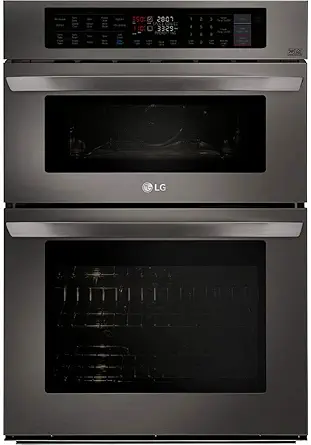
From an aesthetic and structural design standpoint, LG adopts a sleek, high-end architectural language characterized by seamless stainless steel and black stainless finishes, wide-view tinted glass windows, and ergonomic, heavy-duty bar handles. The interior engineering mirrors this attention to detail with brilliant cobalt blue porcelain enamel interiors, smooth-gliding telescopic racks capable of bearing heavy cast-iron cookware, and recessed broil elements that maximize usable vertical space. The physical presence of an LG wall oven communicates durability and luxury, serving as a visual focal point in modern kitchen designs.
Thermomate designs prioritize compact functionality and clean, understated lines that integrate well into smaller contemporary kitchens or modular cabinetry. Often utilizing standard brushed stainless steel trim paired with black tempered glass, Thermomate ovens maintain an appealing visual profile, though the tactile feel of their knobs, racks, and door hinges reflects their cost-effective construction. The interior cavities are smaller—frequently tailored to European 24-inch cutouts rather than the standard American 30-inch standard dominated by LG—making Thermomate's compact footprint a deliberate design strength for micro-apartments, ADUs, and space-limited renovations.