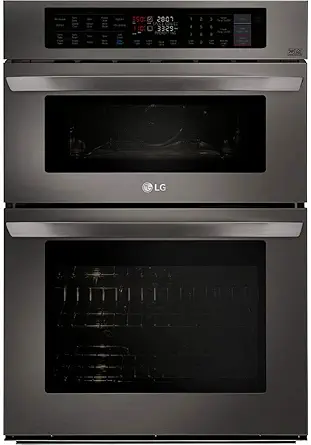
LG vs GE: Overview & Brand Philosophy
When selecting a built-in wall oven, the choice often comes down to two appliance powerhouses with radically different engineering philosophies: LG and GE (General Electric). LG, a global technology titan hailing from South Korea, approaches the kitchen appliance sector through the lens of modern digital innovation, sleek aesthetics, and high-tech convenience. In the wall oven segment, LG prioritizes advanced connectivity, rapid preheating mechanisms, and minimalist, high-end visual appeal aimed at tech-forward homeowners looking to modernize their culinary spaces.
Conversely, GE represents an enduring legacy deeply rooted in traditional American kitchens. Now operating under the umbrella of Haier, GE Appliances maintains a practical, performance-driven design ethos that prioritizes broad mechanical reliability, wide-ranging dimensional compatibility, and intuitive functionality. Across its standard GE, feature-rich GE Profile, and luxury Café lines, the brand designs wall ovens built around the diverse, heavy-duty demands of home cooks who favor robust hardware, proven thermal consistency, and widespread service availability over purely futuristic novelties.
Key Differences & Technological Comparison
While both brands manufacture single, double, and combination wall ovens with true European convection, their implementation of heating systems, user interfaces, and smart capabilities varies significantly:
- Convection & Heating Systems: LG sets itself apart with its proprietary ProBake Convection technology. By moving the primary heating element from the bottom of the cavity directly to the back wall around the fan, LG delivers direct, dry heat that results in superior multi-rack baking uniformity and faster preheat cycles. GE counters with its True European Convection with Direct Air, an advanced dual-reverse fan system that channels airflow evenly from the top down, exceptionally suited for roasting meats, caramelization, and intricate pastry work.
- Smart Integration & Ecosystems: LG integrates its ThinQ ecosystem, offering features like remote monitoring, recipe app sync (SideChef, Innit), and InstaView technology, which allows users to knock twice on the tinted glass door to illuminate the interior without dropping the cavity temperature. GE excels with its SmartHQ platform, which is arguably more capable in precision cooking; GE Profile models offer downloadable over-the-air (OTA) updates, built-in interior cameras for live-streaming browning progress, and native guided-cooking programs tailored for specific cuts and dishes.
- Installation Versatility: Replacement installations heavily favor GE. GE's "FIT Guarantee" pledges up to a monetary match if their wall oven does not seamlessly fit into an existing cut-out of the same width from any standard brand. LG also offers a fit guarantee on select models, but GE's historical presence in domestic construction means their physical footprint matches millions of legacy wall cutouts with fewer cabinet modifications required.
- Interior Maintenance: LG utilizes its EasyClean enamel interior alongside standard high-heat pyrolytic cleaning. EasyClean allows for a 10-minute, low-temperature water-spray wipe-down for minor spills, reducing energy consumption and odors. GE heavily features heavy-duty, self-clean roller racks that can remain inside the oven during a standard high-heat pyrolytic self-clean cycle, eliminating the tedious chore of hand-scrubbing greasy chrome racks.
Pros & Cons Comparison
LG Wall Ovens
- Pros:
- ProBake Convection delivers exceptional multi-rack heat distribution and rapid preheat times.
- Signature InstaView door avoids thermal loss by allowing illumination with a double knock.
- Modern, ultra-sleek exterior aesthetics with intuitive, capacitive touch displays.
- Fast, energy-saving 10-minute EasyClean cycle for routine, light maintenance.
- Cons:
- Third-party independent service and replacement parts availability can be limited in non-metro regions.
- Touch controls on certain mid-range models can be overly sensitive or prone to moisture interference.
GE Wall Ovens
- Pros:
- Industry-leading direct replacement compatibility with the reliable GE FIT Guarantee.
- Self-clean, heavy-duty roller racks eliminate the need to wash hardware manually.
- Vast nationwide service network with readily accessible parts and certified technicians.
- Advanced smart features including in-oven interior cameras and upgradeable OTA software.
- Cons:
- Design language tends to be more utilitarian on standard (non-Profile/Café) tiers.
- Preheat cycles can be marginally slower compared to LG's rear-element-driven design.
Performance, Durability & Value Analysis
In terms of real-world baking and roasting performance, both manufacturers rank near the top of the mass-premium segment, but they cater to slightly different culinary styles. LG’s rear-positioned ProBake element prevents bottom-burning on delicate baked goods, making it an exceptional choice for bakers who routinely fill all three racks with cookies or bread. However, GE’s Direct Air convection airflow system creates superior searing and browning for proteins, creating an edge for savory roasting. From a structural durability standpoint, GE appliances benefit from sturdier hinge designs and industrial-grade internal wiring harnesses, yielding slightly better long-term reliability metrics according to aggregate independent repair service data.
From a cost-to-value perspective, LG generally offers a lower barrier to entry for modern features. Consumers can often obtain smart Wi-Fi controls, true convection, and premium stainless-steel finishes from LG at a lower street price than a comparably equipped GE Profile unit. However, GE counters this upfront cost disparity with lower lifecycle friction: replacement parts are widely stocked, service documentation is universally understood by independent contractors, and trade-in retrofitting requires minimal cabinetry rework. Over a 10-to-15-year ownership horizon, GE frequently proves to be the more economical investment when accounting for maintenance ease and repair turnaround times.
Final Verdict: Which Brand Should You Choose?
Your choice between LG and GE ultimately hinges on whether your priority lies in contemporary tech innovation or seamless replacement and mechanical reliability:
Choose LG if: You are designing a modern kitchen from scratch, place a premium on cutting-edge design, and frequently bake. LG’s ProBake architecture, eye-catching InstaView panel, and budget-friendly access to premium aesthetics make it the superior choice for tech-enthusiasts and contemporary home renovators.
Choose GE if: You are replacing an existing, older wall oven, demand bulletproof parts availability, or want advanced precision cooking features. With its industry-standard FIT Guarantee, robust nationwide technician support, and porcelain-coated, self-clean gliding racks, GE is the safer, more practical choice for traditional cooks who view their wall oven as an indispensable, long-term workhorse.
Features
When evaluating the feature ecosystems of LG and GE wall ovens, the distinction lies between high-tech culinary integration and deeply established, chef-inspired utility. LG leans aggressively into modern consumer-tech trends, equipping its wall ovens with standout proprietary technologies like ProBake Convection, which moves the heating element from the bottom of the cavity to the back wall for more uniform heat distribution. Furthermore, LG distinguishes itself with integrated lifestyle features, including built-in Air Fry, Air Sous Vide, and the iconic InstaView door, which allows users to illuminate the interior with two quick knocks. GE, particularly through its core and Profile lines, focuses on robust, traditional culinary engineering. GE counters with advanced True European Convection with Direct Air, an airflow system engineered to optimize multi-rack baking through channeled venting. GE also holds a technical edge in cooking precision by offering integrated food probes that continuously communicate internal temperatures to the control board to prevent overcooking.
The technological divergence becomes even more pronounced in smart connectivity and automation. GE boasts one of the most mature smart ecosystems in the appliance industry through its SmartHQ platform, featuring guided cooking partnerships (like Flavorly and Innit) and downloadable, over-the-air precision cooking modes that actively update the oven with new algorithms for specific foods. High-end GE models also incorporate precision internal cameras that allow users to monitor browning via smartphone and even utilize food-recognition AI. LG’s ThinQ platform is robust and highly reliable for remote preheating, diagnostics, and notifications, pairing seamlessly with popular recipe apps, but it generally offers fewer downloadable, food-specific cooking algorithms compared to GE. Additionally, GE often integrates heavy-duty, self-clean roller racks that can remain inside during high-heat pyrolytic cleaning cycles, whereas LG relies heavily on its 10-minute EasyClean steam cycle, which is fast and chemical-free but occasionally lacks the brute strength needed for heavily baked-on grease.
Ultimately, the practical trade-offs between the two feature sets reflect different cooking priorities. LG offers a feature package tailored toward tech-forward households that value multi-functional convenience—eliminating standalone countertop appliances like air fryers and sous vide circulators while enjoying an intuitive, visually modern user interface. Conversely, GE provides a deeper, more utilitarian feature set fine-tuned for serious bakers and home cooks who prioritize physical ergonomics, dynamic convective airflow, and expansive precision-temperature monitoring. While LG wins on multi-cooking versatility and sleek novelty, GE maintains the upper hand in culinary consistency, mechanical durability of components, and forward-thinking smart software support.
Performance
When evaluating core cooking performance in wall ovens, GE holds a distinct advantage rooted in thermal engineering maturity and consistent heat distribution. GE’s primary performance driver is its advanced True European Convection system, which integrates a dedicated third heating element surrounding the rear fan to circulate preheated air continuously throughout the cavity. This results in virtually zero cold spots, superior multi-rack baking uniformity, and precise roasting times across both their standard and higher-end Profile lines. LG counters with its proprietary ProBake Convection technology, which moves the primary heating element from the bottom floor directly to the back wall. While this engineering approach significantly reduces preheating times and excels at fast, directional radiant cooking—such as searing meats—it can occasionally lead to uneven browning on the rear edges of delicate baked goods if pans are not properly spaced. Additionally, GE’s hidden ten-pass bake and eight-pass broil elements provide a wider, more uniform radiant footprint than LG’s dual-pass configurations, giving GE the edge for traditional, temperature-sensitive baking.
In terms of specialized cooking modes and modern feature sets, the competition pivots between rapid versatility and precision execution. LG leads the charge in modern lifestyle performance by aggressively integrating high-demand modes like built-in Air Fry, Air Sous-Vide, and ultra-fast Steam-Combi cooking into their mainstream wall ovens. These features perform admirably for moisture retention in proteins and quick, oil-free crisping without requiring lengthy preheats. However, GE matches this versatility while offering superior precision through its commercial-adjacent technology. GE ovens feature precision cooking modes with pre-programmed algorithms tailored to specific proteins and dishes, integrated meat probes that communicate with the heating elements in real time, and on select models, true Steam Cooking and Precision Temperature Probes calibrated down to the degree. While LG’s infrared heating elements deliver faster turnaround times for casual everyday meals, GE offers far more reliable performance tolerances for serious home chefs who demand exact temperature regulation.
The practical trade-offs between the two brands ultimately center on speed versus predictability. LG's wall ovens deliver high-octane performance characterized by rapid heat recovery, ultra-fast preheat sequences, and quick self-cleaning cycles (via the 10-minute EasyClean feature alongside traditional pyrolytic cleaning). This makes LG an exceptional performer for busy households prioritizing throughput and multi-functional culinary trends. Conversely, GE's engineering emphasizes thermal stability and heavy-gauge construction that retains internal heat far more effectively when the oven door is opened. GE’s long-standing consistency in ambient cavity stabilization means baked goods, delicate soufflés, and large roasted turkeys yield more repeatable, predictable results. For rapid, modern, tech-forward cooking, LG delivers strong performance metrics, but for pure thermal fidelity, even heat diffusion, and culinary precision, GE remains the industry benchmark.
Design
When evaluating the design philosophy of wall ovens, LG focuses on sleek, contemporary minimalism, whereas GE leans into functional, versatile ergonomics tailored to traditional and modern kitchens alike. LG wall ovens are immediately recognizable by their distinctive seamless aesthetic, often highlighted by edge-to-edge black glass, flush-to-cabinet integration, and the brand's signature PrintProof stainless steel finish. A hallmark of LG's visual engineering is the InstaView window, which illuminates the interior with two knocks on the glass, paired with a vibrant, cobalt blue porcelain cavity that elevates the visual experience. In contrast, GE prioritizes broad-market architectural cohesion, offering robust, heavy-duty stainless handles, tactile heavy-cast knobs on select models alongside smooth digital touchpads, and a classic dark gray interior. While LG’s aesthetic feels distinctly high-tech and ultra-modern, GE delivers a time-tested, professional-grade visual presence that integrates more naturally into a wider variety of existing kitchen cabinet styles.
From an engineering and user-interface perspective, both brands exhibit distinct technical strengths and ergonomic trade-offs. LG excels in digital touch integration, offering smooth LCD and capacitive control panels that minimize physical clutter, though users who prefer tactile feedback may find the lack of physical dials less intuitive when navigating menus quickly. Structurally, LG utilizes advanced soft-close hinges and Glide racks engineered for smooth operation, yet the brand's emphasis on clean lines can sometimes result in shallower handle profiles that offer slightly less grip. GE, conversely, excels in functional ergonomics through its precision engineering of heavy-duty, roller-bearing racks that can remain in the oven during self-clean cycles—a notable engineering convenience LG rarely matches. GE also provides greater installation flexibility with its "Fit Guarantee," ensuring that its cut-out dimensions are engineered to replace standard existing wall oven spaces with minimal cabinet modification, a crucial design advantage for remodelers.
Ultimately, the design trade-off between LG and GE comes down to a choice between high-tech futuristic styling and robust practical utility. LG is the superior design choice for consumers seeking a visually striking, smart-forward appliance featuring high-visibility glass, clean touch controls, and striking interior finishes that act as a visual centerpiece. Conversely, GE is the superior technical design for consumers prioritizing structural durability, tactile control options, easier retrofitting, and low-maintenance features like porcelain-coated, self-cleanable racks. While LG pushes the envelope on modern kitchen aesthetics, GE relies on pragmatic, deeply refined mechanical engineering designed to withstand the rigors of heavy daily cooking.
Compare current retail pricing, active promotions, and verified stock availability directly from authorized stores: