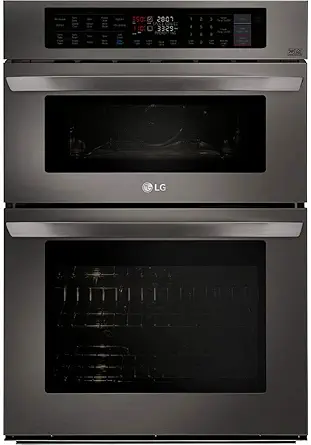
LG vs Frigidaire: Overview & Brand Philosophy
When selecting a built-in wall oven, modern consumers are caught between two distinct design and engineering philosophies: forward-thinking, connected appliance design and practical, utility-driven culinary tradition. LG, a South Korean tech titan that has spent two decades disrupting the major home appliance landscape, treats the wall oven as a high-tech centerpiece of the smart kitchen. LG’s design language prioritizes sleek aesthetics, innovative digital interfaces, and cutting-edge convection technologies aimed at tech-savvy homeowners looking for a modern architectural edge.
Conversely, Frigidaire—an American legacy brand operating under the Electrolux umbrella—approaches the wall oven market with a focus on democratic practicality, intuitive functionality, and accessibility. Frigidaire's lineup, primarily stratified across its core line and the upgraded Frigidaire Gallery and Professional series, appeals to consumers who want dependable culinary performance without a steep learning curve or excessive digital complexity. While LG pushes the envelope of what a digital kitchen can be, Frigidaire focuses on straightforward ergonomics, tried-and-true heating systems, and replacement-friendly form factors.
Understanding these distinct brand philosophies is essential for buyers navigating this category. LG is building for the future of connected homes, where your oven communicates with your smartphone and utilizes specialized baking algorithms. Frigidaire builds for everyday utility, offering workhorse reliability, classic styling, and features that cater directly to active family kitchens prioritizing convenience and fast weeknight meal prep.
Key Differences & Technological Comparison
The technological divide between LG and Frigidaire wall ovens is most apparent across three core operational pillars: convection architecture, interface ecosystems, and cooking mode versatility.
Convection Systems: LG heavily features its proprietary ProBake Convection® technology across its mid-to-high-tier wall ovens. Unlike traditional systems that place the primary heating element at the bottom of the cavity, ProBake moves the heating element to the back wall surrounding the convection fan. This promotes optimal, dry-heat distribution and significantly reduces hot spots, making it exceptional for multi-rack cookie baking and precision roasting. Frigidaire, particularly in its Gallery and Professional tiers, utilizes Total Convection or True Convection (a third-element system behind the fan). While effective at even heat circulation, it generally lacks the aggressive directional airflow engineered into LG's ProBake system, though Frigidaire compensates by using this airflow to pioneer built-in Air Fry and Slow Cook modes directly inside the main cavity.
Smart Connectivity & Controls: LG leads decisively in the smart appliance space. Powered by the LG ThinQ® ecosystem, its ovens offer comprehensive remote monitoring, push notifications, and integration with Amazon Alexa, Google Assistant, and recipe services like SideChef and Innit. Premium LG models also feature the "InstaView®" window, allowing users to knock twice on the glass to illuminate the interior without dropping the cavity temperature. Frigidaire takes a more conservative approach; while select models now offer Wi-Fi connectivity, the brand places greater emphasis on tactile control panels, clear LED displays, and immediate, one-touch cooking modes that do not require an app or network connection to utilize efficiently.
Specialty Cooking Modes & Cleanability: Frigidaire has established a major competitive advantage by packing extensive multi-functionality into its Total Convection ovens, offering dedicated modes for Air Fry, No Preheat, Steam Bake, Steam Roast, and Dehydrate in a single unit. For maintenance, Frigidaire frequently includes a dual-cleaning approach: a fast 30-minute steam clean for light spills alongside a traditional high-heat pyrolytic self-clean cycle. LG counters with its EasyClean® technology, a 10-minute water-based cycle designed for frequent, chemical-free upkeep, supported by heavy-duty pyrolytic self-clean cycles on most models for heavy grease accumulation.
Pros & Cons Comparison
LG Wall Ovens
- Pros:
- Advanced ProBake Convection delivers class-leading heat uniformity.
- Market-leading smart home integration via the robust LG ThinQ platform.
- Signature aesthetic features like InstaView glass and brilliant blue interior enamel.
- Ultra-fast 10-minute EasyClean cycle for low-effort routine maintenance.
- Cons:
- Higher baseline price point compared to entry-level competitors.
- Touchscreens and electronics can be intimidating for traditional cooks.
- Customer service and repair technician availability can vary by geographic region.
Frigidaire Wall Ovens
- Pros:
- Exceptional value-to-feature ratio, especially in the Frigidaire Gallery series.
- Versatile built-in features including Air Fry, Slow Cook, and Steam Bake.
- Frigidaire Fit Promise guarantees direct dimensional replacement for existing cutouts.
- Intuitive, uncomplicated control interfaces with dedicated physical buttons.
- Cons:
- Smart features and mobile app integration are basic compared to LG.
- Exterior finishes and trim pieces can feel lighter and less premium.
- Convection fans can run noticeably louder than LG's brushless fan assemblies.
Performance, Durability & Value Analysis
From a culinary performance standpoint, LG typically edges out Frigidaire for precision baking. The placement of the rear heating element in LG ProBake units eliminates the intense floor heat common in standard ovens, preventing the bottoms of delicate pastries and breads from scorching before the center finishes cooking. However, for everyday multi-purpose cooking—such as crisping chicken wings with Air Fry, reheating pizza, or using the No Preheat feature for frozen dinners—Frigidaire proves exceptionally capable and often faster to deploy. In terms of build quality, LG incorporates heavier-gauge door hinges, smoother gliding racks, and a noticeably more insulated door assembly, contributing to lower external heat transfer into the kitchen during extended roasting cycles.
Regarding durability, long-term serviceability, and overall value, the dynamic shifts slightly. Frigidaire benefits from decades of widespread distribution in North America; replacement parts (such as igniters, standard heating elements, and control boards) are widely available, and virtually any independent appliance technician can service them without proprietary diagnostic tools. LG wall ovens utilize more proprietary electronic components, which can sometimes lead to longer repair lead times if a main logic board fails. However, in terms of price-to-performance value, Frigidaire frequently retails for 15% to 25% less than a comparably sized LG unit, making it an undeniable value powerhouse for budget-conscious remodels, whereas LG commands a justifiable premium for superior finishes and advanced culinary technology.
Final Verdict: Which Brand Should You Choose?
Choose an LG Wall Oven if you prioritize modern kitchen aesthetics, advanced smart home automation, and serious baking precision. LG is the superior choice for passionate bakers who require perfectly uniform heat distribution across multiple racks, as well as tech enthusiasts who value checking roast temperatures via smartphone or knocking on the door to inspect a soufflé without losing heat. It is a premium, design-forward investment built for modern living.
Choose a Frigidaire Wall Oven (especially from the Gallery or Professional lines) if you want maximum culinary versatility, easy maintenance, and outstanding value for money. Frigidaire is ideal for busy families who will frequently use everyday modes like Air Fry, Steam Bake, and rapid preheating without wanting to navigate complex digital menus. If you are replacing an older wall oven and want a straightforward, reliable, and cost-effective upgrade that fits effortlessly into standard cabinet cutouts, Frigidaire is the pragmatic winner.
Features
When evaluating feature sets, LG approaches the wall oven market with a heavy emphasis on smart home integration and modern culinary technology. Most mid-to-high-tier LG wall ovens are equipped with their proprietary ProBake Convection system, which moves the primary heating element from the bottom of the cavity to the rear wall, combining it with a dual-speed fan to optimize heat distribution and significantly shorten preheat cycles. Beyond core thermal dynamics, LG leads substantially in culinary versatility and connectivity. Many models incorporate built-in Air Fry, Air Sous-Vide, and Steam Combi functionalities, effectively consolidating specialized countertop appliances into a single unit. These advanced cooking modes are further elevated by LG’s ThinQ ecosystem, which offers robust Wi-Fi capabilities, remote diagnostics, scan-to-cook recipe integration, and seamless voice control via Amazon Alexa or Google Assistant. The engineering leans modern, polished, and digitally centric, catering to tech-savvy consumers who prioritize precision cooking modes and proactive appliance maintenance.
Frigidaire, particularly through its widely popular Frigidaire Gallery and Frigidaire Professional series, focuses its engineering on high-utility, utilitarian features designed for practical, everyday reliability. While Frigidaire has embraced modern cooking modes—most notably pioneering integrated Air Fry and utilizing Total Convection to support multiple specialized racks—its interface philosophy remains distinctly analog and tactile. Frigidaire excels in technical convenience features such as true self-cleaning complemented by rapid 30-minute steam-clean cycles, effortless glide racks, and integrated meat probes that communicate directly with the oven's central control board to automatically shift to a warming state upon hitting target internal temperatures. Unlike LG, Frigidaire limits its reliance on digital smart hubs, offering more modest connected capabilities and instead prioritizing intuitive, direct-access physical knobs and capacitive touch buttons that avoid the learning curves or software vulnerabilities associated with heavy app-based ecosystems.
The ultimate trade-off between the two brands centers on sophisticated automation versus tactile usability. LG’s technical strength lies in its comprehensive sensor technology, ultra-even convection engineering, and cutting-edge aesthetic that appeals to modern, connected households; however, this software reliance introduces potential pain points regarding firmware updates and Wi-Fi stability. Conversely, Frigidaire provides exceptional mechanical and thermal utility, delivering high-output convection cooking and robust convenience features without the premium price tag often demanded by advanced smart platforms. For consumers prioritizing cutting-edge culinary techniques, smart automation, and specialized modes like Air Sous-Vide, LG delivers a distinctly superior feature suite, whereas Frigidaire remains the stronger pragmatic choice for users who demand intuitive, button-driven control and robust core-baking reliability.
Performance
When evaluating thermal performance and culinary engineering, LG wall ovens distinguish themselves through advanced heat distribution systems and modern cooking technology. Central to LG's operational capability is its proprietary ProBake Convection system, which relocates the primary heating element from the oven cavity floor directly to the back wall. Paired with a dual-speed fan, this configuration delivers direct, uniform heat distribution that significantly minimizes cold spots, allowing for multi-rack baking without the need to rotate trays halfway through the cycle. LG models also excel in rapid preheating and incorporate specialized modes such as built-in Air Fry, precision Air Sous Vide, and Steam Combi cooking in their higher-tier units. These technical strengths ensure tight temperature control and moisture retention, yielding professional-grade crusts and evenly cooked proteins, though the reliance on sophisticated digital sensor suites can present a steeper learning curve for users seeking purely conventional operation.
Frigidaire takes a more direct, utilitarian approach to performance that emphasizes dependable brute force, rapid recovery times, and straightforward heating consistency. Models equipped with Frigidaire's Total Convection system utilize a robust rear third-heating element and an optimized variable-speed fan to achieve consistent airflow across the cavity. Where Frigidaire frequently outperforms competitors in practical use is in sheer everyday responsiveness; its PowerPlus No Preheat technology allows users to skip traditional warming phases for single-rack items without sacrificing baseline bake quality. Frigidaire ovens also feature heavily calibrated multi-tier broilers that deliver intense, edge-to-edge radiant heat, making them superior for rapid searing and caramelization compared to LG’s gentler broiler dispersion. However, while Frigidaire effectively handles daily baking and roasting, its temperature regulation can exhibit slightly wider thermal swings during prolonged low-temperature cycles compared to the finely tuned digital modulation found in LG’s high-end convection units.
Ultimately, the performance trade-off between the two brands hinges on whether a consumer prioritizes innovative, precision-driven culinary versatility or streamlined, heavy-duty speed. LG is the superior performer for baking purists and culinary hobbyists who demand tight temperature uniformity, exceptional moisture control, and modern specialized cooking modes. Conversely, Frigidaire appeals to home cooks who value rapid workflow, straightforward functionality, and powerful broiling capability. While LG captures the technical high ground with its back-wall element engineering and low-temperature accuracy, Frigidaire delivers exceptional pragmatic value with rugged, fast-heating performance that reliably executes foundational kitchen tasks with minimal fuss.
Design
When evaluating the design paradigms of LG and Frigidaire wall ovens, the two brands cater to fundamentally different aesthetic and functional sensibilities. LG positions its design language firmly in the contemporary, tech-forward space. The brand emphasizes sleek, architectural minimalism with edge-to-edge black glass, ultra-flush installation capabilities, and streamlined pro-style handles that integrate seamlessly into high-end, modern kitchens. A signature engineering flourish is LG’s proprietary brilliant blue interior enamel, which not only elevates the visual presentation when the door is opened but also optimizes visibility by reflecting interior halogen lighting. In contrast, Frigidaire—particularly through its Frigidaire Gallery and Professional series—favors a classic, commercial-inspired aesthetic. Frigidaire champions heavy-gauge Smudge-Proof stainless steel that resists fingerprints and smudges, pairing it with robust, industrial-style control knobs and square-profile handles. While Frigidaire's design is decidedly more utilitarian and traditional than LG’s sleek facades, its exterior materials are exceptionally well-engineered for the wear and tear of active family kitchens.
The interface engineering and user experience (UX) design further demarcate the technical philosophies of both manufacturers. LG leans heavily into digital-first interactions, outfitting its wall ovens with high-resolution color LCD touchscreens or SmoothTouch glass controls embedded directly into the glass fascia. This eliminates physical crevices, making the exterior remarkably easy to wipe clean while providing a dynamic display for smart features via the ThinQ ecosystem, including remote monitoring and step-by-step recipe navigation. Frigidaire, conversely, adheres to a tactile, hybrid design approach. Even on its high-end single and double wall ovens, Frigidaire integrates physical push-and-turn knobs alongside responsive capacitive touch displays. This hybrid interface ensures intuitive, instant parameter adjustments without the need to traverse digital sub-menus, appealing to traditional cooks who prioritize tactile reliability and rapid accessibility over digital immersion.
From a practical and spatial engineering standpoint, both brands present distinct design trade-offs inside the cavity. LG excels in interior engineering by integrating dual-speed, rear-wall convection systems that sit flush, maximizing usable interior capacity (frequently offering up to 4.7 to 4.9 cubic feet per single cavity). LG also incorporates its InstaView technology—where double-knocking on the tinted glass illuminates the interior—preventing heat loss while cooking. Frigidaire, while offering slightly more standard internal volumes (typically 4.3 to 4.6 cubic feet), focuses on ergonomic, heavy-duty interior fixtures. Frigidaire’s engineering strengths shine in its gliding Effortless Rack systems that slide out with minimal friction on ball bearings, fully accommodating heavy cast-iron Dutch ovens and oversized roasters. Ultimately, the choice in design comes down to modern sophistication versus utilitarian durability: LG delivers a futuristic, high-capacity, showpiece appliance, while Frigidaire offers a durable, commercially styled workhorse built for seamless ergonomic convenience.
Compare current retail pricing, active promotions, and verified stock availability directly from authorized stores: