Valve vs HTC: Overview
Comparing Valve and HTC helps you determine which brand is best suited for your needs in VR Headsets. Both brands offer strong choices depending on your budget and key feature requirements.
Key Features & Comparison
Evaluate factors such as build quality, warranty, customer satisfaction, and total value before making your final purchase choice between Valve and HTC.
Features
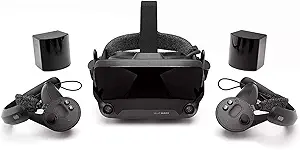
Valve’s feature set is defined by depth and targeted innovation rather than sheer variety. The centerpiece of Valve's offering is the revolutionary 'Knuckles' controllers, which feature 87 sensors tracking individual finger movement, grip pressure, and hand presence, fundamentally transforming how players interact with virtual worlds. Combined with industry-leading off-ear nearfield speakers that create natural spatial audio without physical ear fatigue, Valve prioritizes sensory immersion. However, the ecosystem remains tethered to external base stations and PC hardware, completely foregoing native standalone functionality, wireless streaming out of the box, or integrated mixed-reality color passthrough.
HTC, by contrast, provides a technologically broader and more modular array of features across its diverse portfolio. Modern headsets like the Vive XR Elite and Vive Focus 3 offer full standalone processing, hot-swappable batteries, high-resolution full-color RGB passthrough for mixed reality, and optional modular add-ons such as integrated eye-tracking and facial-tracking modules. HTC also provides robust inside-out optical tracking, liberating users from permanent lighthouse installations. While HTC's input controllers generally lack the nuanced sub-finger capacitive tracking found on Valve's hardware, its willingness to adopt hybrid standalone functionality and modular biometrics makes it a substantially more versatile toolkit for developers and modern VR users.
Performance
Performance benchmarks reveal contrasting priorities between display fidelity and fluid responsiveness. Valve’s Index leans heavily into temporal fluidity and latency reduction, sporting a dual-LCD panel with an ultra-smooth refresh rate that can be overclocked up to 144Hz. This higher frame rate, paired with sub-millimeter sub-millisecond external SteamVR Base Station 2.0 tracking, ensures that latency-sensitive applications like competitive rhythm games or flight simulators run with exceptional fluidity and zero tracking drift. However, the Index’s 1440x1600 per-eye resolution is increasingly dated, leading to a noticeable screen-door effect when compared against modern high-density panels.
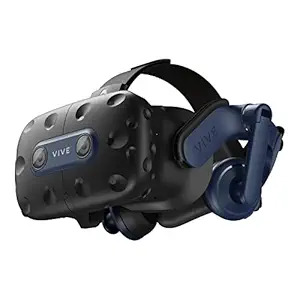
HTC shifts the performance balance toward raw visual clarity and processing flexibility. Hardware like the Vive Pro 2 delivers a staggering 2448x2448 pixels per eye (5K combined resolution) running at 120Hz, offering razor-sharp text legibility and photorealistic environments that far outclass the Valve Index in visual fidelity. Furthermore, HTC’s standalone devices leverage dedicated Snapdragon XR2 silicon to deliver competent on-board processing without requiring a high-end gaming PC. While HTC’s inside-out camera tracking can occasionally struggle in unideal lighting conditions compared to Valve's flawless laser tracking, its sheer visual resolution and adaptable performance profiles give it a decisive edge for visual analysis and fidelity.
Design
The industrial design of Valve's hardware demonstrates a user-centric focus on ergonomics, weight distribution, and acoustic comfort. The Index uses premium, antimicrobial moisture-wicking fabrics, an intuitive mechanical interpupillary distance (IPD) slider, and dual-element canted lenses that maximize the field of view up to approximately 130 degrees. The standout design achievement remains the suspended BMR speakers, which eliminate contact pressure and ear sweating entirely. However, the overall package is undeniably bulky, tethered by a thick, heavy cable, and requires a dedicated, static room setup to mount the tracking lighthouses.
HTC pursues a modern, transformative design philosophy that prioritizes modularity, transportability, and industrial durability. The Vive XR Elite showcases this engineering forwardness through its convertible design, allowing users to remove the rear battery cradle and swap it for lightweight temple glasses arms, dropping the headset down to an astonishingly light profile for extended productivity sessions. HTC’s enterprise headsets also feature durable, wipe-clean synthetic materials engineered for high-turnover multi-user environments. While HTC’s optical lens designs have occasionally drawn criticism for glare and concentric-ring lens artifacts, its daring form factors, detachable components, and lightweight architectures present a substantially more modern vision of VR hardware than Valve's classic, utilitarian construct.