Samsung vs HTC: Overview
Comparing Samsung and HTC helps you determine which brand is best suited for your needs in VR Headsets. Both brands offer strong choices depending on your budget and key feature requirements.
Key Features & Comparison
Evaluate factors such as build quality, warranty, customer satisfaction, and total value before making your final purchase choice between Samsung and HTC.
Features
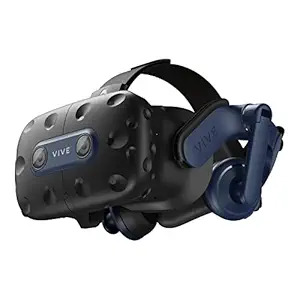
HTC’s feature set is defined by its deep versatility, modularity, and focus on immersive tracking enhancements. Devices like the HTC Vive Pro 2 and Vive XR Elite highlight the brand’s commitment to hardware extensibility, boasting support for both external SteamVR lighthouse tracking and inside-out optical camera arrays. HTC frequently integrates or supports advanced biometric sensors, including native eye-tracking modules, full lip and facial motion captures, and wrist-worn trackers. Furthermore, HTC’s dual-mode functionality allows users to toggle between tethered high-performance PC VR and standalone untethered operation, providing unprecedented flexibility for developers, enterprise training, and advanced simulators.
Samsung counters by integrating display-first innovation and deep hardware optimization into its feature portfolio. Historically demonstrated through the Odyssey+ with its patented Anti-Screen Door Effect (Anti-SDE) technology, Samsung focuses on maximizing visual immersion and onboard sensory comfort. Rather than relying heavily on external modular add-ons, Samsung integrates premium built-in spatial audio calibrated by AKG, integrated dual-array microphones, and intuitive physical IPD (interpupillary distance) dials. Samsung’s broader feature strategy also ties directly into its extensive software ecosystems and smart display capabilities, promising streamlined connectivity, effortless multi-device streaming, and superior mobile-platform synergy compared to HTC’s more utility-driven utility software.
Performance
Performance benchmarks heavily favor HTC when evaluating tracking precision, refresh rate overhead, and latency management across demanding simulation environments. By utilizing SteamVR’s external sub-millimeter laser tracking infrastructure in its enthusiast lines, HTC eliminates the occlusion blind spots that frequently plague inside-out camera systems. High-end Vive headsets often boast industry-leading refresh rates of up to 120Hz and expansive fields of view stretching past 120 degrees horizontally. When running graphically intensive simulations or competitive VR titles, HTC’s refined DisplayPort tethering ensures uncompressed, artifact-free visual throughput that preserves pure compute performance from modern dedicated graphics cards.
Samsung shines exceptionally in raw optical performance, dynamic contrast, and pixel response times, areas directly benefiting from the company's dominance in panel manufacturing. Samsung's VR implementations, characterized by custom AMOLED panels, provide infinite contrast ratios, deep true blacks, and exceptionally vibrant color gamuts that LCD-based competitors simply cannot match. This eliminates the muddy gray tones often seen in dark virtual scenes on standard headsets. While Samsung’s tracking typically relies on inside-out visual-inertial algorithms that can be marginally more prone to controller occlusion behind the back or close to the face, its smooth processing pipeline and superior visual fidelity create an intensely realistic, ghosting-free visual throughput.
Design
HTC embraces an industrial, utilitarian design language focused on modular weight distribution and professional durability. Headsets like the Vive XR Elite demonstrate clever mechanical engineering by incorporating a detachable rear battery cradle that transforms the headset into a lightweight pair of immersive glasses. HTC places a major emphasis on ventilation, active cooling systems to prevent lens fogging, and replaceable, hygienic face cushions suited for multiple users in arcade or commercial environments. While this design ethos occasionally results in a bulkier, more complex aesthetic, it delivers robust build quality capable of withstanding hundreds of hours of rigorous physical movement.
Samsung approaches headset architecture from a consumer-first industrial design perspective, prioritizing sleek contours, streamlined aesthetics, and immediate plug-and-play comfort. Taking cues from modern wearable tech, Samsung often utilizes a halo-style headband design that distributes the headset’s weight across the forehead and crown of the skull rather than pulling against the user’s facial structure. The integration of premium fabrics, soft-touch plastics, and concealed cabling gives Samsung hardware a clean, living-room-friendly appearance. While Samsung’s designs are generally less modular than HTC’s, they provide superior out-of-the-box ergonomic balance that reduces neck strain during extended seated or casual room-scale viewing sessions.