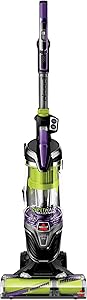
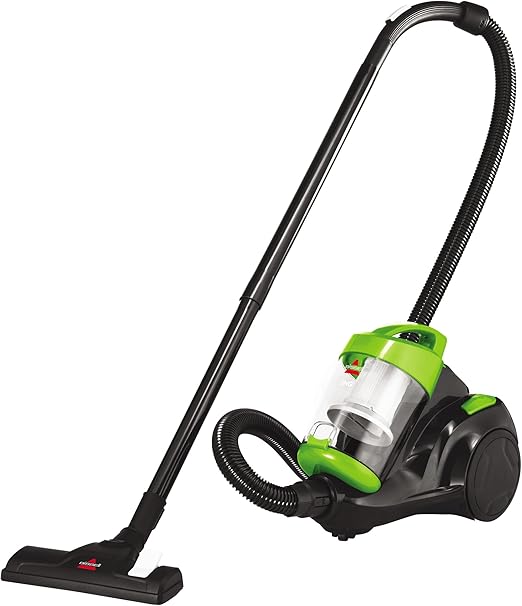
Bissell vs Tineco: Overview
Comparing Bissell and Tineco helps you determine which brand is best suited for your needs in Vacuum Cleaners. Both brands offer strong choices depending on your budget and key feature requirements.
Key Features & Comparison
Evaluate factors such as build quality, warranty, customer satisfaction, and total value before making your final purchase choice between Bissell and Tineco.
Features
In terms of feature sets, Tineco generally outpaces Bissell by leveraging proprietary smart technologies that actively manage the cleaning process. The hallmark of Tineco’s lineup is the iLoop Smart Sensor technology, which detects the severity of wet and dry messes in real time and automatically modulates suction power, water flow, and brush roller speed to optimize cleaning efficacy and battery longevity. Tineco machines also boast interactive full-color LED/OLED displays, multilingual voice prompts, app connectivity for maintenance tracking, and advanced self-cleaning cycles that use centrifugal drying or heated air to prevent roller mildew and odor buildup, creating a hands-off post-cleaning maintenance workflow.
Bissell approaches features from a more mechanical, utilitarian perspective, concentrating heavily on pet hair management and deep extraction mechanisms. Features like the specialized Pet Hair Strainer inside the dirty water tank, multi-surface tangle-free brush rolls, and dual-action rotating brushes highlight Bissell's focus on physical debris separation. Higher-end Bissell models incorporate automated chemical dispensing, two-tank systems with larger liquid volumes, and targeted steam-infusion capabilities (such as the HydroSteam series) to sanitize surfaces without relying purely on high-frequency oscillation. While Bissell's interfaces are more utilitarian—favoring physical tactile switches over digital screens—they provide predictable, user-controlled performance without relying on sensor calibration.
Performance
Performance dynamics reveal distinct engineering trade-offs, particularly across different flooring materials. Bissell excels dramatically in raw extraction power and carpet deep-cleaning. Utilizing high-wattage corded motors in many of its flagship cleaners, Bissell delivers relentless, unthrottled suction that pulls deeply embedded pet dander, dirt, and saturated liquid from plush carpets and area rugs. In wet-dry applications, Bissell's vigorous scrub-roller rotation and generous fluid delivery make short work of dried, sticky residues on hard floors, although excessive moisture dispersion can occasionally leave streaks if the pass is executed too quickly.
Tineco, by contrast, dominates hard-surface maintenance through calibrated balance and high-speed brushless digital motors. Because the majority of Tineco’s lineup consists of cordless units, raw mechanical suction is deliberately counterbalanced by precision water application and rapid roller rotation, ensuring hard floors dry within minutes without water spots or pooling. For sealed hardwoods, tile, and laminate, Tineco offers superior edge-to-edge cleaning due to zero-clearance brush head designs that pick up debris flush against baseboards. However, on medium-to-high pile carpets, Tineco’s wet-dry models are typically ineffective or restricted, ceding carpet restoration performance entirely to Bissell.
Design
From an industrial design standpoint, Bissell adheres to a pragmatic, heavy-duty aesthetic that prioritizes high fluid capacity and durable plastics. The chassis of a typical Bissell machine features oversized dirty and clean water reservoirs, wide cleaning paths, and high-impact ABS construction meant to withstand rigorous impacts against furniture. This focus on capacity and durability results in a heavier, bulkier footprint, often exceeding 12 to 15 pounds. Maneuverability can feel somewhat cumbersome, particularly when navigating tight corners or carrying the machine between different floors of a multi-level home, though the stable base allows it to stand upright securely without external docking.
Tineco approaches design with minimalist, modern ergonomics, producing sleek appliances that blend seamlessly into high-end interiors. Tineco units feature a slender vertical profile, low-profile pivot joints, and motorized self-propulsion that actively pulls the vacuum forward, reducing the user’s physical push-pull effort to near zero. While the liquid tanks are noticeably more compact than Bissell’s—requiring more frequent refilling and emptying during large-scale cleaning jobs—the reduction in size directly enhances agility around obstacles. Furthermore, Tineco's compact, all-in-one charging docks neatly store accessories and manage automated maintenance cycles, presenting a significantly tidier footprint than Bissell’s manual rinse trays.