







Bissell vs Dyson: Overview
Comparing Bissell and Dyson helps you determine which brand is best suited for your needs in Vacuum Cleaners. Both brands offer strong choices depending on your budget and key feature requirements.
Key Features & Comparison
Evaluate factors such as build quality, warranty, customer satisfaction, and total value before making your final purchase choice between Bissell and Dyson.
Features
Feature deployment between the two brands highlights a stark contrast between mechanical utility and digital sophistication. Dyson's feature suite is characterized by cutting-edge sensors and high-tech feedback loops. Its flagship cordless models feature piezoelectric dust sensors that actively measure and count micro-particles in real time, automatically adjusting motor speed based on debris density and displaying diagnostic cleaning reports on high-definition LCD screens. Furthermore, Dyson’s inclusion of optical illumination—such as angled green lasers integrated into cleaner heads to expose invisible floor dust—demonstrates an obsession with microscopic precision. These features are augmented by sophisticated de-tangling hair removal vanes engineered directly into the polycarbonate brush bars, alongside comprehensive whole-machine sealed HEPA systems that trap 99.99% of particles down to 0.1 microns.
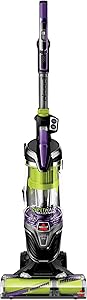
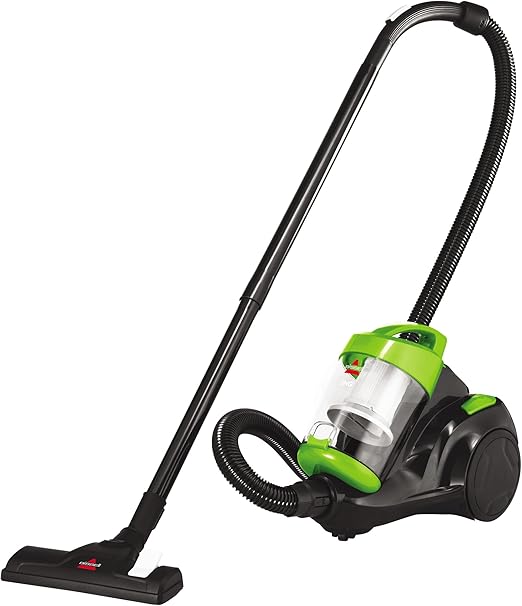
Bissell approaches feature integration from a more tactile, mess-specific perspective, focusing heavily on chemical and fluid integration rather than digital interfaces. Bissell's standout capability lies in its fluid dynamics, offering dual-tank systems that separate clean solution from dirty recovery water, integrated formula dispensers, and specialized motorized brush rolls engineered for deep carpet scrubbing. In their dry vacuums, Bissell provides practical pet-centric innovations such as the Tangle-Free Brush Roll, Febreze-infused scent filters, and internal spooling systems that compress hair inside the dirt cup for hands-free emptying. While Bissell lacks Dyson’s micro-sensor arrays, automated suction governors, and digital telemetry, it compensates by providing multi-functional cleaning modalities—namely deep wet extraction—that Dyson’s strictly dry-suction architecture simply cannot perform.
Performance
Performance metrics reveal distinct operational advantages for each brand depending on the medium and surface being treated. Dyson is the undisputed leader in dry suction power, cubic feet per minute (CFM) airflow, and cyclonic separation efficiency. Powered by its hyperdymium motors spinning upwards of 125,000 RPM, Dyson cordless vacuums generate sustained suction that routinely outperforms many full-sized corded uprights. The multi-stage radial cyclones generate centrifugal forces exceeding 100,000 g, effectively flinging microscopic dust directly into the bin without clogging the pre-motor or post-motor filters. This architecture ensures zero loss of suction across diverse surfaces, delivering peerless deep-cleaning agitated performance on medium-to-high pile carpets as well as static micro-dust removal from delicate hardwood floors.
Where Bissell excels and frequently out-performs Dyson is in real-world messy scenarios involving wet, viscous, or deeply ground-in organic debris. Dyson vacuums are engineered strictly as dry-particulate vacuums; introducing liquids into a Dyson cyclone system can ruin the motor and foster severe microbial growth. Bissell, conversely, excels in wet-wash extraction and heavy-duty pet soil remediation. Its upright carpet cleaners and CrossWave lines utilize high-torque continuous brush rotation paired with targeted fluid injection and powerful wet-lift suction, physically washing and extracting mud, urine, and food spills from carpet fibers and hard floors. While Bissell’s standard dry vacuums experience higher filter loading rates and slightly lower absolute CFM compared to Dyson, their performance on high-volume pet hair and stubborn surface grime remains exceptionally robust for the price.
Design
The industrial design of Dyson vacuums reflects a futuristic, form-follows-function aesthetic dominated by radical ergonomics and lightweight material choices. Utilizing advanced polycarbonates and ABS materials, Dyson achieves an extraordinary strength-to-weight ratio, allowing users to effortlessly hoist full-size cordless vacuums overhead for ceiling cleaning or quickly reconfigure them into handheld formats. The center-of-gravity engineering positions the motor, battery pack, and bin adjacent to the user's hand, optimizing pivot mechanics and wrist comfort. Dyson’s point-and-shoot hygienic bin ejection system exemplifies mechanical elegance, wiping the inner shroud clean while depositing debris in a single motion. However, this minimalist, tight-tolerance design can sometimes result in components that feel delicate, and the reliance on continuous trigger-holds in older variants drew ergonomic criticism.
Bissell embraces a traditional, workhorse design philosophy that emphasizes structural rigidity, broad footprints, and straightforward component accessibility. Bissell uprights and wet-dry cleaners are visibly heavier and bulkier, relying on broad bases, substantial cord lengths, and high-capacity water and dirt reservoirs. While this bulk makes Bissell units less nimble on tight staircases or overhead trim, it delivers stability and sustained cleaning capacity without requiring mid-cycle battery recharges or frequent bin emptying. Bissell designs also emphasize user-serviceability, featuring clear-access brush roll windows, easily removable fluid tanks, and intuitive foot-pedal releases. While Dyson's sleek, space-age aesthetic serves modern, compact living spaces, Bissell’s rugged, high-capacity construction feels built to survive the high-impact demands of chaotic, multi-pet households.
Compare current retail pricing, active promotions, and verified stock availability directly from authorized stores:
Compare current retail pricing, active promotions, and verified stock availability directly from authorized stores: