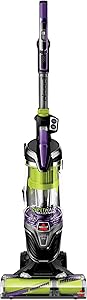
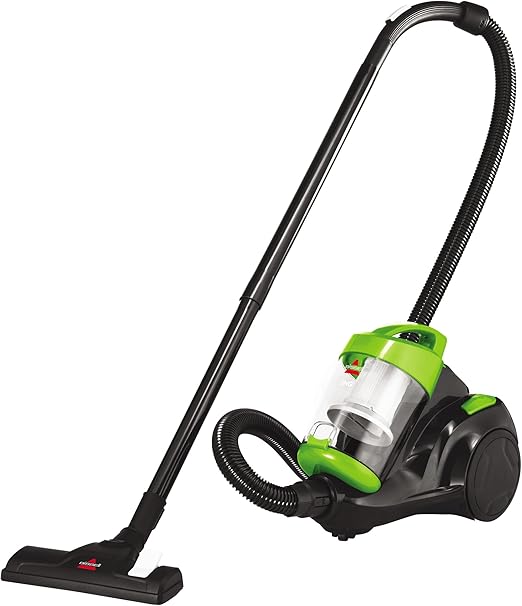
Bissell vs Aspiron: Overview
Comparing Bissell and Aspiron helps you determine which brand is best suited for your needs in Vacuum Cleaners. Both brands offer strong choices depending on your budget and key feature requirements.
Key Features & Comparison
Evaluate factors such as build quality, warranty, customer satisfaction, and total value before making your final purchase choice between Bissell and Aspiron.
Features
Feature distribution reveals the distinct product development priorities of each brand, with Bissell emphasizing task-specific innovations and Aspiron focusing on core essentials. Bissell vacuums, particularly within their CleanView and Pet Hair Eraser lineups, incorporate specialized cyclonic separators, tangle-free brush rolls, onboard Febreze-scented filtration, and quick-release wands tailored for pet owners. Furthermore, Bissell’s pioneering wet-dry vacuum lines introduce dual-tank technology that completely separates clean solution from dirty recovery water, complemented by self-cleaning docking stations that automate post-vacuum maintenance—capabilities that Aspiron does not match.
Aspiron counters by packing classic, high-utility features into their canister and upright models, often matching standard European-style cleaning mechanics. Many Aspiron canister units feature variable suction speed dials, automated cord rewinds, multi-stage HEPA filtration systems, and telescopic metal wands right out of the box. While these features are practical and well-executed for day-to-day debris collection, they rely on conventional vacuum technology rather than proprietary engineering. Bissell offers a more diverse and technically sophisticated feature set tailored to modern multi-surface homes, while Aspiron provides the quintessential mechanical toolset necessary for straightforward floor-to-ceiling cleaning.
Performance
In terms of cleaning performance, both brands excel in different environments owing to their internal motor dynamics and airflow designs. Bissell’s performance is highlighted by its specialized floor heads that balance raw static lift with aggressive mechanical agitation. On medium-to-high pile carpets, Bissell’s motorized brush rolls outperform Aspiron by actively dislodging embedded pet hair, dander, and fine dust from deep within carpet fibers. Furthermore, in wet-dry configurations, Bissell provides unmatched performance by simultaneously washing and extracting liquids, which solves sticky spills and biological stains that traditional dry vacuums cannot address.
Aspiron, on the other hand, frequently integrates powerful, high-wattage motors (often reaching 1200W or higher in canister formats) that generate exceptional raw suction power and airflow (CFM). This makes Aspiron particularly formidable on hard flooring, low-pile rugs, and above-floor surfaces like curtains and upholstery where pure suction lift is more critical than motorized roller agitation. However, Aspiron models often rely on air-driven turbo brushes rather than dedicated secondary brush motors, leading to reduced agitation performance when dragged across dense carpeting. Bissell provides more reliable, all-surface cleaning consistency, whereas Aspiron shines brightest on hard surfaces and flat planes.
Design
The architectural execution and material choices of both brands reflect their target price tiers and operational goals. Bissell designs are ergonomic and purpose-built, prioritizing intuitive operator touchpoints such as swivel steering, foot-activated pedals, and one-touch bottom-empty dirt canisters with internal pet hair spooling mechanisms. The aesthetics of Bissell machines are modern, often sporting bright accent colors and transparent polycarbonates that allow users to monitor brush roll health and tank capacity. While their consumer-grade plastics are occasionally prone to squeaks under high torque, Bissell balances weight distribution effectively to minimize user fatigue during extended use.
Aspiron adopts a more minimalist, industrial aesthetic, predominantly favoring compact canister silhouettes with low centers of gravity that roll easily across hard floors. While their units are relatively lightweight and easy to carry via integrated handles, the plastics used in Aspiron chassis, hose assemblies, and wand collars feel distinctly lighter and more rigid, which can raise concerns regarding impact resistance over years of regular use. Additionally, hose lengths and power cords on some Aspiron models are shorter than Bissell’s extended reach standards, requiring more frequent outlet changes. Bissell exhibits superior design maturity through ergonomic refinement and durable latching mechanisms, while Aspiron delivers a space-saving, utilitarian profile suited for straightforward storage.