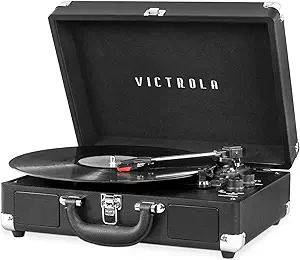








Victrola vs Sylvania: Overview
Comparing Victrola and Sylvania helps you determine which brand is best suited for your needs in Turntables. Both brands offer strong choices depending on your budget and key feature requirements.
Key Features & Comparison
Evaluate factors such as build quality, warranty, customer satisfaction, and total value before making your final purchase choice between Victrola and Sylvania.
Affordability
In the entry-level turntable market, both Victrola and Sylvania aggressively target cost-conscious consumers, yet they execute affordability through distinctly different manufacturing philosophies. Sylvania occupies the absolute baseline of the budget hierarchy, frequently pricing its standalone and novelty units well below the fifty-dollar threshold. To achieve this ultra-low point of entry, Sylvania relies on heavily commoditized, generic OEM internal mechanisms, featherweight plastic chassis, and rudimentary ceramic cartridges. In contrast, Victrola positions itself as an accessible lifestyle brand with an expansive catalog that spans from sub-fifty-dollar suitcase players to multi-hundred-dollar intermediate systems. While Victrola's entry models compete in the same price bracket as Sylvania, Victrola leverages superior economies of scale to offer a more polished exterior presentation, distinct vintage or mid-century cabinetry, and a broader variety of form factors that look and feel more substantial than their price tags suggest.
When assessing feature density relative to cost, Victrola consistently delivers higher practical value per dollar. Even within its budget-friendly Journey and Vintage lines, Victrola routinely incorporates modern conveniences such as two-way Bluetooth connectivity (both receiving streaming audio and transmitting vinyl playback to external wireless speakers), pitch control dials, and standard RCA line-outs. Sylvania’s ultra-budget engineering tends to prioritize bare-minimum utility; features like Bluetooth are often limited to passive receiver mode only, turning the turntable into an underpowered Bluetooth speaker rather than a versatile audio source. Furthermore, Sylvania's internal amplification and tiny built-in drivers are notoriously prone to microphonic distortion and chassis rattle, which severely compromises playback. Victrola, while still employing cost-effective ceramic styli and plastic tonearms on its baseline units, tunes its integrated audio components more effectively, yielding a noticeably more coherent acoustic profile for the money.
Ultimately, the practical trade-off between the two brands lies between absolute lowest purchase price and long-term utility. Sylvania’s extreme affordability comes at the cost of component longevity, high tonearm tracking force that can accelerate record wear over time, and a near-total absence of an upgrade path. Victrola presents a more balanced economic equation for entry-level hobbyists. Not only does Victrola provide better customer support and standard replacement styli availability, but the brand also offers affordable transitional steps into true hi-fi hardware—such as its Premiere line—which introduce moving-magnet cartridges, adjustable counterweights, and damped cueing levers at accessible prices. For buyers seeking the lowest possible barrier to casual vinyl spinning without completely sacrificing structural integrity, feature versatility, and aesthetic charm, Victrola represents the far more economically sound investment.
Sound Quality
When assessing sound quality between Victrola and Sylvania, the mechanical foundation of their playback systems creates a significant divide in acoustic fidelity. Sylvania operates almost entirely in the budget-to-value novelty segment, outfitting its turntables with generic, high-output ceramic cartridges mounted on uncalibrated, spring-tensioned plastic tonearms. These mechanisms generate excessive tracking force—often exceeding five grams—which strips dynamic range, squashes subtle transients, and clips high frequencies, resulting in a muffled, dynamically compressed output. In contrast, while Victrola also manufactures entry-level suitcase models with similar ceramic limitations, the brand offers a substantial catalog of mid-tier and audiophile-adjacent turntables. Victrola’s higher-tier models incorporate precision-balanced aluminum tonearms with adjustable counterweights, anti-skate controls, and pre-mounted moving-magnet cartridges, such as the Audio-Technica AT3600L or Ortofon 2M Red. This engineering allows Victrola to extract wider stereo separation, clear micro-details, and an expansive 20 Hz – 20 kHz frequency response that Sylvania simply cannot replicate.
The acoustic execution of amplification and vibration dampening further separates the two brands. Built-in speakers on Sylvania models suffer from thin, tinny reproduction characterized by an overly forward and boxy midrange, nonexistent sub-bass, and brittle treble that distorts heavily at moderate to high volumes. Furthermore, Sylvania's unisolated plastic plinths allow mechanical motor rumble and speaker vibrations to transfer directly into the stylus, amplifying acoustic feedback and degrading overall clarity. Victrola, on the other hand, employs better acoustic isolation even in its consumer-grade units, utilizing rubber-damped platters and decoupled internal speaker enclosures to mitigate chassis resonance. When routed to external sound systems, Victrola’s low-noise internal preamps deliver a significantly cleaner signal-to-noise ratio, preserving dynamic headroom and bass authority, whereas Sylvania’s line-level outputs frequently introduce audible baseline hum and elevated Total Harmonic Distortion (THD).
Ultimately, the practical trade-off between the two brands boils down to whether sound quality is treated as a core performance metric or a secondary cosmetic feature. Sylvania satisfies users seeking a casual, low-investment vintage aesthetic, but its sonic performance is plagued by muddy definition and mechanical acoustic interference that cannot be upgraded due to fixed tonearm assemblies. Victrola provides a far more versatile audio trajectory; even if a consumer begins with their entry-level hardware, Victrola's broader ecosystem offers genuine high-fidelity pathways—featuring wireless streaming integration, upgradeable styli, and dedicated phono stages—making it the vastly superior choice for listeners who prioritize tonal balance, dynamic accuracy, and acoustic clarity.
Features & Functionality
When evaluating features and functional versatility, Victrola demonstrates a substantially wider technological scope than Sylvania. While both manufacturers occupy significant shelf space in the entry-level lifestyle category with self-contained suitcase designs, Victrola has aggressively modernized its feature architecture to cater to contemporary consumer habits. Victrola’s ecosystem spans entry-level players with proprietary Vinyl Stream technology (bi-directional Bluetooth that allows transmission to external speakers as well as standard reception) up to high-tier models boasting native "Works with Sonos" Wi-Fi integration. Sylvania, by contrast, adheres almost exclusively to a traditional novelty multi-format approach. Sylvania's feature sets commonly incorporate AM/FM analog tuners, cassette players, and front-loading CD drives inside retro-style consoles, appealing to users seeking an all-in-one media center. However, Sylvania’s digital connectivity is largely confined to basic Bluetooth-in receiver functionality, lacking modern network streaming or digital audio output versatility.
The mechanical execution and acoustic engineering of the two brands reveal sharp divergence in technical capability and component sophistication. Sylvania relies almost universally on entry-grade, cost-engineered internal mechanisms: lightweight plastic platters, non-adjustable straight tonearms, and generic ceramic cartridges with rigid sapphire styli. These mechanisms generally operate under heavy tracking forces (often exceeding 5 grams) without the benefit of anti-skate or counterbalance adjustments, offering zero functional upgrade pathways and posing long-term wear risks to vinyl grooves. While Victrola uses similar baseline assemblies in its introductory Journey models, the brand scales its engineering far beyond this ceiling. Victrola’s Premiere and Carbon series incorporate precision-engineered components, including solid aluminum platters, resonance-damped plinths, switchable preamps, and fully adjustable counterweights paired with industry-standard Audio-Technica or Ortofon moving-magnet (MM) cartridges, delivering vastly superior tracking accuracy and mechanical isolation.
Ultimately, the practical trade-off between Victrola and Sylvania hinges on multi-media utility versus authentic analog performance. Sylvania presents a budget-friendly, plug-and-play solution for casual consumers who prioritize legacy format consolidation—such as reviving old cassettes and CDs alongside vinyl—without the clutter of external receivers or separate speakers. However, Victrola provides a vastly superior functional trajectory for listeners who take vinyl playback seriously. By offering modularity, high-resolution wireless streaming codecs (such as aptX Adaptive), USB digital archival capabilities, and genuine hi-fi tonearm adjustments, Victrola delivers an adaptable, future-proof operational platform that far exceeds Sylvania's static, entry-level mechanics.
Ease of Use & Setup Processes
From an out-of-the-box perspective, both Victrola and Sylvania cater heavily to the entry-level and lifestyle audio markets, prioritizing virtually zero-assembly architectures over the intricate setup rituals typical of audiophile decks. Neither brand requires novice users to calculate cartridge overhang, manually align headshells, or calibrate counterweights with a digital stylus force gauge. Victrola engineers its players—spanning from ubiquitous suitcase models to the more refined Eastwood and hybrid-streaming lines—with pre-calibrated, fixed-tracking tonearms and factory-aligned styli (often utilizing Audio-Technica moving-magnet upgrades on mid-tier models). Sylvania adopts an identical turnkey philosophy across its compact players and nostalgic multi-format music consoles, featuring pre-mounted ceramic cartridges and pre-tensioned spring-loaded tonearms. However, Victrola holds an engineering edge in manufacturing tolerances: its tonearm damping and cueing levers offer smooth, predictable descents, whereas Sylvania’s cueing mechanisms and plastic tonearm rests often exhibit loose tolerances, requiring a steadier hand to avoid skipping or aggressive needle drops during initial operation.
The daily operational workflow and connectivity ecosystems further differentiate the two brands. Victrola has heavily invested in modernizing setup routines through streamlined controls and hybrid connectivity. Modern Victrola models feature intuitive multi-way control knobs, well-documented auto-stop switches that reliably halt platter rotation at the run-out groove, and seamless dual-way Bluetooth functionality (allowing users to either stream to the internal speakers or transmit vinyl audio out to external speakers with simple one-button pairing). Sylvania remains far more traditional and strictly budget-focused; its consoles frequently integrate legacy media formats like CD players, cassettes, and AM/FM tuners. While Sylvania’s reliance on physical rotary dials and mechanical push buttons offers straightforward, tactile accessibility for non-technical users, its multi-source input selectors can feel crowded and clunky. Furthermore, Sylvania’s wireless integration is strictly basic, frequently limited to standard Bluetooth receiving, with less intuitive pairing protocols and inconsistent visual feedback compared to Victrola’s clear status LEDs.
Ultimately, the practical trade-offs center on whether a consumer prioritizes modern peripheral integration or basic multi-media versatility. Sylvania succeeds in delivering complete out-of-the-box self-containment with a non-existent learning curve, making it functional for casual users who want to drop a record on the platter, turn a physical knob, and hear sound immediately. However, its lower-grade chassis materials and finicky tolerances make manual tonearm alignment on 7-inch or 12-inch records slightly clumsier. Victrola provides a more cohesive and refined user experience, balancing true plug-and-play vinyl playback with polished modern features that facilitate effortless expansion into external soundbars, wireless headphones, or smart-speaker setups. For consumers prioritizing a frictionless setup that seamlessly integrates into contemporary listening environments, Victrola delivers a distinctly smoother operational flow.
Compare current retail pricing, active promotions, and verified stock availability directly from authorized stores: