Denon vs Music Hall: Overview & Brand Philosophy
The turntable market accommodates a wide spectrum of listeners, ranging from convenience-minded consumers seeking modern integration to uncompromising audiophiles hunting for micro-detail. Denon and Music Hall represent two fundamentally distinct approaches within this space. Denon, a legacy Japanese consumer electronics giant founded in 1910, has spent over a century engineering mass-market high-fidelity equipment. In the vinyl realm, Denon is renowned for popularizing robust direct-drive platforms, integrated phono preamplifiers, and semi- or fully-automatic mechanisms designed to eliminate the anxiety of manual needle drops. Their brand philosophy centers on accessibility, technological reliability, and frictionless user experiences that integrate seamlessly into broader home theater and audio ecosystems.
Conversely, Music Hall operates with a singular, purist vision spearheaded by founder Roy Hall. Established in 1985 and manufacturing primarily out of the esteemed Pro-Ject factory in the Czech Republic, Music Hall approaches turntable design strictly from a two-channel, high-end audio perspective. Rather than prioritizing consumer-friendly automation or digital connectivity, Music Hall champions mechanical simplicity, resonance suppression, and isolation. Their signature engineering hallmark—the multi-plinth construction—physically separates the motor, bearing, and tonearm to eliminate vibrational interference. Music Hall views the turntable not as a gadget, but as a precision analog instrument engineered to extract uncolored musical information from the groove.
Key Differences & Technological Comparison
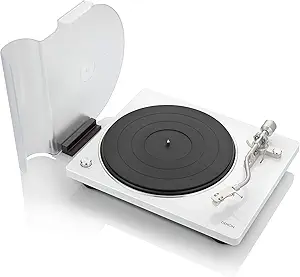
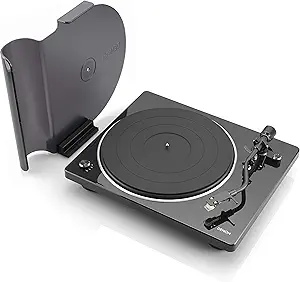
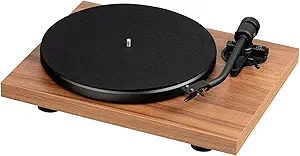
The most immediate distinction between Denon and Music Hall lies in their mechanical drive systems and operating mechanics. Denon historically made its mark with sophisticated direct-drive systems, though their entry-level lifestyle models (such as the DP-300F and DP-400) utilize belt drives with integrated auto-stop or auto-lift features. These systems prioritize convenience, reducing stylus wear by lifting the arm at the end of a record. Music Hall, on the other hand, strictly employs completely manual, low-noise belt-drive systems across its entire catalog. By avoiding the internal gears, microswitches, and mechanical linkages required for automated cueing, Music Hall ensures that the tonearm assembly remains entirely free of mechanical drag and acoustic coloration.
Isolation and plinth engineering further demarcate the two manufacturers. Denon generally uses unified, molded plastic or composite plinths that rely on internal dampening and elastomeric feet to handle vibration. While effective at their price points, they can transmit environmental resonance when played at higher volumes. Music Hall is renowned for its proprietary "split-plinth" or "dual-plinth" design (found on models like the MMF-5.3 and above). By isolating the motor and switch on the lower tier while mounting the inverted ceramic bearing and tonearm on the upper tier, isolated by Sorbothane dampers, Music Hall achieves an exceptionally low noise floor and superior signal-to-noise ratios.
Tonearm design and cartridge pairings also reflect their divergent priorities. Denon turntables frequently feature distinct S-shaped tonearms that evoke mid-century broadcast tables; they include removable headshells, making cartridge swapping easy, though the bearings often possess looser tolerances. Denon commonly bundles basic moving magnet (MM) cartridges or their legendary, yet demanding, DL-103 moving coil (MC) option on higher-end gear. Music Hall outfits its decks with rigid, one-piece carbon fiber or precision-machined aluminum tonearms with ultra-low friction bearings. These tables typically come pre-mounted with custom-specified cartridges developed in partnership with Ortofon or Goldring, ensuring optimized tracking force, resonance compliance, and high-frequency retrieval straight out of the box.
Pros & Cons Comparison
Denon: Pros
- User-Friendly Automation: Offers fully-automatic and semi-automatic models, making vinyl playback approachable and safe for newcomers.
- Built-In Phono Preamps: Most consumer models include switchable phono stages, allowing direct connection to powered speakers or receivers lacking dedicated phono inputs.
- Removable Headshells: S-shaped tonearms allow users to swap out pre-mounted cartridges quickly without complex re-alignment.
- Consistent Aesthetics: Sleek, glossy finishes that match modern living spaces and secondary AV components.
Denon: Cons
- Mechanical Noise Floor: Additional automatic linkages and lightweight plastic housings can introduce subtle mechanical rumble.
- Limited High-End Upgrades: The chassis and tonearms do not scale well with ultra-high-end audiophile moving coil cartridges.
- Vibration Sensitivity: Single-plinth designs are more susceptible to acoustic feedback from nearby subwoofers or footfall.
Music Hall: Pros
- Exceptional Resonance Isolation: Signature dual- and triple-plinth systems isolate motor rumble away from the sensitive stylus.
- Superior Tonearm Geometry: Rigid carbon-fiber and one-piece alloy arms offer tight bearing tolerances for pinpoint soundstaging.
- High-End Componentry: Stainless steel and bronze bearings, acrylic platters, and premium pre-aligned cartridges ensure reference-grade fidelity.
- Modular Audiophile Longevity: Built with standard high-fidelity components, making tonearms, counterweights, and sub-platters easily upgradeable.
Music Hall: Cons
- Strictly Manual Operation: No auto-lift or shutoff; leaving the room requires manual cueing to prevent the needle from spinning in the runout groove.
- Minimal Built-In Electronics: Almost all models require an external phono preamplifier or an amplifier with a dedicated phono input.
- Higher Entry Price: Premium materials and European manufacturing command a noticeable price premium over mass-market brands.
Performance, Durability & Value Analysis
When assessing raw audio fidelity, Music Hall consistently outperforms Denon in transient response, stereo imaging, and dynamic range. Because Music Hall dedicates its manufacturing budget entirely to high-grade acoustic materials—such as decoupled AC synchronous motors, inverted ceramic bearings, and dense multi-layer MDF—the sonic presentation is noticeably blacker and more resolving. Denon turntables sound warm, enjoyable, and punchy, which is more than adequate for casual listening environments or entry-to-mid-tier stereo setups. However, when pushed through resolving, high-sensitivity speakers, Denon's lighter structural mass and higher internal resonance can introduce slight low-end bloom and veiled micro-details.
In terms of durability and value, both brands offer reliable investments, but for different ownership timelines. Denon models provide exceptional short-term value: for a modest upfront investment, buyers receive an all-in-one package that works with virtually any home sound system without needing auxiliary outboard gear. The trade-off is mechanical longevity; automatic levers and internal switches comprise more moving parts that can wear down over a decade. Music Hall represents a high-durability, long-term audio asset. The simplicity of their manual design, combined with robust, easily replaceable drive belts and isolated motors, ensures that a Music Hall deck can realistically perform for decades with minimal maintenance, retaining superior resale value among analog enthusiasts.
Final Verdict: Which Brand Should You Choose?
Choose Denon if your primary objective is effortless, stress-free vinyl playback. If you want a turntable that complements your living room setup, connects directly into existing powered bookshelf speakers or an AV receiver, and offers the peace of mind of auto-stop functionality, Denon is the sensible, economical choice. It is the premier option for vinyl hobbyists who value convenience, industrial styling, and straightforward usability over absolute acoustic purity.
Choose Music Hall if you are building an intentional, dedicated two-channel stereo system where sound quality is paramount. If you are comfortable cueing the tonearm manually and intend to invest in quality phono stages and high-resolution amplifiers, Music Hall’s resonance-eliminating multi-plinth designs and precision carbon-fiber arms will reward you with detail retrieval and depth that Denon simply cannot match. For the serious audiophile seeking authentic high-fidelity analog playback, Music Hall is well worth the extra investment.
Affordability
When evaluating affordability in the turntable market, Denon and Music Hall approach value from fundamentally different design philosophies, appealing to distinct tiers of consumer budgets. Denon positions itself firmly in the mainstream-to-accessible market, providing turnkey solutions with an exceptionally low cost of entry. Models such as the DP-29F and DP-300F deliver complete plug-and-play packages—often under the $400 mark—that include built-in phono preamps, pre-mounted moving magnet cartridges, and automated tonearm mechanisms. From an upfront affordability perspective, Denon captures high consumer value by eliminating the immediate need for outboard electronics or complex calibration tools. In contrast, Music Hall operates predominantly in the entry-audiophile to high-end specialist domain. With entry-level offerings like the MMF-1.3 and MMF-2.3 typically starting where Denon’s midrange caps out, Music Hall requires a larger initial capital investment, often compounded by the necessity of dedicated external phono preamplification in their higher-tier decks.
The trade-offs inherent in each brand's cost architecture directly reflect their internal engineering and materials. Denon achieves its consumer-friendly pricing by utilizing lighter plastic chassis components, integrated mass-market belt- or direct-drive systems, and proprietary aluminum tonearms that favor convenience and automation over acoustic isolation. While this reduces manufacturing costs, it introduces structural resonance compromises that discerning listeners may outgrow. Music Hall’s higher price point, by comparison, amortizes engineering investments into acoustic isolation, incorporating precision high-grade tonearms (often carbon fiber in mid-tier models), isolated DC motors, and their signature dual-plinth construction that mechanically isolates the bearing and tonearm from the motor. While Music Hall decks lack automatic convenience features, the investment goes entirely into acoustic performance, vibration damping, and longevity, delivering a substantially higher performance-per-dollar ratio for critical listening, despite the steeper financial threshold.
Ultimately, long-term affordability hinges on the user's upgrade path and audio ecosystem goals. Denon offers unmatched out-of-the-box financial efficiency for casual listeners, secondary audio systems, or beginners seeking a complete setup without hidden peripheral costs; however, their integrated electronic architecture poses a low ceiling for audiophile modification. Music Hall presents a higher total cost of ownership upfront, but offers superior long-term financial viability for the enthusiast. Their standardized mountings, high-end Ortofon or proprietary cartridge pairings, and modular build quality make them infinitely more upgradable over time, preventing the need for a full turntable replacement as audio demands scale. For strictly constrained budgets prioritizing convenience, Denon is the undisputed affordability leader, whereas Music Hall represents a higher-cost, high-yield value investment for discerning vinyl enthusiasts.
Sound Quality
When evaluating sound quality, Denon and Music Hall approach vinyl reproduction with fundamentally different acoustic philosophies, largely dictated by their drive systems and plinth engineering. Denon, renowned for its direct-drive legacy (as well as entry-level belt models), delivers a sonic signature characterized by robust dynamic punch, exceptional timing, and rock-solid pitch stability. Direct-drive flagships like the DP-3000NE utilize high-torque, electronically controlled motors that practically eliminate wow and flutter, resulting in low-end authority, fast transient attacks, and an energetic, rhythmic drive. However, on their more affordable automatic models like the DP-300F, the internal electronics, built-in phono preamps, and mechanical tonearm linkages can introduce minor microphonic resonance and a higher noise floor, slightly veiling the upper-register clarity and micro-dynamics compared to stripped-down audiophile decks.
Conversely, Music Hall operates firmly in the purist, high-fidelity domain, prioritizing mechanical isolation and acoustic transparency through manual belt-drive architecture. Engineered by Roy Hall, their turntables often employ proprietary multi-plinth technology—most notably seen in models like the mmf-5.3 and mmf-9.3—which physically isolates the motor and electrical components on a bottom platform while the tonearm and bearing sit on a separate, decoupled top tier. This extreme dampening results in an exceptionally black background, ultra-low motor hum, and expansive soundstaging with superior channel separation. Combined with pre-mounted, high-end cartridges (often custom Goldring or Ortofon variants) and ultra-rigid, single-piece carbon fiber or alloy tonearms, Music Hall retrieves fine inner detail, delicate instrument decay, and lush mid-range textures that typically outshine mass-market offerings.
Ultimately, the choice between these two brands comes down to sonic preferences and practical trade-offs. Denon offers an immediate, punchy, and highly cohesive presentation that excels with rhythmically complex genres such as rock, pop, and electronic music—with the added benefit of turnkey functionality on their lower-tier consumer models. Music Hall demands a strictly manual operational commitment and an external preamp, but rewards listeners with profound spatial accuracy, superior signal-to-noise ratios, and an organic, uncolored sonic delivery. For audiophiles who value acoustic fidelity, micro-detail, and an expansive soundstage above all else, Music Hall holds the performance edge; for listeners seeking low-end drive, pristine speed stability, and dynamic impact, Denon delivers a deeply satisfying, authoritative listening experience.
Features & Functionality
When evaluating features and functionality in the turntable category, Denon and Music Hall represent two fundamentally distinct engineering philosophies: user-centric automation versus purist analog performance. Denon prioritizes versatility, convenience, and modern integration. Many of their mainstream models, such as the DP-300F and DP-400, feature semi-automatic or fully automatic operation, including auto-lift and auto-stop mechanisms that preserve stylus longevity. Additionally, Denon frequently integrates high-quality, switchable phono preamps, allowing users to plug directly into virtually any modern audio system or powered speaker without external hardware. Some models even include USB analog-to-digital converters for archiving vinyl directly to a computer. These user-friendly additions make Denon particularly appealing to collectors who value convenience, seamless operation, and minimal setup friction without sacrificing decent fidelity.
Conversely, Music Hall champions a minimalist, audiophile-grade approach where functionality is strictly defined by resonance control and pure signal path preservation. Engineered by Roy Hall and manufactured in the historic Pro-Ject factory in the Czech Republic, Music Hall turntables (such as the MMF series) are strictly manual, deliberately omitting motorized tonearm mechanics to eliminate electrical and mechanical interference. Their defining technical feature is the proprietary multi-plinth construction, which physically isolates the motor, switch, and wiring on the bottom platform while the critical bearing, tonearm, and cartridge rest on the top plinth. Music Hall also offers superior technical modularity, featuring precision carbon-fiber tonearms, inverted ceramic main bearings, adjustable VTA (Vertical Tracking Angle), and decoupled DC motors that provide exceptionally low wow-and-flutter ratings compared to Denon’s consumer-oriented drive systems.
The practical trade-offs between the two brands ultimately hinge on the listener's operational priorities. Denon excels at multi-functional versatility and daily convenience, making it the superior choice for casual listeners or those who want a plug-and-play setup with protective mechanical safeguards. However, those added features introduce slight mechanical noise and limit upgrade pathways. Music Hall completely sacrifices automated convenience—demanding manual cueing and often external phono amplification—in exchange for class-leading acoustic engineering, vibration damping, and long-term hardware tweakability. For discerning audiophiles seeking expansive dynamic range and low background noise, Music Hall’s performance-focused architecture easily outclasses Denon's convenience-focused feature suite.
Ease of Use & Setup Processes
When evaluating ease of use and setup procedures, Denon and Music Hall embody fundamentally divergent philosophies within the turntable market. Denon largely engineers its decks for immediate accessibility and consumer-friendly operation. Popular consumer models such as the DP-300F and DP-400 arrive nearly plug-and-play, featuring pre-mounted and pre-aligned cartridges, integrated switchable phono preamplifiers, and semi- or fully automatic mechanisms. The technical setup rarely requires more than installing the belt and balancing the counterweight using simple, indexed markings. Once calibrated, day-to-day operation is virtually frictionless; users benefit from push-button start/stop functionality or automatic tonearm lifts that engage at the end of a record side, mitigating the risk of stylus wear and removing manual anxiety for newcomers.
In contrast, Music Hall champions a purist, manual audiophile approach that demands greater technical involvement during initial configuration and daily playback. Renowned for their engineered isolation platforms—such as the multi-plinth technology found on models like the MMF-5.3—Music Hall turntables prioritize acoustic resonance suppression over automated convenience. Setup involves intricate mechanical tasks: leveling the chassis via adjustable spiked feet, manually seating isolated motor belts (often requiring manual belt relocation between pulley grooves to alternate between 33 1/3 and 45 RPM), and suspending anti-skating weights via delicate monofilament lines. While many Music Hall units come equipped with high-grade, factory-aligned Ortofon cartridges, the lack of integrated phono preamps on most of their mid-to-high tier decks requires users to integrate and calibrate outboard amplification.
Ultimately, the trade-off centers on ergonomic utility versus mechanical purity. Denon excels in ergonomics and low-barrier entry, making it the superior choice for casual listeners or vinyl enthusiasts who prioritize workflow speed, automated safety nets, and compact all-in-one connectivity. Conversely, Music Hall sacrifices plug-and-play immediacy for audiophile-grade modularity; its completely manual operation and deliberate setup process provide a hands-on, ritualistic tactile experience that rewards critical listeners who possess the patience to precisely tune their analog chain for optimized tracking and acoustic fidelity.