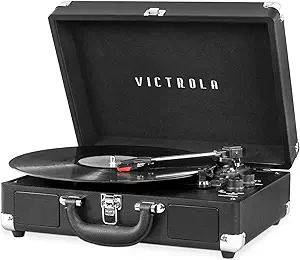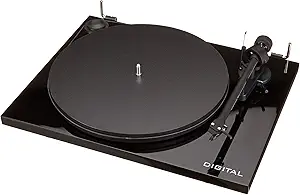






Pro-Ject vs Victrola: Overview & Brand Philosophy
The resurgence of vinyl has exposed a dramatic ideological divide in consumer audio, perfectly epitomized by Pro-Ject Audio Systems and Victrola. Founded in 1991 by Heinz Lichtenegger in Vienna, Austria, Pro-Ject emerged right as compact discs were declared the absolute future of recorded music. The company's foundational premise was simple yet radical: deliver uncompromised, purist, analog hi-fi engineering at an honest price. By stripping away extraneous features—such as automatic tonearm mechanisms, integrated digital displays, or cheap preamps—Pro-Ject channels every dollar of manufacturing cost into acoustic isolation, motor precision, high-grade tonearms, and premium pre-mounted cartridges.
Conversely, Victrola carries a historic brand name dating back to the Victor Talking Machine Company of 1906, but operates today as a modern lifestyle audio powerhouse under Innovative Technology Electronics. Victrola’s modern philosophy focuses on accessibility, nostalgia, convenience, and aesthetic integration into the home. Rather than targeting critical audiophiles with sound deadening and calibrated downforce, Victrola has historically democratized vinyl for the mass market with all-in-one suitcase players and retro consoles featuring built-in speakers, Bluetooth connectivity, and push-button operation. Recently, the brand has attempted to bridge the gap into the mid-tier market with products like the carbon-accented Premiere and Stream series, yet their primary mission remains providing a frictionless on-ramp for casual music fans.
Understanding this philosophical gulf is crucial for prospective buyers. Pro-Ject approaches turntables as precision mechanical instruments designed to extract every micro-groove dynamic without damaging the vinyl medium. Victrola views the turntable primarily as a consumer lifestyle appliance designed to make music listening easy, visual, and social. This divergence dictates every aspect of how both companies source materials, engineer drive assemblies, and calibrate their final products.
Key Differences & Technological Comparison
The technological differences between Victrola and Pro-Ject span tonearm geometry, motor decoupled assemblies, cartridge quality, and structural resonance management:
- Chassis Engineering and Resonance Control: Pro-Ject predominantly uses dense, CNC-machined medium-density fiberboard (MDF) or high-grade acrylic for its platters and plinths, resting on specialized TPE (thermoplastic elastomer) damping feet. This eliminates acoustic feedback and physical vibrations from coloring the audio signal. Basic Victrola players rely heavily on injection-molded hollow plastic or lightweight plywood cabinets that inherently resonate with room sound and internal speaker output, degrading audio clarity.
- Tonearm Assembly and Tracking Force: Pro-Ject's hallmark is its single-piece carbon fiber or high-stiffness aluminum tonearms equipped with fully adjustable counterweights and anti-skate mechanisms. These allow for accurate tracking down to 1.5–1.8 grams, preserving record longevity. Lower-end Victrolas utilize mass-produced, non-adjustable plastic or stamped steel tonearms featuring crude ceramic cartridges that track at dangerously high forces (often 4 to 6 grams), accelerating vinyl wear. While Victrola's higher-tier "Stream" lines feature aluminum arms with counterweights, Pro-Ject's precision sapphire bearings still provide superior trackability.
- Motor and Drive Systems: Pro-Ject isolates its ultra-quiet, DC-driven AC generator motors using decoupled suspensions to prevent motor hum from transferring through the belt to the platter. Platters are often heavy cast-aluminum or dampened acrylic that utilize mass to maintain rotational speed stability (low wow-and-flutter ratings, routinely below 0.15%). Victrola's entry-level models feature cheap, coupled DC motors prone to speed drift and audible flutter. While Victrola's modern flagship units improve on this, they remain engineered to typical consumer tolerances rather than strict hi-fi standards.
- Cartridge Selection and Upgrade Paths: Pro-Ject partners with industry legends such as Ortofon and Sumiko to install factory-aligned moving magnet (MM) cartridges out of the box, with clear upgrade pathways for stylized styli and moving coil (MC) units. Victrola’s entry tier relies on cheap, sapphire-tipped ceramic needles with narrow frequency ranges; only their premium series introduces moving magnet cartridges (such as the Audio-Technica AT-VM95E), but internal electronic configurations limit advanced aftermarket cartridge matching.
- Connectivity & Architecture: Victrola prioritizes digital integration, often featuring two-way Bluetooth, internal speaker amps, or native "Works with Sonos" Wi-Fi streaming. Pro-Ject intentionally limits on-board electronics to avoid introducing electromagnetic interference into the low-level phono signal, providing pure gold-plated RCA outputs and specialized phono cables to pair with external hi-fi amplifiers.
Pros & Cons Comparison
Pro-Ject
Pros:
- Exceptional, audiophile-grade acoustic fidelity with high signal-to-noise ratios.
- Precision tonearms (carbon fiber/aluminum) with adjustable tracking and anti-skate controls.
- Minimal vinyl groove wear due to factory-aligned, low-tracking-force cartridges.
- High modularity and customizability (upgradable platters, sub-platters, styli, and phono stages).
- Rigid build materials like CNC-machined MDF, decoupled motors, and resonance-dampened acrylic.
Cons:
- High financial barrier to entry, requiring a dedicated budget for supporting audio gear.
- Rarely includes built-in speakers or Bluetooth (purist analog focus).
- Requires mechanical knowledge for setup (balancing counterweights, anti-skate weights, manual belt changes on certain models).
Victrola
Pros:
- Extremely accessible pricing across entry-level models.
- Turnkey convenience: models often feature built-in preamps, amplifiers, and internal speakers.
- Extensive digital integration (Bluetooth transmitters/receivers, Sonos Wi-Fi streaming).
- Diverse retro and mid-century aesthetic designs that integrate well into decorative home spaces.
- Virtually plug-and-play simplicity right out of the box.
Cons:
- Budget suitcase models suffer from high tracking forces that can permanently damage vinyl over time.
- Inferior sound fidelity, prone to high wow-and-flutter, poor bass control, and distorted highs.
- Heavy use of cheap plastics, hollow chassis, and lightweight platters prone to ambient vibration.
- Extremely limited or non-existent upgrade potential across entry and mid-tier lines.
Performance, Durability & Value Analysis
From a longevity and mechanical perspective, Pro-Ject represents an investment in long-term engineering. Because their turntables are designed around mechanical simplicity, high-tolerance bearings, and non-proprietary parts, a Pro-Ject deck can comfortably last decades with basic routine maintenance—such as belt replacements and stylus refreshes. The value equation for Pro-Ject lies in acoustic fidelity per dollar: by eliminating gimmicks, they direct every cent of their sub-$500 to $2,000+ MSRPs into components that genuinely elevate playback. Even in their entry-level Primary or Debut series, you are paying for structural integrity that preserves your record collection while extracting dynamic range, subtle instrument separation, and zero motor noise.
Victrola’s value proposition is inverted. For under $100, they provide an all-in-one novelty entertainment system that requires no additional receivers, cables, or speakers. However, the durability of these entry models is notoriously poor; cheap rubber belts, under-spec motors, and plastic tonearm hinges frequently fail within one to two years of consistent use. Furthermore, the true financial cost of a budget Victrola often manifests in the destruction of your vinyl collection via poorly tracking, high-downforce ceramic styli. Victrola’s premium push—notably the $600 to $800 "Stream" series—provides significantly improved materials and legitimate Audio-Technica cartridges alongside seamless Sonos integration. However, in that higher price tier, Victrola is charging heavily for digital convenience chips rather than the pure mechanical and sonic mastery offered by Pro-Ject at equivalent price points.
Final Verdict: Which Brand Should You Choose?
Your choice between these two brands comes down to whether you prioritize audiophile preservation or casual, plug-and-play lifestyle convenience:
Choose Pro-Ject if: You care deeply about audio fidelity, collect records you want to preserve for decades, and plan to build (or already own) a dedicated component stereo system. A turntable like the Pro-Ject Debut Carbon EVO or T1 is an ideal choice for serious music enthusiasts who want audiophile-grade components, upgrade flexibility, and ultra-accurate acoustic tracking.
Choose Victrola if: You are shopping on a strict budget, treat vinyl primarily as a casual weekend hobby, or place a premium on space-saving, all-in-one convenience. If you simply want a self-contained retro centerpiece for background listening, an entry-level Victrola works for casual playback. Alternatively, choose a high-end Victrola Stream model only if you are deeply entrenched in the Sonos smart home ecosystem and prioritize whole-home wireless convenience over manual, purist hi-fi performance.
Affordability
From a purely monetary perspective, Victrola represents the apex of budget accessibility in the turntable market, offering plug-and-play simplicity for under a hundred dollars. Victrola’s entry-level models, such as their ubiquitous suitcase designs, integrate built-in speakers, phono preamplifiers, and Bluetooth receivers into a self-contained unit. However, this extreme affordability comes at the cost of baseline engineering quality. These units frequently rely on inexpensive ceramic cartridges, mass-produced plastic tonearms, and low-torque motors that exhibit high wow and flutter. The aggressive tracking force characteristic of these budget mechanisms—often exceeding four to five grams—can accelerate groove wear on vinyl records over time. While Victrola has recently made strides into the mid-tier market with products like the Stream Carbon, their brand identity remains firmly anchored in low-cost convenience designed for casual hobbyists who prioritize immediate, affordable entertainment over acoustic precision.
In contrast, Pro-Ject treats affordability through an audiophile lens, defining value by technical performance per dollar rather than the absolute lowest barrier to entry. Starting around the three-hundred-dollar mark with their Primary and Debut series, Pro-Ject strips away superfluous features like integrated speakers to funnel production costs directly into core audio components. Engineering trade-offs are calculated: belt-drive motors are decoupled from the chassis to minimize vibration, tonearms are precisely engineered from single pieces of aluminum or carbon fiber, and medium-density fiberboard (MDF) plinths are used to eliminate the acoustic resonances typical of hollow plastic shells. Furthermore, Pro-Ject partners with established cartridge manufacturers like Ortofon, ensuring proper tracking forces, replaceable styli, and future-proof upgrade paths that protect vinyl collections and extend the hardware's operational lifespan.
Ultimately, the choice between Victrola and Pro-Ject regarding affordability hinges on short-term expenditure versus long-term value. Victrola offers an unbeatable up-front price point that satisfies casual listeners seeking a novelty aesthetic without needing dedicated stereo receivers or outboard speakers. Pro-Ject, conversely, represents a higher initial financial commitment but yields vastly superior longevity, modular repairability, and high-fidelity sound. For buyers with strict immediate budget limitations, Victrola is the accessible gateway; for those viewing audio equipment as a lasting investment, Pro-Ject delivers true economic value by preventing early obsolescence and mitigating potential record damage.
Sound Quality
When evaluating sound quality, Victrola and Pro-Ject occupy fundamentally different tiers of audio engineering, catering to distinct listening philosophies. Victrola historically built its reputation on entry-level, vintage-inspired lifestyle players characterized by integrated, low-wattage speakers and budget ceramic cartridges. These ceramic styli require high tracking forces (often exceeding 4 to 5 grams) and lack the compliant suspension necessary to track intricate dynamic passages, resulting in a compressed, midrange-heavy soundstage with thin bass and early high-frequency rolloff. Even though Victrola has recently made strides toward true high fidelity with its higher-end "Stream" and "Hi-Res" carbon-fiber models equipped with Audio-Technica moving-magnet (MM) cartridges, the bulk of its catalog prioritizes consumer-friendly DSP and wireless streaming convenience over pure acoustic transparency.
Conversely, Pro-Ject is an audiophile-grade manufacturer engineered specifically to maximize analog fidelity, low-noise performance, and microscopic groove extraction. Pro-Ject’s design ethos eliminates non-essential circuitry in favor of high-mass, resonance-dampened plinths (often constructed from dense MDF), decoupled AC-synchronous motors, and precision-machined aluminum or acrylic platters. By pairing lightweight, rigid one-piece carbon-fiber tonearms with pre-aligned, premium moving-magnet cartridges from Ortofon or Sumiko, Pro-Ject turntables achieve exceptional channel separation, a broad dynamic range, and remarkably low wow-and-flutter ratings (typically under 0.15%). This physical dampening prevents unwanted motor vibration from transferring through the needle, producing the rich low-end presence, airy micro-detail, and expansive stereo imaging that analog enthusiasts demand.
Ultimately, the trade-off in sound quality comes down to acoustic potential versus setup complexity. Victrola provides an instantly accessible, "warm" nostalgic tone out of the box that suffices for casual listeners, but its built-in amplification and plastic-heavy chassis inevitably choke musical dynamics and introduce subtle phase distortion at louder volumes. Pro-Ject requires careful cartridge calibration, tracking weight adjustments, and pairing with dedicated external phono preamps and speakers, but the sonic payoff is vastly superior. For listeners seeking authentic high-fidelity reproduction, pristine transient response, and a completely uncolored audio signal, Pro-Ject decisively outperforms Victrola across every critical acoustic benchmark.
Features & Functionality
When evaluating features and functionality in the turntable market, Victrola and Pro-Ject represent two fundamentally opposing design philosophies: consumer convenience versus audiophile purity. Victrola heavily emphasizes all-in-one accessibility and modern, lifestyle-oriented utility. Across its entry-level and mid-tier catalog, Victrola decks often incorporate multi-speed playback (33 1/3, 45, and 78 RPM), built-in phono preamplifiers, stereo speakers, auxiliary inputs, and robust Bluetooth integration with both transmit and receive capabilities. Advanced models, such as the Victrola Stream series, feature certified "Works with Sonos" network integration, allowing users to broadcast vinyl directly across multi-room digital ecosystems without messy cabling. While these features make Victrola exceptionally versatile and user-friendly for casual listeners, the engineering under the hood typically prioritizes feature density over analog precision, frequently utilizing mass-produced ceramic cartridges, lightweight plastic chassis, and mechanical components that trade acoustic fidelity for operational simplicity.
Conversely, Pro-Ject approaches functionality through a purist, performance-first engineering lens, deliberately stripping away extraneous features to eliminate electrical and mechanical noise. Rather than packing decks with Bluetooth transmitters or headphone jacks, Pro-Ject’s functional strengths lie in precision mechanical engineering. Features on Pro-Ject models like the Debut Carbon or T1 include low-resonance MDF or acrylic plinths, high-precision stainless steel platter bearings, decoupled low-noise AC motors, and one-piece carbon fiber tonearms designed to eliminate structural resonances. While many Pro-Ject decks are strictly manual—requiring physical intervention to drop the needle and occasionally remove the platter to shift the drive belt from 33 to 45 RPM—they offer high-grade functional components such as pre-installed, high-output Ortofon moving-magnet (MM) cartridges, gold-plated RCA output jacks for dedicated ground isolation, and adjustable tracking and anti-skate mechanisms for exacting calibration.
The practical trade-offs between the two brands ultimately center on out-of-the-box utility versus long-term acoustic potential and equipment longevity. Victrola provides unmatched convenience for consumers who want an all-in-one entertainment hub with modern smart home integration, but this comes at the cost of higher tracking force, limited upgradeability, and elevated total harmonic distortion. Pro-Ject demands a more involved user experience, requiring outboard amplification, proper setup, and manual operation, but provides a vastly superior signal-to-noise ratio, negligible wow and flutter, and an upgrade-friendly modular architecture. For buyers who view features through the lens of wireless connectivity and standalone ease of use, Victrola dominates; however, for those who measure functionality by mechanical precision, playback accuracy, and component modularity, Pro-Ject is the undisputed technical victor.
Ease of Use & Setup Processes
When evaluating the initial setup and daily ergonomics of turntables, Victrola and Pro-Ject occupy polar opposite ends of the engineering spectrum. Victrola prioritizes absolute immediacy and consumer-grade convenience, designing the vast majority of its catalog—from retro all-in-one suitcase players to the modern Stream series—as plug-and-play solutions. Most Victrola models feature pre-aligned ceramic or budget moving-magnet cartridges, factory-calibrated tracking forces, and integrated phono preamplifiers or direct Bluetooth transmitters. Unboxing a standard Victrola generally requires nothing more than releasing the tonearm transport clip, placing the slipmat, and plugging into mains power. Even their high-end Victrola Stream turntables streamline operation by embedding certified “Works with Sonos” Wi-Fi modules managed via a smartphone app. This architectural choice entirely bypasses the need for traditional stereo receiver wiring, grounding lugs, or precise mechanical calibration, offering an exceptionally low barrier to entry that requires zero prior vinyl literacy.
Conversely, Pro-Ject approaches setup through the lens of traditional audiophile mechanics, emphasizing mechanical isolation and user-configurable precision over instantaneous operation. While Pro-Ject does offer introductory models with pre-set anti-skate and tracking force (such as the Primary E or Juke Box series), most of their core catalog—including the acclaimed Debut and T1 lines—requires a hands-on mechanical assembly process. Users must manually install the drive belt around the sub-platter, seat the main platter, mount the counterweight, and physically balance the tonearm using a calibrated dial or stylus force gauge. Furthermore, anti-skate mechanisms often involve delicate weight-and-thread assemblies rather than internal spring dials, and cartridges are left fully adjustable for azimuth, overhang, and vertical tracking angle (VTA). While this rigorous setup process steepens the initial learning curve and demands technical patience, it directly yields acoustic superiority by eliminating structural resonance, allowing component upgradability, and ensuring optimal stylus-to-groove alignment that significantly extends record longevity.
The practical trade-offs between the two brands ultimately reflect the user’s tolerance for technical friction versus fidelity. Victrola’s design philosophy eliminates mechanical intimidation, offering motorized auto-stop capabilities and straightforward control knobs, making it an ideal choice for casual listeners who view vinyl as a lifestyle medium. However, this simplicity introduces heavy compromises in longevity, playback stability, and calibration flexibility, often locking users into factory tolerances that cannot be fine-tuned. Pro-Ject trades away that out-of-the-box spontaneity for pure acoustic fidelity and long-term mechanical reliability; simple tasks like switching between 33 and 45 RPM on mid-tier models frequently mandate manually shifting the belt between pulley grooves rather than toggling a switch. For buyers on Brandchoose, Victrola offers near-zero operational friction and instant gratification, whereas Pro-Ject rewards a more labor-intensive calibration phase with vastly superior engineering tolerances, system integration flexibility, and pure high-fidelity playback.