Thorens vs Pro-Ject: Overview
Comparing Thorens and Pro-Ject helps you determine which brand is best suited for your needs in Turntables. Both brands offer strong choices depending on your budget and key feature requirements.
Key Features & Comparison
Evaluate factors such as build quality, warranty, customer satisfaction, and total value before making your final purchase choice between Thorens and Pro-Ject.
Affordability
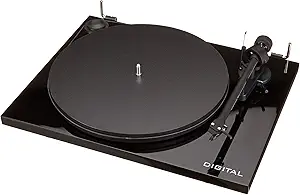
When evaluating affordability, Pro-Ject stands out as the dominant force in democratizing high-fidelity analog playback. The Austrian-owned brand revolutionized modern hi-fi by manufacturing minimalist, cost-effective turntables in the Czech Republic, exemplified by its Primary, Debut, and T-Line series. These entry-level and midrange decks provide exceptional performance per dollar, often bundling factory-aligned Ortofon cartridges, precision AC synchronous motors, and stiff carbon-fiber or aluminum tonearms at prices accessible to beginners and intermediate enthusiasts alike. Pro-Ject's supply chain scale and focus on value engineering allow buyers to acquire audiophile-grade components without having to invest thousands upfront, keeping the barrier to entry remarkably low.
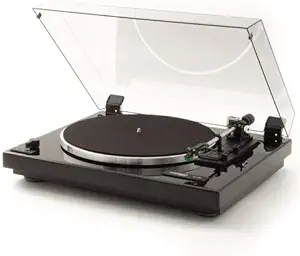
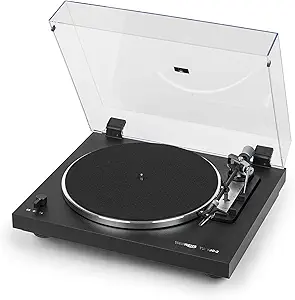
In contrast, Thorens occupies a distinctly premium tier of the market, reflecting its historic heritage as a Swiss-German luxury manufacturer. While Thorens has introduced entry-level offerings such as the TD 201 and TD 202, their prices remain noticeably higher than Pro-Ject's equivalent starter models. The bulk of the Thorens catalog consists of upper-midrange to high-end legacy designs—such as the TD 1500 and TD 1600—which command substantial financial investment. For the discerning buyer, Thorens justifies its elevated price tag through heavy-gauge sub-chassis architecture, precision CNC-machined metal components, and exquisite real-wood plinths, but for budget-conscious consumers seeking maximum sonic return on investment, Pro-Ject remains the significantly more affordable path.
Sound Quality
The acoustic profile of Pro-Ject turntables is defined by speed, clarity, and modern neutrality. Because Pro-Ject heavily incorporates ultra-stiff, lightweight materials like carbon-fiber tonearm tubes and resonance-optimized MDF or acrylic plinths, its decks excel at delivering tight transient response, pinpoint rhythmic precision, and low noise floors. Midrange models such as the Debut PRO or the X-line resolve intricate micro-details with clean highs and agile, controlled low-end frequencies. However, because many Pro-Ject models rely on rigid, unsuspended plinth designs, they can be susceptible to acoustic feedback and microphonic vibrations if placed close to loudspeakers or atop unstable furniture, requiring careful mechanical decoupling to achieve their acoustic potential.
Thorens, by comparison, delivers a richer, more relaxed, and spatially expansive acoustic presentation that honors its analog legacy. High-end Thorens models are famous for their suspended sub-chassis engineering, which decouples the motor from the platter and tonearm using tuned conical springs. This mechanical isolation yields exceptionally low wow and flutter, superior rhythmic warmth, and a deep, cavernous soundstage free from mechanical interference. Bass performance on a suspended Thorens deck is typically full-bodied, organic, and textured, offering a classic analog musicality that contrasts with Pro-Ject’s hyper-focused, modern analytical character. For listeners who prioritize lush timbre, smooth midrange delivery, and effortless dynamic ease, Thorens frequently holds the sonic edge.
Features & Functionality
Pro-Ject focuses on stripped-back purist engineering, prioritizing signal integrity and modular customization over operational automation. The vast majority of Pro-Ject turntables are strictly manual, requiring physical interaction to cue the tonearm, engage the motor, and frequently even to adjust playback speed by physically shifting the drive belt on a stepped pulley—though high-end models now feature integrated electronic speed controls. Pro-Ject sets itself apart functionally through an extensive ecosystem of modular upgrades. Enthusiasts can easily upgrade their Pro-Ject turntables with acrylic platters, high-mass sub-platters, outboard power supplies, and balanced XLR connections (via their "True Balanced" architecture), making them a dream for hobbyists who love gradual component tweaking.
Thorens takes a fundamentally different mechanical approach, leaning into advanced sub-chassis engineering and offering wider functional variety across its product lines. In addition to manual reference models, Thorens produces high-grade semi-automatic and fully automatic turntables like the TD 102 A and TD 148 A, which provide mechanical arm lift and return without degrading the delicate tonearm geometry. Furthermore, higher-end Thorens models often feature built-in electronic speed switching, integrated optical shut-off sensors, and factory-fitted balanced outputs. The standout engineering feature of Thorens remains its sophisticated floating sub-chassis designs, which mechanically isolate the critical playback components from external footfall and motor rumble in a way that rigidly built Pro-Ject turntables cannot match out of the box.
Ease of Use & Setup Processes
Pro-Ject is renowned for delivering out-of-the-box convenience for the everyday music consumer, particularly across its Debut and Essential lineups. These turntables typically ship with pre-mounted and precisely aligned cartridges, pre-calibrated anti-skate settings, and intuitive counterweights that require minimal effort to calibrate. Setup for a beginner can often be completed in under fifteen minutes with basic household tools and clear, visual documentation. However, setup becomes considerably more demanding once you move up to Pro-Ject’s audiophile-tier decks, where users encounter delicate unshielded tonearm wires, suspended counterweights with nylon threads, and manual azimuth adjustments that require a high degree of patience and technical familiarity.
Thorens decks vary dramatically in setup complexity depending on the model's underlying architecture. While their entry-level modern series (TD 201/202) are straightforward plug-and-play decks equipped with switchable phono preamplifiers, their core suspended sub-chassis models demand meticulous attention during initial assembly. Tuning a sprung sub-chassis involves balancing spring tension, ensuring free vertical piston action without lateral wobble, and carefully dressing the phono interconnect cables so they do not introduce parasitic resonances to the floating assembly. Once properly dialed in, a Thorens turntable is exceptionally stable and user-friendly, but the initial calibration curve is notably steeper and more technically involved than that of a standard Pro-Ject turntable.