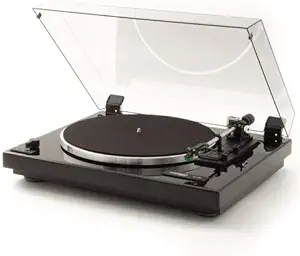
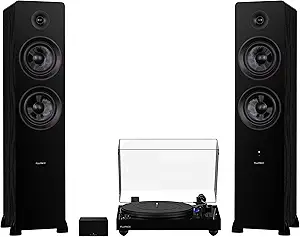
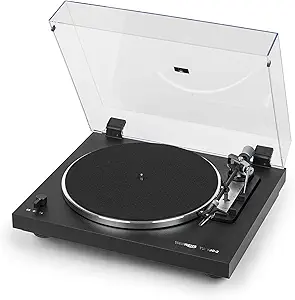
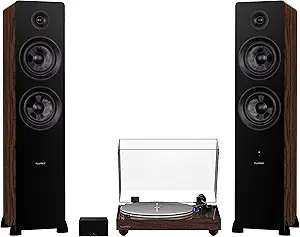
Thorens vs Fluance: Overview
Comparing Thorens and Fluance helps you determine which brand is best suited for your needs in Turntables. Both brands offer strong choices depending on your budget and key feature requirements.
Key Features & Comparison
Evaluate factors such as build quality, warranty, customer satisfaction, and total value before making your final purchase choice between Thorens and Fluance.
Affordability
When examining price-to-performance metrics, Fluance occupies an exceptionally consumer-friendly space in the modern audio landscape. The Canadian manufacturer has disrupted the entry-level to mid-range turntable market by delivering high-spec components—such as heavy solid-wood plinths and premium Ortofon or Audio-Technica cartridges—at pricing tiers that rarely exceed high three-figure sums. By adopting a direct-to-consumer sales model and utilizing efficient manufacturing overseas, Fluance ensures that even budget-conscious audiophiles can acquire belt-driven systems with decoupled motors without suffering the acoustic compromises commonly associated with low-cost players.
In stark contrast, Thorens operates primarily in the upper-mid-range to true luxury hi-fi categories, reflecting its storied Swiss-German heritage and specialized engineering processes. While Thorens does occasionally field entry-level offerings like the TD 200 series, their pricing floor is often near or above Fluance's absolute ceiling, with flagship suspended-chassis models stretching into the thousands of dollars. The elevated cost of a Thorens deck is attributed to bespoke tonearm fabrications, intricate sub-chassis stabilization mechanisms, and low-tolerance European assembly, making it an investment-grade acquisition rather than an accessible entry point for beginners.
Sound Quality
Fluance turntables, especially the higher-tiered Reference line (RT82 through RT85), punch significantly above their weight in sonic delivery. Characterized by low wow and flutter courtesy of optical sensor-controlled servo motors and high-density acrylic platters, Fluance decks provide an impressively dark background with minimal resonance. The acoustic profile is largely neutral and highly defined by the supplied cartridges; for example, the flagship pairing with an Ortofon 2M Blue extracts punchy transients, tight bass response, and articulate highs that satisfy both casual vinyl enthusiasts and aspiring audiophiles seeking high clarity without harmonic coloration.
Thorens, however, delivers a profoundly refined, reference-level acoustic presentation born from decades of mechanical isolation mastery. Renowned for their floating sub-chassis designs, Thorens turntables effectively decouple the platter and tonearm from environmental vibrations, resulting in an exceptionally wide, three-dimensional soundstage and superior micro-dynamic resolution. The low-frequency presentation on a Thorens possesses an effortless depth and warmth, with rhythmic pacing (PRaT) that reveals subtle instrumental layering often masked by rigid-plinth competitors like Fluance, representing the pinnacle of analog musicality.
Features & Functionality
Fluance builds its product ecosystem around pragmatic, highly desirable features tailored for the contemporary listener. A standout technical inclusion across their lineup is the auto-stop feature, which safely halts platter rotation roughly thirty seconds after the stylus reaches the run-out groove—a critical quality-of-life safeguard that prevents needless needle wear. Furthermore, Fluance models utilize universal SME-style headshells for effortless cartridge swapping, multi-layered resonance-dampening feet, and modular component paths that allow users to easily upgrade from an aluminum to an acrylic platter down the line.
Thorens takes an engineering-first, audiophile-purist approach to features, focusing on mechanical perfection rather than modern convenience gadgets. While select modern Thorens units include integrated switchable phono stages or electronic speed control toggles, the brand prioritizes advanced sub-chassis tuning, complex counterweight damping, and precision tonearms like the TP series with non-contact anti-skating mechanisms. Thorens omits features like auto-stop on many of its higher-end turntables to eliminate any mechanical linkage that could introduce acoustic feedback, choosing extreme structural isolation and audio purity over operational automation.
Ease of Use & Setup Processes
Fluance excels at demystifying turntable assembly, providing one of the most frictionless out-of-the-box experiences available in hi-fi audio. Each turntable arrives with comprehensive, step-by-step documentation, pre-mounted and factory-aligned cartridges, and intuitive counterbalance weights that make balancing the tonearm and setting tracking force straightforward for novices. The straightforward plug-and-play design minimizes calibration errors, enabling users to go from unboxing to playing their first record in under fifteen minutes with standard household tools and minimal technical anxiety.
Conversely, configuring a Thorens turntable often demands a higher degree of technical literacy, patience, and precise mechanical calibration. Because many iconic Thorens models employ a delicate three-spring suspended sub-chassis, the setup process frequently entails tuning spring tension, leveling the platter relative to the outer chassis, and carefully adjusting the tonearm geometry using specialized protractors. While modern plug-and-play Thorens variants exist, the brand's quintessential platforms are unapologetically enthusiast-oriented, rewarding deliberate, careful setup with peerless vibration control but posing a steep learning curve for the uninitiated.