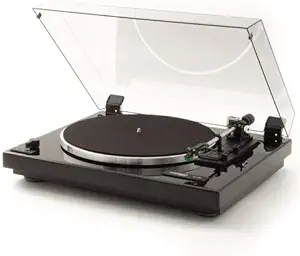
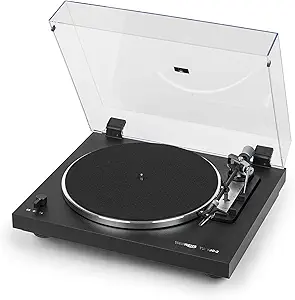
Thorens vs Audio-Technica: Overview
Comparing Thorens and Audio-Technica helps you determine which brand is best suited for your needs in Turntables. Both brands offer strong choices depending on your budget and key feature requirements.
Key Features & Comparison
Evaluate factors such as build quality, warranty, customer satisfaction, and total value before making your final purchase choice between Thorens and Audio-Technica.
Affordability
When evaluating affordability, Audio-Technica and Thorens occupy fundamentally different tiers of the audio market. Audio-Technica is widely celebrated for democratizing high-fidelity vinyl playback, offering class-leading entry-level and mid-range options such as the AT-LP60X and the iconic AT-LP120XUSB. By leveraging vast global manufacturing efficiencies and producing their own phono cartridges in-house, Audio-Technica provides fully functional, high-value packages at accessible price points that often include built-in phono preamps and pre-mounted styli. This positioning makes Audio-Technica the dominant choice for budget-conscious hobbyists, beginners, and home DJs seeking dependable performance without a significant upfront capital investment.
In stark contrast, Thorens targets the high-end audiophile and heritage luxury segment, where affordability is defined not by a low barrier to entry, but by long-term durability and artisanal European craftsmanship. Starting prices for introductory Thorens decks frequently exceed the cost of Audio-Technica’s flagship consumer models, with premium suspended-chassis decks like the TD 1600 or TD 1500 reaching into multi-thousand-dollar territory. While Audio-Technica excels at maximizing features per dollar, Thorens commands a premium based on heavy, precision-machined materials, non-resonant plinths, and bespoke mechanical engineering, making it an investment-grade pursuit rather than a cost-effective utility.
Sound Quality
Audio-Technica decks deliver a lively, clean, and punchy acoustic signature that appeals broadly to contemporary listeners across diverse genres. Paired natively with their respected VM95 series cartridges, models like the AT-LP140XP or LP5X offer balanced tonal separation, crisp high-frequency extension, and agile bass response. However, due to lighter-weight composite or plastic chassis construction and standard motor isolations, Audio-Technica turntables can occasionally exhibit higher resonance transfer, minor internal motor hum, and measurable wow and flutter compared to dedicated reference gear, slightly bottlenecking soundstage depth and micro-detail resolution.
Thorens, on the other hand, is legendary for its analog acoustic purity, warmth, and expansive soundstaging. Renowned for pioneering suspended sub-chassis architecture, Thorens isolates the platter and tonearm entirely from external vibrations and motor resonance, yielding an exceptionally black background with vanishingly low noise floors. The result is superior dynamic range, natural mid-range texture, and highly articulate instrument separation that extracts intricate nuances from vinyl grooves. For critical listeners demanding sonic transparency, rhythmic fluidity, and precise acoustic imaging, Thorens easily surpasses the sonic ceiling of Audio-Technica’s catalog.
Features & Functionality
Audio-Technica heavily prioritizes modern functionality, versatile connectivity, and hybrid utility. Many of their turntables come equipped with switchable moving magnet (MM) phono stages, internal analog-to-digital converters with USB outputs for vinyl archiving, and even Bluetooth aptX streaming capabilities. Additionally, their DJ-inspired direct-drive decks feature variable pitch faders, reverse playback buttons, quartz-locked speed accuracy, and removable headshells that allow effortless cartridge swapping. This comprehensive suite of contemporary tools makes Audio-Technica models exceptionally adaptable for digital integration and dynamic home playback.
Thorens intentionally eschews lifestyle digital conveniences in pursuit of purist mechanical excellence and playback optimization. You will rarely find USB outputs, Bluetooth transmitters, or integrated budget preamplifiers on a traditional Thorens deck; instead, engineering resources are focused on electronically regulated synchronous motors, dual-spring suspension systems, balanced XLR output options, and ultra-low-friction precision tonearms. Where Audio-Technica adds functional gadgetry to serve broad modern lifestyles, Thorens emphasizes modular audiophile engineering, allowing users to fine-tune azimuth, vertical tracking angle (VTA), and damping for maximum acoustic extraction.
Ease of Use & Setup Processes
Audio-Technica offers one of the most painless, consumer-friendly setup experiences in the modern turntable landscape. Many of their entry-level units arrive virtually plug-and-play, with pre-calibrated tracking forces and factory-aligned cartridges that require little more than mounting the platter and slipping on the belt. Even their intermediate direct-drive models, which require counterweight balancing and anti-skate calibration, provide clear, beginner-friendly markings and user-friendly manuals. Operating these turntables is straightforward, often incorporating fully automatic or semi-automatic push-button controls that eliminate the anxiety of manual cueing for novice listeners.
Thorens demands a considerably more deliberate, hands-on calibration process tailored toward experienced analog enthusiasts. Unpacking and setting up a Thorens deck often involves balancing suspended sub-chassis springs, carefully positioning heavy belt-driven platters, mounting uncalibrated high-end cartridges using precision protractors, and micro-adjusting VTA and azimuth settings. Furthermore, most classic Thorens models are strictly manual, requiring precise hand placement with a damped cueing lever to start and finish records. While Audio-Technica emphasizes immediate, hassle-free accessibility, Thorens rewards patience and mechanical engagement with deeply satisfying, ritualistic playback.