Stanton vs Thorens: Overview
Comparing Stanton and Thorens helps you determine which brand is best suited for your needs in Turntables. Both brands offer strong choices depending on your budget and key feature requirements.
Key Features & Comparison
Evaluate factors such as build quality, warranty, customer satisfaction, and total value before making your final purchase choice between Stanton and Thorens.
Affordability
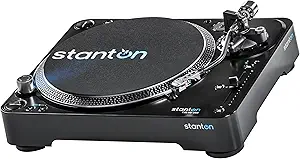
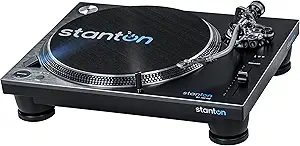
When examining the financial commitment required for these two storied audio brands, Stanton and Thorens occupy virtually opposite ends of the economic spectrum. Stanton has historically targeted the high-value, entry-level to mid-tier segment, focusing primarily on bedroom DJs, gigging performers, and budget-conscious vinyl enthusiasts. Their deck designs—largely inspired by industrial direct-drive standards—utilize cost-effective materials such as molded composite plastics reinforced with steel plates, enabling them to offer robust, feature-dense packages at competitive price points. For consumers seeking a functional, heavy-duty turntable without a steep upfront investment, Stanton models present exceptional value per dollar, often bundling usable cartridges, slipmats, and integrated preamps straight out of the box.
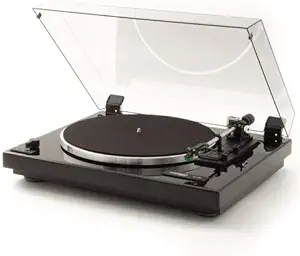
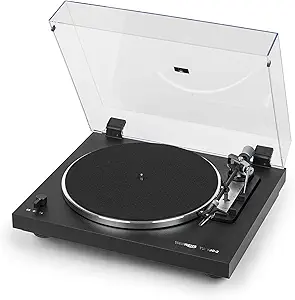
Conversely, Thorens operates almost exclusively within the premium Hi-Fi and ultra-high-end audiophile tier, where pricing directly reflects European engineering, artisanal craftsmanship, and specialized acoustic isolation. A standard entry-level Thorens unit routinely commands a price tag that exceeds Stanton’s flagship models, while their top-tier, suspended-subchassis turntables run into multi-thousand-dollar territory. This significant pricing disparity is justified through Thorens’ deployment of exotic tonearm materials, precision-machined aluminum platters, and decoupled motor systems designed for critical listening rather than utilitarian abuse. Consequently, while Stanton offers accessibility and mass-market affordability, Thorens demands a serious monetary investment intended for lifetime ownership and uncompromising analog fidelity.
Sound Quality
In terms of acoustic performance, the two brands cater to radically different listening paradigms. Stanton decks are engineered primarily for high-torque direct-drive stability, trackability, and durability under rugged operational conditions. While their higher-tier models deliver clean and punchy audio with solid bass response and reliable timing, the acoustic signature is fundamentally utilitarian. Direct-drive motors, especially those engineered to keep costs low, can transmit micro-vibrations and mechanical cogging through the platter directly to the stylus, manifesting as a higher noise floor and slightly compressed dynamic range. For typical DJ monitoring and casual vinyl playback, Stanton's output is more than adequate, but it lacks the micro-detail and spatial separation demanded by seasoned audiophiles.
Thorens, on the other hand, is an industry benchmark for sublime analog sound reproduction. Renowned for pioneering the suspended sub-chassis architecture, Thorens turntables excel at isolating the platter, tonearm, and cartridge from external acoustic feedback, footfall vibrations, and internal motor resonance. Utilizing precision belt-drive mechanisms and resonance-damped tonearms, Thorens decks produce a remarkably black background, allowing for expansive soundstaging, intricate instrument separation, and uncolored tonal accuracy. High frequencies are rendered with delicate airiness, while midrange vocals possess natural warmth and liquidity. When the objective is pure, critical Hi-Fi listening with minimum harmonic distortion and maximum signal-to-noise ratio, Thorens operates in an acoustic league far beyond Stanton.
Features & Functionality
Functionally, Stanton decks are built around performance-oriented versatility and hands-on control. Typical Stanton models boast an array of performance-driven features such as high-torque direct-drive motors, dual start/stop buttons for battle-style positioning, selectable pitch controls with wide operational ranges (often ±8%, ±16%, and up to ±50%), reverse playback capabilities, and key lock functionality. Furthermore, modern Stanton units frequently integrate selectable phono/line outputs, digital S/PDIF connections, and onboard USB audio interfaces for effortless vinyl digitization. This utilitarian approach provides the user with an agile, multi-functional tool designed to manipulate and capture audio across live, home, and studio environments.
In contrast, Thorens adopts a minimalist, purist philosophy where features exist solely to serve playback fidelity and mechanical longevity. Rather than packing their plinths with faders, buttons, and digital conversion chips, Thorens focuses functionality on precision belt-drive mechanics, electronic speed switching (33/45, and occasionally 78 RPM), precision anti-skating mechanisms, and dampened tonearm lift controls. While certain consumer-oriented Thorens models incorporate semi-automatic or fully automatic tonearm lift and shut-off features to protect delicate styli, they deliberately eschew pitch sliders, reverse play, and USB outputs to keep the audio path pristine. Thus, while Stanton prioritizes active tactile control and creative utility, Thorens emphasizes mechanical perfection and fidelity-first restraint.
Ease of Use & Setup Processes
From an out-of-the-box perspective, Stanton turntables generally offer a straightforward, modular setup tailored to practical users who want to begin spinning records quickly. Most Stanton packages come complete with pre-mounted headshells or integrated plug-and-play cartridges, adjustable counterweights with clear tracking force scales, and straightforward anti-skate dials. Because they usually feature built-in phono preamplifiers, users can connect them directly to powered speakers, standard receivers, or mixer line inputs without purchasing separate preamplification hardware. However, fine-tuning for DJ use—such as tonearm height adjustment (VTA) and stylus tracking calibration for scratch stability—does require a foundational understanding of tonearm geometry, though the learning curve remains relatively low.
Thorens presents a setup process that varies significantly across its product lines, ranging from accessible modern belt-drives to complex, highly technical audiophile rigs. While their entry-level modern models come pre-calibrated with factory-aligned Ortofon or Audio-Technica cartridges, their classic and high-end suspended-chassis decks demand meticulous, deliberate calibration. Dialing in the suspension bounce, setting precise vertical tracking angles, adjusting azimuth, and balancing counterweights can be an intimidating, labor-intensive ritual that requires dedicated alignment protractors and stylus gauges. Operating a Thorens is generally serene and uncomplicated once dialed in, but the initial setup and maintenance require patience, delicate handling, and a true appreciation for audiophile mechanics.