Rega vs Thorens: Overview
Comparing Rega and Thorens helps you determine which brand is best suited for your needs in Turntables. Both brands offer strong choices depending on your budget and key feature requirements.
Key Features & Comparison
Evaluate factors such as build quality, warranty, customer satisfaction, and total value before making your final purchase choice between Rega and Thorens.
Affordability
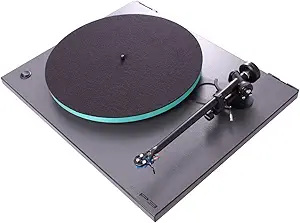
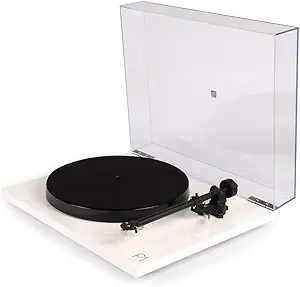
When evaluating affordability, Rega and Thorens adopt distinct pricing philosophies reflective of their manufacturing heritage. Rega, engineered and built in the United Kingdom, commands a strong presence in the entry-to-mid-tier audiophile market with its widely acclaimed Planar series. The Planar 1 and Planar 2 provide high-value entry points, focusing on stripping away non-essential components to maximize playback quality per dollar spent. While Rega models scale into high-end territory with the Planar 8 and 10, their introductory and mid-range options are exceptionally competitive, offering consumers an accessible gateway into true high-fidelity vinyl playback without demanding an exorbitant initial investment.
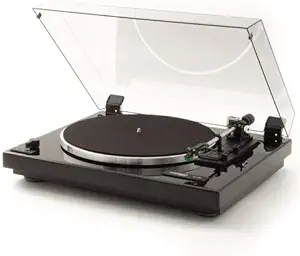
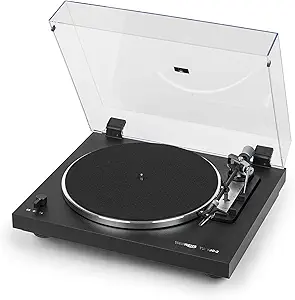
In contrast, Thorens occupies a slightly more premium pricing spectrum, driven by its storied Swiss-German engineering lineage and preference for complex mechanical systems. While Thorens offers entry models such as the TD 201 and TD 202, their pricing is frequently higher than equivalent bare-bones decks due to the inclusion of integrated preamplifiers, electronic speed switching, and higher-mass chassis materials. As consumers climb the Thorens catalog toward iconic suspended-subchassis models like the TD 1600 or TD 1500, the financial investment rises steeply. Consequently, Rega generally delivers a more aggressive value-to-performance ratio at lower price tiers, whereas Thorens represents an investment in heirloom-grade mechanical construction and traditional craftsmanship.
Sound Quality
In terms of acoustic performance, Rega is legendary for its fast, rhythmic, and dynamic sound signature. The brand’s engineering doctrine prioritizes extreme rigidity and ultra-low mass, exemplified by their lightweight plinths and stiff, one-piece RB tonearms. This design minimizes the absorption of energy, resulting in exceptional PRaT (Pace, Rhythm, and Timing), articulate transient response, and highly engaging attack. Bass response on Rega turntables is characteristically tight and punchy, avoiding bloated lower frequencies, while high-frequency resolution remains crisp and transparent, making them particularly favored by listeners who enjoy energetic genres such as rock, jazz, and modern electronic music.
Thorens delivers a contrasting sonic profile characterized by lushness, depth, and expansive soundstaging. Leveraging mass-loaded platters and, in their classic and higher-end lines, floating suspended subchassis designs, Thorens decks naturally isolate the stylus from external vibrations and motor noise. This high level of mechanical decoupling creates an exceptionally quiet, black background from which micro-details emerge with organic warmth. Bass reproduction through a Thorens turntable tends to be deeper, rounder, and more resonant than Rega’s taut presentation, offering an immersive, non-fatiguing listening experience that appeals strongly to classical, acoustic, and vocal enthusiasts seeking analog richness.
Features & Functionality
Rega’s approach to features is dogmatically minimalist, prioritizing pure mechanical performance over operational conveniences. Most Rega turntables, especially within the Planar 1 to Planar 3 range, lack built-in phono preamps, USB outputs, and electronic speed toggles; users must manually lift the platter and adjust the drive belt between pulley grooves to switch between 33⅓ and 45 RPM. Tonearms on Rega turntables typically do not feature detachable headshells, and adjustments for vertical tracking angle (VTA) or azimuth are intentionally restricted or require aftermarket spacers, reflecting the belief that excessive adjustment joints compromise arm rigidity and mechanical integrity.
Conversely, Thorens embraces functional versatility and modern user conveniences across much of its product line. Many entry-to-mid-range Thorens models incorporate built-in, switchable phono stages, electronic speed control buttons, and even semi-automatic or fully automatic tonearm mechanisms that lift and stop at the end of a record side. Furthermore, Thorens tonearms frequently feature standard SME-style detachable headshells, greatly simplifying cartridge swaps for enthusiasts who like to rotate between different styli or mono cartridges. For users prioritizing feature-rich utility and mechanical assistance over strict purist minimalism, Thorens provides a significantly more adaptable platform.
Ease of Use & Setup Processes
Rega excels in delivering an almost frictionless out-of-the-box setup experience, particularly on its introductory models. Turntables like the Planar 1 and Planar 2 feature factory-mounted Carbon cartridges with pre-calibrated tracking weights and factory-set anti-skate bias, allowing beginner and intermediate vinyl listeners to start playing records within minutes of unboxing. When upgrading cartridges within the Rega ecosystem, their proprietary three-point mounting system automatically aligns the cartridge geometry, eliminating the need for complex alignment protractors. The daily operational trade-off, however, comes with manual belt-shifting for speed changes and the care required to position the ultra-lightweight deck away from footfall vibrations.
Thorens presents a more traditional and technically involved setup process that caters to seasoned vinyl hobbyists. While their budget models are reasonably straightforward, models utilizing Thorens' celebrated suspended chassis require meticulous leveling, spring tuning, and counterweight calibration to perform optimally. Tonearm setup on Thorens decks involves precise adjustments of overhang, VTA, and magnetic or weight-based anti-skate mechanisms. While this introduces a steeper learning curve for novices, it affords experienced audiophiles complete granular control over fine-tuning their playback parameters, resulting in an immensely satisfying and mechanically customizable ownership experience.