Rega vs Denon: Overview
Comparing Rega and Denon helps you determine which brand is best suited for your needs in Turntables. Both brands offer strong choices depending on your budget and key feature requirements.
Key Features & Comparison
Evaluate factors such as build quality, warranty, customer satisfaction, and total value before making your final purchase choice between Rega and Denon.
Affordability
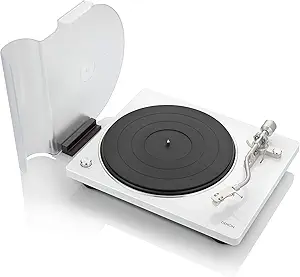
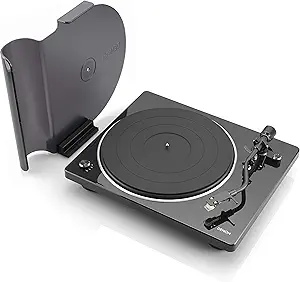
When analyzing affordability, Denon presents an exceptionally compelling value proposition, particularly for budget-conscious consumers and vinyl novices. The Japanese manufacturer leverages extensive global manufacturing infrastructure to produce fully equipped, feature-rich turntables at accessible entry and mid-tier price points. Models in Denon's lineup frequently retail with built-in phono preamplifiers and factory-installed phono cartridges, meaning a consumer’s initial purchase price represents an all-in cost with virtually zero mandatory auxiliary equipment needed to start listening. This bundled approach significantly reduces the barrier to entry, offering high feature density per dollar spent.
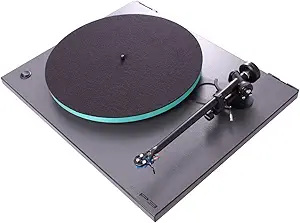
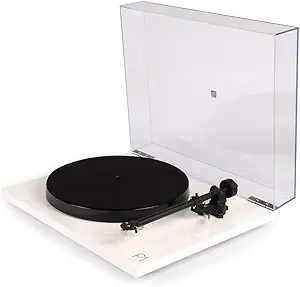
In contrast, Rega operates in a fundamentally different price tier, adhering to a purist, hand-assembled ethos based in the United Kingdom. While the entry-level Planar 1 represents an accessible entry into the high-end audiophile space, its baseline price typically surpasses Denon's consumer models, often without integrated preamplification. As listeners ascend Rega's catalog toward the Planar 3, Planar 6, and beyond, the financial investment climbs steeply into luxury territory. Rega's higher acquisition cost reflects precision British engineering and longevity, making it a platform aimed at dedicated audiophiles rather than casual, budget-focused buyers.
Sound Quality
In terms of acoustic performance, Rega is renowned within high-fidelity circles for its exceptional rhythm, timing, and dynamic realism. Built on low-mass, high-rigidity plinths paired with industry-benchmark RB-series tonearms, Rega decks excel at microscopic groove tracing and mechanical resonance control. This minimalist design philosophy eliminates sonic coloration, yielding an open, transparent soundstage with snappy transient response and superb detail retrieval. The listening experience is vibrant and engaging, making Rega the clear frontrunner for discerning audiophiles who prioritize sheer fidelity and natural acoustic balance.
Denon, on the other hand, engineers its turntables with a warm, musical, and forgiving sound signature that complements a wide array of listening environments and contemporary audio setups. Utilizing heavier dampening and robust drive mechanisms—including their historic expertise in direct-drive motors—Denon decks provide steady pitch stability and punchy low-frequency performance. While they may not deliver the micro-detail, extreme channel separation, or expansive three-dimensional imaging of an equivalent Rega, Denon decks deliver a smooth, pleasant acoustic profile that softens harsh pressings and excels across diverse musical genres without demanding an intensely tuned listening room.
Features & Functionality
Denon stands far ahead in sheer convenience, automation, and modern utility. Recognizing the lifestyle demands of everyday consumers, Denon frequently equips its decks with semi-automatic or fully automatic tonearm mechanisms, preventing stylus wear by lifting and returning the arm at the end of a record side. Moreover, select models integrate USB outputs for high-resolution vinyl digitization, electronic speed selection switches for seamless switching between 33⅓ and 45 RPM, and switchable phono stages that allow direct connection to line-level powered speakers or AV receivers without specialized inputs.
Rega embraces an austere, minimalist philosophy that intentionally excludes non-essential electronic features in pursuit of pure audio fidelity. Rega turntables are strictly manual, requiring hands-on tonearm cueing and placement, and entry-level models often require the listener to manually reposition the drive belt on the motor pulley beneath the platter to change rotational speeds. Features like USB outputs or integrated preamps are virtually nonexistent in their core high-performance range, as Rega engineers consider switches and supplementary boards potential conduits for electrical interference and mechanical vibration that compromise signal integrity.
Ease of Use & Setup Processes
Denon excels at providing a turnkey, plug-and-play experience that prioritizes user convenience straight out of the box. Setup is straightforward, typically requiring only the placement of the platter, the balancing of a pre-configured counterweight, and the attachment of an included headshell. The integration of internal preamplifiers and standard RCA connections means even complete novices can connect the turntable directly to an auxiliary port, soundbar, or powered bookshelf monitor within minutes, completely eliminating the intimidating trial-and-error often associated with analog hardware.
Rega also offers remarkably swift setup on its entry-level decks—such as the Planar 1 with its pre-set bias and balance weight—yet integration into a larger audio ecosystem demands greater consumer expertise. Because most Rega turntables lack internal preamplifiers and grounding switches, users must carefully match external phono stages, amplifiers, and interconnects. Furthermore, higher-end Rega models require meticulous tonearm balancing, tracking force calibration, and precise cartridge alignment using protractors, catering to enthusiasts who view hands-on mechanical optimization as an integral part of the vinyl hobby.