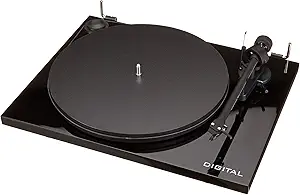
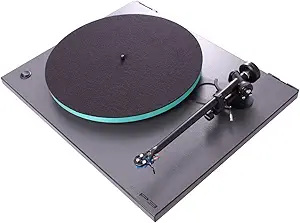
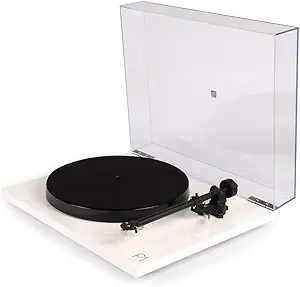
Pro-Ject vs Rega: Overview & Brand Philosophy
In the modern vinyl revival, two European manufacturers stand uncontested as the titans of high-fidelity, belt-drive turntables: Austria’s Pro-Ject Audio Systems and England’s Rega Research. Both companies were forged during periods when analog was declared dead—Rega launching in the mid-1970s and refining its ethos through the rise of the compact disc, and Pro-Ject boldly debuting in 1991 right as digital audio completely dominated the retail landscape. Despite sharing a fundamental commitment to stereo analog playback, their industrial approaches, manufacturing philosophies, and acoustic priorities sit at polar opposites of hi-fi engineering.
Pro-Ject, founded by Heinz Lichtenegger and manufacturing out of the Czech Republic, believes in modern manufacturing efficiency, comprehensive modularity, and acoustic isolation through mass and damping. Pro-Ject approaches the turntable market by providing listeners with immense versatility, modern aesthetic customization, cutting-edge material science (such as carbon-fiber and thermo-plastic elastomer damping), and feature-rich options spanning every conceivable price point. Their philosophy emphasizes eliminating external acoustic resonances and offering the consumer unprecedented adjustability to fine-tune azimuth, vertical tracking angle (VTA), and playback speed.
Rega Research, guided for decades by founder Roy Gandy in Southend-on-Sea, Essex, adheres to an uncompromising, almost purist mechanical doctrine: low mass, extreme rigidity, and minimalist engineering. Rega rejects the concept of heavily damped, high-mass plinths, arguing that high mass stores kinetic energy rather than dissipating it, ultimately muddying the musical signal. Instead, Rega utilizes ultralight plinths reinforced by rigid phenolic and ceramic resin braces coupled to one-piece cast tonearms. Rega prioritizes timing, dynamic agility, and mechanical simplicity over end-user adjustability and external features.
Key Differences & Technological Comparison
The philosophical divide between Pro-Ject and Rega manifests across four critical components: tonearm design, plinth engineering, motor control, and user adjustability.
Tonearm Engineering: Pro-Ject is famous for bringing single-piece carbon-fiber tonearms (such as those found on the Debut Carbon EVO and X-series) to affordable price brackets. Carbon fiber provides exceptional stiffness with low resonance, combined with aluminum bearing housings and damped counterweights. Most importantly, Pro-Ject tonearms provide full adjustments for tracking force, anti-skate, vertical tracking angle (VTA), and azimuth. Conversely, Rega’s legendary hand-assembled tonearms (RB220, RB330, and up) rely on stiff, one-piece cast aluminum alloy tubes that eliminate mechanical joints entirely to reduce micro-vibrations. However, Rega tonearms deliberately omit VTA and azimuth adjustments, advocating that mechanical joints for height adjustment compromise baseline arm rigidity.
Plinth Construction and Resonance Management: Pro-Ject uses dense, CNC-machined MDF, often combined with sandwich structures using carbon fiber, aluminum, and sorbothane/TPE (Thermo-Plastic Elastomer) damping to isolate the platter and tonearm from footfall and motor vibration. Rega takes the opposite approach: ultralight particulate cores clad in aerospace-grade laminates or syntactic foam (as seen on the Planar 8 and 10), tied together with their proprietary "Double Brace" technology. This creates an ultra-stiff beam directly between the tonearm bearing and the main hub bearing, moving unwanted energy away from the pickup cartridge instantly without storing it.
Motor Drive and Platter Design: Both brands use low-vibration AC synchronous motors, but their execution differs. Entry-to-mid Pro-Ject tables typically integrate an electronic speed-change switch (33/45 RPM) directly into the chassis driven by a sophisticated DC-driven AC generator. Plinths are paired with heavy steel or resonance-free acrylic platters. Rega prioritizes manual belt adjustments under the platter on their entry models (Planar 1 and Planar 2) to prevent electronic interference near the signal path. Only their higher-tier models (Planar 3 with Neo PSU, Planar 6) include precision off-board electronic power supplies. Rega favors dynamic inertia over uniform mass, famously utilizing float glass and oxide-ceramic platters with flywheel weight concentration on the outer rim.
Pros & Cons Comparison
Pro-Ject Turntables
- Pro: Exceptional Adjustability: Native support for VTA and azimuth adjustment allows audiophiles to mount virtually any third-party cartridge without aftermarket spacers.
- Pro: Everyday Ergonomics: Most modern models feature electronic push-button speed switching and detachable RCA interconnects, allowing for simple cable upgrades.
- Pro: Materials & Aesthetics: High-end finishes, real wood veneers, and widespread use of carbon-fiber tonearms deliver superior perceived tactile value per dollar.
- Con: Acoustic Damping Character: Some listeners find high-mass/damped decks can sound slightly relaxed or dynamically polite compared to ultra-rigid alternatives.
- Con: QC Inconsistencies: Given their high production volumes, minor setup adjustments out-of-the-box (like motor suspension alignment) can occasionally be required.
Rega Turntables
- Pro: Class-Leading Timing & Rhythm: The low-mass/high-rigidity design delivers unrivaled PRaT (Pace, Rhythm, and Timing), punchy low-end transients, and open musicality.
- Pro: Benchmark Tonearm Quality: Rega's cast aluminum tonearms feature some of the lowest-friction, highest-tolerance custom bearings available in the industry.
- Pro: Proprietary Synergy: Three-point cartridge mounting makes aligning native Rega moving magnet (MM) and moving coil (MC) cartridges fast, fool-proof, and micro-metric.
- Con: Limited Adjustability: Adjusting VTA for non-Rega cartridges requires dismantling the arm to install third-party shims or spacers.
- Con: Spartan Features: Hardwired phono cables on most models, lack of built-in speed control on entry tiers, and lightweight construction can leave some feeling the product lacks physical mass for the price.
Performance, Durability & Value Analysis
When evaluating sonic performance, the two brands cater to distinct musical tastes. Rega is universally recognized for its dynamic realism, rhythmic drive, and transient speed. Fast percussive attacks, jazz upright bass lines, and rock arrangements sound intensely alive and cohesive on a Rega Planar, driven by the structural rigidity of their one-piece tonearms and brace systems. Pro-Ject decks counter with an ultra-quiet, ink-black background, spacious imaging, and a rich, linear tonal balance. Because Pro-Ject heavily isolates mechanical components, their playback often sounds more relaxed, lush, and refined over long, non-fatiguing listening sessions.
In terms of longevity and lifecycle value, both manufacturers exhibit remarkable durability, though through different engineering avenues. Rega's minimalist design philosophy means there are fewer electronic parts to fail; decades-old Planar 2 and 3 decks remain in daily operation worldwide, bolstered by continuous parts availability and simple maintenance. Pro-Ject dominates the pure feature-to-dollar metric: an entry-to-mid Pro-Ject turntable routinely bundles a pre-installed Ortofon or Sumiko cartridge, an electronic motor controller, a carbon tonearm, and gold-plated RCA jacks at a price point where Rega provides a completely manual, resin-plattered setup with fixed leads.
Final Verdict: Which Brand Should You Choose?
Choosing between Pro-Ject and Rega comes down to your personal approach to audio playback: do you prioritize ease of cartridge upgrading, modern features, and adjustability, or do you seek pure, uncompromised mechanical timing and plug-and-play simplicity?
Choose Pro-Ject if: You want the most versatile, feature-rich turntable for your money. If you appreciate the convenience of electronic 33/45 RPM speed switching, value the freedom to experiment with different phono cartridges via simple VTA/azimuth adjustments, or want to swap out your phono cables down the line, Pro-Ject is the definitive choice. Models like the Pro-Ject Debut Carbon EVO and X1 remain the sweet spot for vinyl enthusiasts who want both aesthetic luxury and technical flexibility.
Choose Rega if: Your primary directive is pure, rhythmic sound quality and you prefer an uncompromising, minimalist platform. If you want a turntable that delivers extraordinary dynamic attack, pairs seamlessly with factory 3-point cartridges, and relies on precise British mechanical engineering that will run uninterrupted for decades without needing re-calibration, Rega is the purist's gold standard. Decks like the Rega Planar 3 represent an undisputed benchmark for analog timing and high-fidelity musical engagement.
Affordability
When assessing affordability in the audiophile turntable market, Pro-Ject and Rega operate on fundamentally different engineering and economic philosophies. Pro-Ject dominates the budget-to-midrange territory through extensive vertical integration and economies of scale, manufacturing the vast majority of its parts in-house across European facilities. This infrastructure allows Pro-Ject to deliver feature-dense, out-of-the-box solutions at remarkably low entry points, notably within their Primary, T-Line, and Debut series. For under $500, Pro-Ject routinely provides components such as pre-installed Ortofon cartridges, built-in phono preamps, electronic speed control switches, and even carbon-fiber tonearms. By offering distinct feature tiers, Pro-Ject makes analog audio accessible without requiring significant upfront capital or immediate auxiliary investments, making them the superior choice for cost-conscious buyers seeking maximum feature density per dollar.
Conversely, British manufacturer Rega treats affordability through the lens of minimalist, high-performance mechanical engineering, deliberately stripping away secondary features to invest in structural rigidity and low-mass plinths. Rega’s true entry point begins higher with the Planar 1, an intentionally bare-bones deck lacking electronic speed switching, built-in phono stages (on the base model), or adjustable vertical tracking angles. Rega allocates its manufacturing budget almost entirely into low-tolerance components that matter most to fundamental sound reproduction, most notably their benchmark RB-series tonearms with zero-play bearings and ultra-stiff phenolic resin platters. While a Rega deck presents a higher initial barrier to entry and often necessitates the purchase of an external pre-amplifier, its lifetime cost of ownership is offset by exceptional reliability, minimal moving parts prone to failure, and robust secondary-market resale value.
Ultimately, the practical trade-off between the two brands boils down to feature accessibility versus purist modularity. Pro-Ject delivers immediate fiscal gratification and high out-of-the-box utility; a consumer can spend under $400 and receive an all-in-one system ready to connect to powered speakers. Rega, on the other hand, asks for a larger upfront investment for a deck that offers zero convenience features, betting that the consumer will appreciate superior acoustic timing and long-term durability over push-button ease. For vinyl enthusiasts with tight budgetary constraints looking for the highest performance-to-cost ratio in features, Pro-Ject is the uncontested victor, whereas Rega offers a higher-cost, pure-play foundation designed to be upgraded and preserved over decades.
Sound Quality
When evaluating the sound quality of Pro-Ject and Rega turntables, listeners are fundamentally choosing between two distinct engineering philosophies: mass-loaded isolation versus ultra-lightweight rigidity. Rega champions a "mass absorbs energy" design ethos, utilizing featherweight, high-rigidity plinths (such as the Tancast core in the Planar 3 and Planar 6) paired with their legendary, hand-assembled single-piece tonearms like the RB330. This structural synergy gives Rega turntables unmatched rhythmic drive, pinpoint micro-dynamics, and a dynamic timing—often referred to as Pace, Rhythm, and Timing (PRaT)—that makes rock, jazz, and fast-tempo tracks sound thrillingly alive. In contrast, Pro-Ject addresses resonance through damping and material diversity, utilizing high-density MDF or acrylic plinths, heavy TPE-damped aluminum or sub-platter designs, and carbon-fiber composite tonearms found on models like the Debut Carbon EVO and X2. This approach yields an exceptionally low noise floor, providing a warm, smooth, and expansive soundstage with articulate separation that excels in showcasing acoustic textures and orchestral depth.
The sonic divergence extends deeply into the cartridge pairings and technical ecosystems favored by each manufacturer. Rega integrates proprietary moving-magnet and moving-coil cartridges (such as the Elys 2, Exact, or Ania) that utilize a three-point mounting system, optimizing factory alignment to virtually eliminate tracing distortion and extract a vibrant, forward mid-range with sparkling, transparent highs. Pro-Ject, conversely, historically partners with Ortofon (and more recently produces its own Pick it line), providing a more linear, neutral, and balanced frequency response with full, subterranean bass extension. Furthermore, Pro-Ject equips even its entry-to-midrange decks with fully adjustable vertical tracking angle (VTA) and azimuth, offering audiophiles the technical flexibility to fine-tune third-party cartridges to sonic perfection. Rega intentionally omits VTA and azimuth adjustments to preserve arm-tube stiffness, trading off plug-and-play cartridge adaptability to maintain structural integrity and minimize vibrational smearing.
Ultimately, the practical trade-offs regarding sound quality depend on room dynamics and personal sonic taste. Rega’s low-mass design, while sonically expressive and revealing, is notoriously sensitive to external environmental vibrations and footfalls; without a dedicated wall bracket or exceptionally sturdy isolation platform, its pristine sound quality can easily be compromised by structural feedback. Pro-Ject’s heavier construction and heavily damped, height-adjustable TPE feet offer superior intrinsic isolation, delivering consistent, deep, and uncolored audio fidelity even on standard audio furniture. Audiophiles prioritizing explosive musical urgency, pitch accuracy, and holographic mid-range clarity will naturally gravitate toward Rega, while those seeking a refined, lush presentation with pitch-black backgrounds and greater cartridge-tuning flexibility will find Pro-Ject to be the more sonically versatile investment.
Features & Functionality
When evaluating features and functionality, Pro-Ject and Rega represent two fundamentally opposed engineering philosophies in modern turntable design: feature-rich versatility versus purist minimalism. Pro-Ject approaches product development by giving listeners modern convenience and comprehensive adjustability right out of the box. Even on entry-to-midrange models like the Debut Carbon EVO, Pro-Ject integrates features such as electronic speed switching (33/45/78 RPM) via a discreet rocker switch, height-adjustable damped aluminum leveling feet, and fully detachable RCA interconnects that allow consumers to upgrade cabling easily. Furthermore, Pro-Ject’s tonearms offer granular micro-adjustments for both azimuth and vertical tracking angle (VTA). This level of mechanical flexibility makes Pro-Ject highly adaptable to third-party phono cartridges and varied playback setups, appealing directly to hobbyists who value functional customizability and plug-and-play modernization.
Conversely, Rega’s engineering ethos—epitomized by their Planar series—sacrifices non-essential features on the altar of acoustic rigidity and mechanical simplicity. Rega deliberately omits electronic speed switches on baseline models (requiring manual belt-shifting under the platter on the Planar 1 and 2), hardwires high-quality RCA leads directly into the plinth, and uses non-adjustable, fixed rubber feet to maintain low mass and high stiffness. Their world-renowned, single-piece cast tonearms (such as the RB110 and RB330) explicitly lack azimuth adjustment and native VTA calibration. To Rega, joints and set-screws introduce unwanted parasitic resonance and energy loss. While adjusting VTA on a Rega requires purchasing aftermarket structural shims, this deliberate austerity simplifies the baseline operational footprint and guarantees factory-optimized geometry—particularly when paired with Rega’s proprietary three-point mounting cartridge system.
The practical trade-off between the two brands comes down to user agency versus curated performance. Pro-Ject’s high-density feature set offers superior real-world convenience, making daily operation more effortless for consumers who spin records across multiple formats, swap cartridges frequently, or lack an external phono stage (thanks to widespread built-in preamp and USB options on select models). Rega, on the other hand, delivers fewer mechanical bells and whistles, directing all manufacturing capital toward precision low-friction bearings, ultra-lightweight plinths, and exceptional motor stability. Consumers prioritizing day-to-day usability, ergonomic conveniences, and cartridge setup flexibility will find Pro-Ject functionally superior, while purists willing to sacrifice automated creature comforts for structural rigidity and streamlined simplicity will favor Rega’s uncompromised design architecture.
Ease of Use & Setup Processes
When evaluating the initial setup and everyday usability of hi-fi turntables, Pro-Ject and Rega approach user experience from fundamentally divergent engineering philosophies. Pro-Ject adopts a feature-rich, highly adaptable model designed to cater to both novices and analog tinkerers. Many entry-to-midrange Pro-Ject decks, such as those in the Debut series, feature electronic speed control switches that effortlessly toggle between 33 and 45 RPM at the push of a button, entirely bypassing the need to lift the platter. However, Pro-Ject’s initial calibration can prove fiddly for beginners. Setting up the tracking force frequently involves manual counterweight balancing and checking with an external stylus gauge, while their classic, dangling-thread anti-skate weight mechanism requires careful manual dexterity and is notoriously prone to accidental dislodging during routine dust cover cleaning or cartridge maintenance.
Conversely, Rega champions an ultra-minimalist, purist engineering methodology that prioritizes immediate mechanical plug-and-play simplicity, albeit with distinct operational trade-offs. Rega's tonearms (such as the RB110, RB220, and RB330) are among the easiest in the industry to balance out of the box, thanks to pre-calibrated stop-points on the counterweights and integrated, spring-loaded anti-skate sliders or auto-bias mechanisms. Furthermore, consumers pairing a Rega turntable with a proprietary Rega moving-magnet cartridge benefit from an ingenious three-point mounting system that entirely eliminates the intimidating process of manual cartridge alignment and overhang calculation. The primary usability downside for Rega is found in everyday playback: baseline models like the Planar 1 and Planar 2 necessitate manually lifting the heavy glass or phenolic resin platter to physically shift the drive belt across pulley tiers to change speeds, which is significantly more cumbersome than Pro-Ject’s push-button architecture.
Ultimately, the consumer trade-off between the two brands rests on whether a user prioritizes painless initial assembly or frictionless day-to-day operation. Rega is unmatched for quick, error-free assembly; from the moment unboxing begins to dropping the needle, a consumer can be spinning vinyl within minutes without consulting alignment protractors or digital scales. However, for listeners who actively rotate through 7-inch singles and 12-inch LPs, the physical intervention of manual belt adjustments can become a daily annoyance unless they invest in an external Neo PSU power supply. Pro-Ject demands higher patience, precision, and comfort with mechanical calibration during the unboxing phase, but rewards the listener with superior ergonomic conveniences, built-in phono stage options, and electronic push-button operation for daily listening.