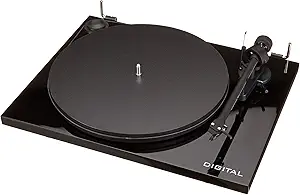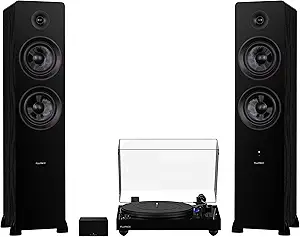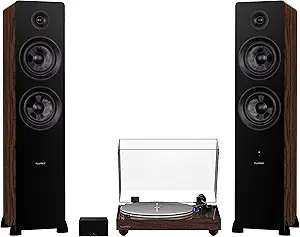





Pro-Ject vs Fluance: Overview
Comparing Pro-Ject and Fluance helps you determine which brand is best suited for your needs in Turntables. Both brands offer strong choices depending on your budget and key feature requirements.
Key Features & Comparison
Evaluate factors such as build quality, warranty, customer satisfaction, and total value before making your final purchase choice between Pro-Ject and Fluance.
Affordability
When evaluating value per dollar, Fluance presents an exceptionally aggressive pricing model that appeals directly to budget-conscious vinyl enthusiasts. The Canadian brand structures its Reference Series—from the entry-level RT80 up to the flagship RT85—in clearly defined, linear price tiers where each incremental step up delivers substantial hardware improvements. Fluance leverages efficient offshore manufacturing to bundle high-end, name-brand components like Ortofon 2M Blue cartridges and high-density acrylic platters at price points where competitors typically include generic, entry-level styli. This results in an unmatched performance-to-cost ratio, allowing consumers to acquire fully equipped, audiophile-adjacent turntables without needing immediate aftermarket upgrades.
Pro-Ject, while operating across a far broader price spectrum ranging from introductory models to multi-thousand-dollar reference decks, commands a premium rooted in its European manufacturing heritage. Even Pro-Ject's most accessible models, such as the Primary E or Debut III, carry slightly higher retail prices relative to their feature sets, frequently shipping with more modest factory cartridges and lightweight composite platters. Pro-Ject's engineering philosophy prioritizes fundamental mechanical precision, low-tolerance bearings, and proprietary component design over bundled luxury add-ons. Consequently, while entry-level buyers may find Pro-Ject less immediately generous out of the box, the brand delivers long-term economic value through robust, serviceable platforms designed for decades of incremental refinement rather than complete replacement.
Sound Quality
In terms of acoustic performance, Fluance designs its turntables to deliver an immediate, dynamic, and engaging sound signature that flatters a wide variety of musical genres. Utilizing solid MDF plinths resting on dual-layer isolation feet, Fluance decks successfully decouple the playback surface from external acoustic feedback. The brand's decision to partner with Ortofon and Audio-Technica ensures that their higher-tier models, particularly the RT85 with its 2M Blue cartridge, deliver crisp channel separation, transparent high-frequency extension, and a lively midrange. However, because Fluance relies on an S-shaped aluminum tonearm with standard detachable headshells, the assembly carries slightly more effective mass and potential resonance points compared to rigid, one-piece audiophile designs, resulting in a sound that favors punch and clarity over ultimate micro-detail resolution.
Pro-Ject approaches sound quality through strict purist engineering principles, aiming for neutral, uncolored acoustic extraction. Renowned for pioneering single-piece, tapered carbon-fiber tonearms on models like the Debut Carbon EVO, Pro-Ject dramatically reduces mechanical resonance and tracking distortion across the record groove. This exceptional arm rigidity, paired with decoupled AC synchronous motors and sub-platter drive systems, yields a noticeably lower noise floor, tighter bass control, and a more expansive, layered soundstage. Audiophiles seeking transparent tonal accuracy and deep instrumental separation will find that Pro-Ject extracts subtleties in complex vinyl pressings that the more energetically voiced Fluance decks may slightly smooth over.
Features & Functionality
Fluance leans heavily into modern convenience and utilitarian features, designing turntables that bridge the gap between traditional analog purity and contemporary user expectations. A signature feature across much of the Fluance lineup is the inclusion of an optical speed-sensor motor, which continuously monitors and corrects platter rotation to minimize wow and flutter down to impressive levels. Furthermore, Fluance incorporates a defeatable auto-stop mechanism that gently halts platter rotation at the end of a record side, preventing unnecessary stylus wear without compromising the signal path. The modular nature of their S-shaped tonearm, complete with an SME-standard bayonet headshell mount, also empowers users to hot-swap pre-mounted cartridges in seconds.
Conversely, Pro-Ject champions a minimalist, purist philosophy where unnecessary mechanical appendages are deliberately eliminated to preserve signal integrity. The vast majority of Pro-Ject turntables are fully manual, avoiding the mechanical drag or complex linkages associated with auto-stop systems. Instead of headshell-swapping versatility, Pro-Ject emphasizes chassis-level mechanical optimization, such as electronically regulated precision motor control (Speed Box technology) hidden beneath the plinth, heavy TPE-damped steel or acrylic platters, and gold-plated RCA breakout junctions that facilitate audiophile interconnect experimentation. Pro-Ject's functionality is deeply focused on isolation and rotational stability rather than automated assistance, catering to listeners who prioritize mechanical simplicity over convenience.
Ease of Use & Setup Processes
Fluance delivers one of the most accessible out-of-the-box experiences in the modern turntable industry, prioritizing clear consumer onboarding. Their decks ship with cartridges factory-aligned on detachable headshells, intuitive counterweights with clear tracking-force markings, and built-in bubble levels on select models to simplify leveling. The inclusion of integrated, switchable phono preamplifiers on entry models like the RT80 and RT81 allows novices to connect directly to powered speakers or receivers without auxiliary equipment. Moreover, switching playback speeds from 33 1/3 to 45 RPM is universally handled via a tactile, electronic top-panel dial, entirely removing the friction of manual mechanical adjustments.
Pro-Ject demands a more traditional, hands-on mechanical setup that may intimidate vinyl newcomers while satisfying experienced hobbyists. While newer iterations like the Debut Carbon EVO have incorporated electronic rocker switches for speed changes beneath the plinth, historically—and on several current models—users must manually remove the platter and shift the drive belt across a stepped motor pulley to change speeds. Counterweight calibration on Pro-Ject's tonearms requires precise balancing and an external scale for peak accuracy, and adjusting anti-skate often involves delicate, thread-and-weight gravity assemblies rather than the dial-operated magnetic systems found on Fluance. Ultimately, setting up a Pro-Ject demands greater patience and mechanical finesse, rewarding the user with deeper engagement in the mechanical physics of analog playback.
Compare current retail pricing, active promotions, and verified stock availability directly from authorized stores: