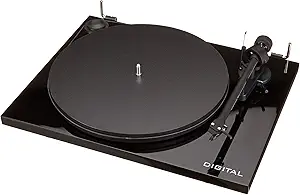
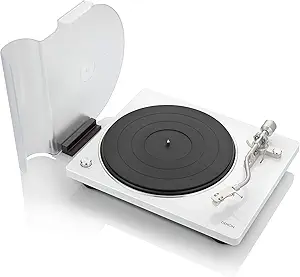
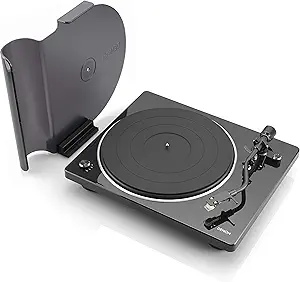
Denon vs Pro-Ject: Overview & Brand Philosophy
The resurgence of vinyl has revitalized the turntable market, positioning legacy electronics giants alongside boutique audio manufacturers. Denon, founded in Japan in 1910, carries more than a century of audio engineering prestige. Within the turntable sector, Denon is revered for its historical contributions to direct-drive broadcasting decks and its iconic DL-103 moving-coil cartridge. Today, Denon’s philosophy revolves around seamless integration, high-tech engineering, and end-user convenience. Their turntables typically bridge the gap between traditional analog warmth and modern lifestyle functionality, catering to audiophiles who appreciate automated features, built-in phono preamps, and sleek, contemporary aesthetics without sacrificing structural fidelity.
Conversely, Pro-Ject Audio Systems represents the purist, minimalist counterweight to mass-market audio. Founded in Austria in 1991 by Heinz Lichtenegger amidst the peak of the compact disc era, Pro-Ject was built on a singular, audacious mission: to produce high-performance, fully manual, European-made analog turntables at accessible price points. Pro-Ject’s philosophy adheres strictly to analog purism. By stripping away extraneous microprocessors, mechanical automation, and superfluous circuitry, the company channels all manufacturing resources directly into mechanical resonance control, precision tonearms, and premium chassis materials. Rather than prioritizing plug-and-play features, Pro-Ject champions acoustic isolation, modularity, and an upgrade pathway that appeals to deliberate, critical listeners.
Key Differences & Technological Comparison
The foundational divergence between Pro-Ject and Denon lies in their drive mechanisms and mechanical execution. Historically, Denon made its name on precision direct-drive systems, and modern offerings like the DP-400, DP-450USB, and flagship DP-3000NE utilize sophisticated motor control algorithms to ensure near-zero rotational cogging. Many of Denon's mid-range consumer decks, such as the DP-300F and DP-400 series, employ semi-automatic or fully automatic features, lifting the tonearm at the end of a record side or engaging auto-stop mechanisms. These features minimize record wear and improve everyday usability, though purists argue that additional linkage beneath the chassis can introduce subtle mechanical resonances.
Pro-Ject focuses almost entirely on decoupled, low-noise belt-drive systems across its broad catalog—from the entry-level Primary E and Debut Carbon lines up to the high-end Xtension series. By isolating the AC or DC motor from the platter using synthetic drive belts and TPE-damped suspension, Pro-Ject minimizes motor vibration transfer to the stylus. Unlike Denon's signature S-shaped tonearms, which feature removable headshells for rapid cartridge swapping, Pro-Ject is renowned for its proprietary, one-piece carbon fiber or carbon-aluminum tonearms. These straight tonearms offer exceptional rigidity and low effective mass, suppressing internal acoustic reflections far more effectively than traditional aluminum variants, albeit at the cost of modular cartridge convenience.
Material science and internal electronics further distinguish the two brands. Denon frequently equips its consumer models with onboard moving-magnet (MM) phono stages and high-resolution analog-to-digital converters (as seen on the DP-450USB), making them immediately compatible with modern AV receivers, soundbars, and digital archiving setups. Pro-Ject, with few exceptions, deliberately omits built-in electronics to avoid electrical interference, favoring high-mass MDF or acrylic platters, heavy non-resonant plinths, and gold-plated RCA outputs intended for external preamplifiers. In essence, Denon builds integrated, user-friendly consumer hi-fi hubs, while Pro-Ject builds modular, resonance-damped mechanical precision instruments.
Pros & Cons Comparison
Denon Turntables
Pros:
- Convenience and Automation: Availability of auto-stop, semi-automatic, and fully automatic playback options reduces the risk of accidental record damage.
- Versatile S-Shaped Tonearms: Standardized, removable headshells allow users to quickly swap pre-mounted cartridges and styli for different records.
- Modern Integrated Features: Many models include capable, switchable onboard phono stages and direct USB digital recording capabilities.
- Refined Aesthetics: Sleek, curved chassis designs and unique fitted dust covers that double as album jacket displays.
Cons:
- Internal Resonance: Mechanical linkages associated with auto-mechanisms can introduce minor chassis resonances that critical listeners may detect.
- Limited Upgrade Ceiling: Lower-to-mid tier decks offer fewer options for tonearm adjustments, sub-platter upgrades, and electronic speed-box enhancements.
Pro-Ject Turntables
Pros:
- Superior Tonearm Engineering: Single-piece carbon fiber tonearms provide exceptional stiffness and dampening properties rarely matched at their price points.
- Audiophile Purism: Fully manual operation with strictly decoupled motors and resonance-treated MDF/acrylic plinths maximizes signal-to-noise ratio.
- Extensive Upgrade Ecosystem: Comprehensive catalog of official aftermarket upgrades, including aluminum sub-platters, Acryl-IT platters, and dedicated linear power supplies.
- European Manufacturing: Precision hand-assembly across dedicated production facilities in Europe (primarily the Czech Republic and Slovakia).
Cons:
- Strictly Manual Operation: Most models require physical belt repositioning to change speeds (33 to 45 RPM) and lack end-of-side auto-lift features.
- Setup Complexity: Setting up counterweights, anti-skate hanging weights, and precise cartridge alignments demands patience and technical care.
Performance, Durability & Value Analysis
When assessing acoustic performance, Pro-Ject generally yields a lower noise floor, wider soundstage, and superior dynamic retrieval when compared dollar-for-dollar against Denon. By prioritizing high-grade plinth density, precision stainless steel bearings, and stiff carbon tonearms, Pro-Ject ensures that the stylus extracts microscopic groove information with minimal coloration. Denon, while delivering warm, highly musical playback with excellent speed stability, tends to sound slightly more compressed at entry-to-mid tiers due to lighter plinth materials and the internal electronic pathways running near the tonearm wiring. However, at the extreme high end, Denon’s direct-drive engineering matches top-tier audiophile benchmarks, delivering instantaneous torque and rock-solid pitch stability.
In terms of longevity and long-term value, both brands enjoy strong market reputations, but they require different maintenance expectations. Denon’s direct-drive and electronically assisted units have more complex internal circuits, mechanical gears, and switches that could require specialized repair decades down the road, although their baseline reliability out of the box is exceptionally high. Pro-Ject’s reliance on purely mechanical, stripped-down components means fewer electronic points of failure; belts can be replaced cheaply in seconds, motors are straightforward to service, and the wide availability of replacement parts ensures longevity spanning decades. From a pure depreciation and resale standpoint, Pro-Ject holds an edge among audiophile communities, whereas Denon maintains broad appeal in general consumer markets.
Final Verdict: Which Brand Should You Choose?
Choosing between Pro-Ject and Denon ultimately hinges on where your priorities lie on the spectrum between everyday listening convenience and uncompromising analog purism:
Choose Denon if:
- You value seamless usability, auto-stop functionality, or automatic tonearm mechanisms that prevent the stylus from running in the lead-out groove indefinitely.
- You want an all-in-one package with a built-in phono preamplifier or direct USB ripping functionality to quickly digitize your vinyl collection.
- You prefer an S-shaped tonearm with a removable headshell, allowing you to easily swap between stereo, mono, or specialized cartridges in seconds.
Choose Pro-Ject if:
- Acoustic performance, micro-detail retrieval, and high isolation from mechanical vibrations are your absolute primary objectives.
- You view your turntable as an evolving modular system that you intend to upgrade over time with acrylic platters, high-end cartridges, and outboard preamps.
- You appreciate hand-crafted European craftsmanship and prefer the hands-on, deliberate ritual of fully manual record playback.
Affordability
When evaluating affordability between Pro-Ject and Denon in the turntable market, consumers encounter two fundamentally divergent philosophies regarding what constitutes true value. Denon approaches affordability through an all-inclusive, feature-dense lens, making it an exceptionally cost-effective entry point for casual listeners and plug-and-play enthusiasts. Models such as the DP-300F and DP-400 integrate built-in phono preamplifiers, electronic speed switches, and automated or semi-automated mechanical tonearm operation—features rarely found at equivalent price tiers without sacrificing base construction. By packing these conveniences into an accessible sub-$500 window, Denon eliminates the hidden costs of external preamps, high-end interconnects, and upgraded carts, delivering high utility per dollar straight out of the box with minimal ongoing friction.
Conversely, Pro-Ject treats affordability through a purist, component-grade engineering strategy where every dollar is concentrated strictly on audio fidelity rather than automated lifestyle conveniences. Entry-level and mid-tier models like the Pro-Ject Primary E, T1, and Debut Carbon EVO deliberately omit automatic mechanisms and frequently lack internal preamplifiers in favor of superior vibration isolation, heavier CNC-machined platters, low-resonance chassis materials like MDF, and precision one-piece carbon fiber or aluminum tonearms. While the initial investment for a complete Pro-Ject setup is often higher due to the frequent need for outboard phono preamps and manual belt re-positioning, the long-term affordability profile shifts favorably toward audiophiles due to immense upgradeability; platters, sub-platters, styli, and cartridges can be incrementally enhanced over years, forestalling the costly need to replace the entire turntable chassis as listening standards evolve.
Ultimately, the practical trade-off centers on lifecycle cost versus out-of-the-box utility. Denon represents superior immediate financial efficiency, providing a complete, forgiving analog ecosystem with lower mechanical complexity for the user, though its heavier use of molded plastics and proprietary tonearm components can impose an upgrade ceiling that necessitates a full system replacement down the line. Pro-Ject commands a higher net cost of ownership both initially and through modular expansions, but its engineering yields significantly lower wow, flutter, and tracking distortion per dollar spent on the base acoustic platform. Buyers seeking immediate, zero-friction affordability will find Denon unmatched in convenience-per-dollar, whereas consumers seeking lasting acoustic value that preserves the integrity of vinyl collections will view Pro-Ject's modular minimalism as the more financially sound long-term investment.
Sound Quality
When evaluating sound quality, Pro-Ject approaches vinyl playback from a purist, audiophile perspective that prioritizes raw acoustic fidelity and mechanical isolation above all else. Pro-Ject turntables—such as the Debut Carbon EVO—are engineered with resonance-damping MDF plinths, heavy machined steel or acrylic platters, and one-piece carbon fiber tonearms. This minimalist, rigid architecture significantly reduces unwanted vibrations, surface friction, and microphonics, yielding an exceptionally transparent, highly detailed, and spacious soundstage. Factory-fitted with precision cartridges from renowned manufacturers like Ortofon or Sumiko, Pro-Ject decks capture intricate high-frequency dynamics and a tight, articulate low-end with supreme accuracy. The technical trade-off for this uncompromising sonic purity is entirely manual operation and a heightened sensitivity to external vibrations and poor record pressings, meaning their clinical accuracy can occasionally reveal imperfections in vintage or damaged vinyl.
Conversely, Denon adopts a consumer-centric audio philosophy that emphasizes warmth, musicality, and operational convenience. Incorporating robust Direct Drive motors or DC servo-controlled belt systems, Denon tables like the DP-300F and DP-400 provide exceptional speed stability with virtually imperceptible wow and flutter, translating to rock-solid pitch accuracy and steady bass dynamics. Tonally, Denon leans toward a lush, mid-forward character with punchy, rounded lows and smooth, forgiving treble, making them immediately pleasing for everyday listening across rock, jazz, and pop genres. Most models include integrated, switchable phono preamps and proprietary S-shaped tonearms designed to optimize tracking angle and minimize harmonic distortion. However, the convenience of built-in electronics and semi- or fully-automatic mechanisms introduces minor mechanical and electrical compromises, creating a slightly higher internal noise floor and a less expansive dynamic range compared to Pro-Ject’s strictly isolated analog signal path.
Ultimately, the choice in sound quality between the two brands depends on the listener's acoustic priorities and playback environment. Pro-Ject stands out as the superior choice for discerning audiophiles and critical listeners seeking neutral tonal balance, maximum dynamic resolution, and an immersive, transparent stereo image that can scale with high-end outboard preamps and amplifiers. Denon, by contrast, provides a richer, more relaxed, and plug-and-play sonic profile that flatters a wider array of pressings right out of the box. While Denon delivers a reliably cohesive and muscular listening experience with minimal setup, Pro-Ject captures the micro-details, transient speeds, and depth that truly define high-fidelity vinyl reproduction.
Features & Functionality
When evaluating features and functionality in the turntable category, Pro-Ject and Denon represent two fundamentally divergent design philosophies: purist mechanical minimalism versus modern, convenience-driven versatility. Pro-Ject designs its turntables primarily for the dedicated audiophile, deliberately stripping away non-essential electronic features in favor of mechanical precision that maximizes acoustic fidelity. Most Pro-Ject models, such as the Debut Carbon EVO or X1, utilize fully manual belt-drive systems, decoupled synchronous motors, electronic speed switches (a welcome upgrade from their legacy manual belt-moving systems), and advanced single-piece carbon-fiber tonearms designed to eliminate structural resonances. While this approach limits ease-of-use functionality—meaning users must manually cue, track, and lift the tonearm at the end of a record—it delivers superior tracking accuracy, minimal motor vibration transfer, and deep modular upgradability, allowing enthusiasts to independently swap cartridges, sub-platters, counterweights, and even interconnect cables.
Conversely, Denon focuses on consumer convenience, automation, and seamless integration into modern home audio environments. A major technical strength of Denon's lineup, exemplified by models like the DP-300F and DP-400, is the inclusion of automatic or semi-automatic operation. Denon utilizes mechanical auto-start and auto-stop cueing mechanisms that protect delicate vinyl grooves and stylus tips from user error, appealing heavily to casual listeners and multi-taskers. Furthermore, Denon decks frequently include robust, switchable built-in phono preamplifiers—eliminating the immediate need for outboard preamps—and some models, such as the DP-450USB, feature integrated analog-to-digital converters (ADC) capable of ripping vinyl directly to a USB flash drive as high-resolution MP3 or WAV files. Denon also employs uniquely designed dust covers that double as album display stands, highlighting their lifestyle-oriented approach to turntable features.
The practical trade-offs between the two brands ultimately hinge on whether a listener prioritizes mechanical purism or operational convenience. Pro-Ject's engineering minimizes active electronic circuitry within the plinth, which protects the ultra-sensitive phono signal from electromagnetic interference but sacrifices user-friendly automated safeguards. Denon incorporates high-utility features—like integrated preamps, automatic tonearm lifting, and digital ripping—which streamline the listening experience, but the added mechanical linkages of automatic systems and internal pre-amp circuits can introduce minute structural resonances and an elevated noise floor compared to Pro-Ject’s rigid, resonance-tuned architecture. Consequently, consumers seeking plug-and-play ease, automated operation, and digital archival tools will favor Denon’s functional versatility, while listeners demanding lower wow-and-flutter, superior arm rigidity, and long-term modular customization will find Pro-Ject’s audiophile-centric feature set far more compelling.
Ease of Use & Setup Processes
When evaluating the initial setup and daily usability of turntables, Pro-Ject and Denon represent two fundamentally different engineering philosophies: purist audiophile minimalism versus consumer-centric automation. Pro-Ject emphasizes acoustic isolation and mechanical simplicity, which directly impacts the out-of-the-box experience. Most Pro-Ject decks, such as the popular Debut Carbon series, cater to hands-on enthusiasts. Setup requires a meticulous, multi-step calibration process, including manual counterweight leveling, precision tracking-force adjustment with a calibrated scale, and the delicate installation of a suspended anti-skate weight on a monofilament thread. Furthermore, everyday operation often leans fully manual; many entry-to-mid-tier Pro-Ject models omit integrated speed switches, requiring the user to physically remove the platter to shift the drive belt across the motor pulley to change from 33 1/3 to 45 RPM. While this mechanical reductionism eliminates electronic interference and motor noise, it creates a steep learning curve that can intimidate vinyl newcomers.
Conversely, Denon engineers its turntables with immediate accessibility, plug-and-play convenience, and modern lifestyle integration at the forefront. Models like the DP-300F and DP-400 illustrate Denon's mastery of user-friendly automation. Setup is remarkably streamlined: cartridges typically come pre-aligned on removable headshells, and the anti-skate and tracking force mechanisms utilize straightforward, dial-based systems that require minimal technical calibration. In daily operation, Denon excels by offering fully automatic or semi-automatic functionality, incorporating push-button electronic speed controls and optical sensors that automatically lift the tonearm and stop the platter at the end of a record side. Additionally, Denon frequently integrates switchable moving-magnet phono preamplifiers—and in models like the DP-450USB, internal analog-to-digital converters—allowing consumers to connect directly to any auxiliary input, soundbar, or PC without buying separate hi-fi components.
The practical trade-offs between the two brands boil down to a choice between operational friction and ultimate audio performance. Pro-Ject’s deliberate lack of automated features, while demanding more patience and physical interaction from the user, significantly reduces mechanical resonance, electrical cross-talk, and potential points of mechanical failure over decades of use. It rewards the listener who views the tactile, deliberate ritual of vinyl playback as part of the overall experience. Denon, by contrast, sacrifices absolute acoustic purism and modular upgradeability in exchange for high-convenience consumer engineering. For users who prioritize a frictionless setup, protection against needle wear via auto-stop mechanics, and versatile connectivity, Denon offers a vastly superior out-of-the-box workflow, whereas Pro-Ject remains the preferred choice for those willing to invest setup labor to maximize fidelity.