Music Hall vs Thorens: Overview
Comparing Music Hall and Thorens helps you determine which brand is best suited for your needs in Turntables. Both brands offer strong choices depending on your budget and key feature requirements.
Key Features & Comparison
Evaluate factors such as build quality, warranty, customer satisfaction, and total value before making your final purchase choice between Music Hall and Thorens.
Affordability
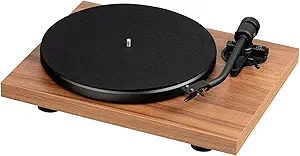
When examining affordability, Music Hall positions itself squarely as a value-driven brand catering to both entry-level vinyl enthusiasts and budget-conscious audiophiles. Roy Hall's engineering philosophy prioritizes component sourcing efficiencies, often leveraging high-grade parts manufactured in the renowned Pro-Ject factory in the Czech Republic. Models like the Music Hall MMF-1.3 and MMF-2.3 provide fully equipped, plug-and-play platforms well under the entry threshold of luxury audio, frequently bundling pre-mounted, high-output phono cartridges that save users additional investment. Even as consumers move up into Music Hall's dual- and triple-plinth systems, such as the MMF-5.3 or MMF-7.3, the brand manages to undercut similarly performing boutique decks by focusing resources on mechanical isolation rather than excessive cosmetic ornamentation, translating directly to a superior cost-to-performance ratio across its core lineup.
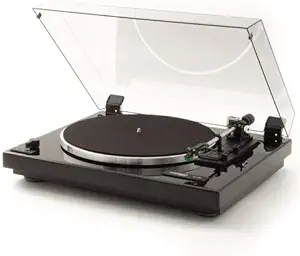
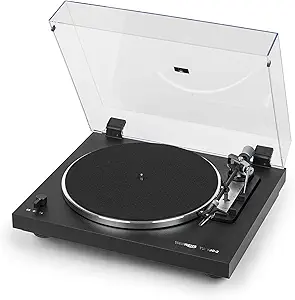
In contrast, Thorens occupies a distinctly more premium tier of the market, reflecting its century-old Swiss-German engineering heritage and status as an iconic luxury manufacturer. While Thorens does offer entry-level alternatives like the TD 202 or TD 402 DD, their baseline pricing is generally higher than Music Hall's entry offerings, reflecting substantial investments in bespoke industrial design, brushed aluminum accents, and custom-machined tonearms. The real core of the Thorens catalog, however, resides in mid-tier to high-end suspended chassis turntables, such as the legendary TD 1600 and TD 1601, which require substantial capital outlays. For audiophiles operating on a strict budget, Thorens asks for a larger upfront investment, but it justifies this expenditure through high residual resale values, heirloom-grade structural longevity, and engineering pedigree that entry-level brands rarely match.
Sound Quality
Music Hall's acoustic character is celebrated for its low noise floor, agile dynamics, and transparent presentation, largely made possible by its signature multi-plinth decoupling architecture. By physically isolating the critical playback elements—placing the AC synchronous motor and power switch on the bottom plinth while isolating the bearing, platter, and tonearm on the upper plinth via visco-elastic cones—Music Hall minimizes motor vibration transfer. The sonic result is an exceptionally dark background that reveals subtle micro-details, punchy bass lines, and precise stereo imaging. Turntables like the MMF-9.3 present a hyper-clean, analytical listening profile that allows the inherent qualities of the mounted cartridge to shine through without adding unwanted resonant coloration or upper-bass bloat.
Thorens delivers a fundamentally different acoustic signature characterized by warmth, fluidity, and an expansive soundstage that many audiophiles consider the benchmark of the classic sub-chassis sound. Utilizing conical internal springs or finely tuned elastomeric suspensions, Thorens decks excel at absorbing external footfall and environmental resonances, giving the music an effortless, relaxed musicality with lush midrange reproduction and deep, extended bass impact. Models like the TD 1500 or direct-drive TD 124 DD project an intoxicating analog presence that smooths out harsh pressings without sacrificing transient speed. While Music Hall leans toward rhythmic punch and clinical isolation, Thorens favors organic harmonic richness and effortless dynamic flow, offering a sound profile steeped in historic analog warmth.
Features & Functionality
From a functionality perspective, Music Hall adheres strictly to a minimalist, purist audiophile philosophy where fewer moving parts equal purer sound reproduction. Most Music Hall turntables operate entirely manually, omitting conveniences like automatic tonearm lifts, auto-stop mechanisms, or built-in phono preamps once you climb above the entry-level MMF-1.5. Instead, their functional engineering is channeled into vibration-reducing features such as built-in spirit levels on the plinth, inverted ceramic main bearings, decoupled external motors, and carbon fiber tonearms with flexible damping adjustments. Speed regulation on higher-tier decks often incorporates isolated DC-driven electronic speed controllers, ensuring pitch stability without introducing electrical hum into the signal path.
Thorens embraces a more diverse feature set that successfully blends pure audiophile mechanics with modern lifestyle conveniences across its varied catalog. Unlike Music Hall's strictly manual posture, Thorens frequently integrates motorized cueing, electronic tonearm lift and auto-shutoff mechanisms (as seen in the TD 1601 and TD 402 DD), and integrated switchable moving magnet/moving coil phono stages on consumer models. Furthermore, Thorens offers consumers a technological choice between precision belt-drive designs and sophisticated, smooth-torque direct-drive motors, while incorporating detachable headshells (SME mount standard) on many of their proprietary tonearms. This makes Thorens decks exceptionally versatile for users who enjoy rapid cartridge swapping and prefer the day-to-day tactile convenience of automated playback assistance.
Ease of Use & Setup Processes
Music Hall designs its entry and mid-level turntables to be remarkably approachable, aiming to eliminate the intimidation factor often associated with high-end vinyl playback. Decks like the MMF-2.3 arrive virtually ready to play out of the box, with factory-mounted, precision-aligned cartridges from Ortofon or Goldring that spare the user tedious protractor setup. The tonearm counterweights and anti-skating mechanisms are straightforward, accompanied by clear, consumer-friendly setup documentation. However, setup complexity increases noticeably when advancing to their decoupled multi-plinth decks; leveling two or three independent plinths using the adjustable spiked feet and properly seating external motor pulleys demands patience, a stable surface, and a careful hand to ensure optimal mechanical decoupling.
Thorens delivers an ease-of-use experience that ranges from remarkably simple on their modern direct-drive turntables to intricate and exacting on their sub-chassis models. Decks like the TD 402 DD feature pre-adjusted cartridges, easy-to-use dial anti-skating, and detachable headshells that make routine maintenance and stylus changes completely painless for everyday listeners. Conversely, setting up a high-end suspended chassis deck such as the TD 1600 requires careful balancing, unlocking transport locking screws, and fine-tuning the leaf or coil springs to achieve the ideal vertical "bounce." Once calibrated, however, a Thorens turntable is exceptionally resilient to external shocks, offering a stable and forgiving daily operational experience that rewards the initial setup investment.