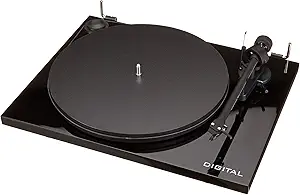
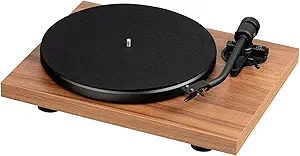
Pro-Ject vs Music Hall: Overview & Brand Philosophy
When navigating the high-fidelity analog landscape, few names carry as much weight in the modern vinyl resurgence as Pro-Ject Audio Systems and Music Hall. Founded in 1991 by Heinz Lichtenegger in Austria, Pro-Ject was built on a singular, defiant mission: to offer pure analog playback at an accessible price point just as the world was abandoning vinyl for compact discs. By acquiring and revitalizing a historic manufacturing facility in Litovel, Czech Republic, Pro-Ject established an industrial powerhouse capable of complete in-house production. Their philosophy revolves around minimalist engineering, the elimination of unnecessary electronic features, and vertical integration that drives down costs for budget to high-end audiophiles alike.
Music Hall, founded by Roy Hall in the United States in 1985, shares a deeply intertwined history with Pro-Ject, yet approaches turntable design from a distinct conceptual angle. While Music Hall manufactures its turntables in the very same Litovel factory as Pro-Ject, Roy Hall’s design philosophy prioritizes component curation, proprietary mechanical isolation, and complete, ready-to-play packages. Music Hall does not simply rebadge Pro-Ject units; instead, they specify custom parts, proprietary multi-plinth isolation designs, and unique tonearm geometries to achieve a warm, highly musical sound profile out of the box.
Understanding the relationship between these two brands is vital for any prospective buyer. Pro-Ject operates as an engineering-driven titan with an exhaustive catalog spanning ultra-budget entry models to reference-level statement pieces. Music Hall operates more like a boutique custom shop, maintaining a streamlined portfolio centered on mechanical damping and acoustic isolation. Both brands have preserved the analog tradition, but their divergent paths in design architecture offer distinctly different experiences for the listener.
Key Differences & Technological Comparison
The most fundamental technical divergence between Music Hall and Pro-Ject lies in their approach to resonance control and plinth construction. Pro-Ject predominantly relies on high-density materials, single-chassis designs utilizing optimized MDF, carbon-fiber composite layups, and mass-loaded sub-chassis systems on their higher-tier models (such as the Xtension series). Their focus is on draining vibration away from the stylus through stiff, low-resonance unified structures. In contrast, Music Hall is famous for its proprietary "multi-plinth" technology, seen on models like the MMF-5.3, 7.3, and 9.3. This approach physically decouples the critical sound-reproducing components (platter, bearing, and tonearm mounted on the top plinth) from the vibration-inducing elements (motor, switch, wiring, and feet mounted on the bottom plinth), separating them with viscous Sorbothane isolation spheres.
Tonearm engineering represents another critical area of differentiation. Pro-Ject is world-renowned for its single-piece carbon fiber tonearms, which combine extraordinary rigidity with low effective mass. This design eliminates headshell resonance and provides exceptional tracking speed, though it can require careful cartridge matching to avoid high-frequency brightness. Music Hall frequently utilizes modified variations of these carbon arms or hybrid alloy-carbon arms, but often tunes their effective mass and internal dampening to pair harmoniously with specific moving magnet and moving coil cartridges, frequently factory-aligning cartridges from Goldring or Ortofon.
Drive mechanisms and power management also reveal subtle philosophical differences. Pro-Ject has invested heavily in integrated, quartz-controlled precision DC-driven AC generators (Speed Box technology) built directly into mid-range decks like the Debut Carbon EVO and X1, allowing push-button electronic speed changes with vanishingly low wow and flutter. While Music Hall also includes electronic speed control on many updated iterations, several of their audiophile-oriented designs isolate the motor entirely by placing it in an autonomous, freestanding housing that passes through a cutout in the plinth without physically touching it, further ensuring zero motor hum reaches the cartridge.
Pros & Cons Comparison
Pro-Ject: Pros
- Vast Model Ecosystem: Offers an unmatched variety of price tiers, aesthetic finishes, and specialized form factors from the entry-level Primary to the ultra-high-end Signature line.
- Advanced In-House Tonearms: Industry-standard one-piece carbon fiber tonearms offer exceptional stiffness and micro-detail retrieval.
- Direct Electronic Integration: Seamless, built-in push-button electronic speed changes (33/45/78 RPM) are standard across most entry-to-mid tiers.
- Vibrant Finish Options: Exceptional high-gloss lacquers, satin veneers, and bold colors that cater to modern interior design aesthetics.
Pro-Ject: Cons
- Susceptibility to External Vibration: Single-plinth designs at lower and middle tiers require careful surface placement or aftermarket isolation platforms to prevent footfall issues.
- Clinical Sound Signature: The combination of stiff carbon arms and high-resolution cartridges can lean analytical or lean-sounding in poorly matched audio systems.
Music Hall: Pros
- Superior Multi-Plinth Isolation: Dual- and triple-plinth systems provide class-leading mechanical decoupling, significantly lowering the noise floor.
- Pre-Calibrated Cartridge Value: Often ships with high-tier, factory-mounted cartridges (e.g., custom Goldring or Ortofon cartridges) that are expertly aligned.
- Freestanding Motor Designs: Upper-tier models physically divorce the motor from the chassis, drastically reducing acoustic breakthrough.
- Musical, Non-Fatiguing Voicing: System tuning prioritizes tonal richness, bass weight, and long-term listening comfort.
Music Hall: Cons
- Higher Starting Price: Music Hall rarely competes in the sub-$400 market, making it less accessible to true entry-level buyers.
- Traditional Aesthetics: Fewer finish and color options, leaning heavily toward traditional piano black, real walnut, or minimalist finishes.
- Narrower Catalog: Fewer total models and third-party upgrade paths compared to Pro-Ject's massive aftermarket ecosystem.
Performance, Durability & Value Analysis
In terms of real-world acoustic performance, the contrast between these brands mirrors their physical design choices. Pro-Ject turntables deliver a resolving, transparent, and articulate sonic signature. Transient attacks are lightning fast, leading edges of acoustic guitars and cymbals are crisp, and soundstaging is remarkably expansive. However, their single-plinth architectures demand stable, well-isolated shelving; otherwise, bass feedback and footfall issues can color playback. Music Hall decks, by virtue of their multi-plinth isolation and Sorbothane damping, produce an astonishingly quiet, pitch-black background. This lowered noise floor translates to richer mid-bass impact, exceptional vocal warmth, and a lush, forgiving presentation that flatters both pristine audiophile pressings and well-worn vintage records.
From a longevity and value standpoint, both brands benefit from the proven, decades-old build practices of the Litovel manufacturing facility. Heavy steel, acrylic, or composite platters, bronze bushings, and inverted ceramic ball bearings ensure that mechanically, both brands can last for decades with basic lubrication and belt replacements. Pro-Ject typically edges out Music Hall in initial price-to-spec ratio, packing carbon fiber and electronic speed regulation into lower price segments. Conversely, Music Hall delivers remarkable long-term value in the mid-to-upper price brackets ($800–$2,500), where buying an equivalent level of resonance isolation and cartridge refinement from Pro-Ject would often require spending hundreds more on outboard isolation gear and cartridge upgrades.
Final Verdict: Which Brand Should You Choose?
Choosing between Music Hall and Pro-Ject comes down to your budget floor, your home listening environment, and your tonal preferences. If you are entering the hobby with a budget under $600, Pro-Ject is the undisputed victor. The Debut Carbon EVO and its siblings represent the benchmark for modern plug-and-play hifi, delivering high manufacturing standards, convenient electronic speed control, and stylish design aesthetics that fit modern living spaces. Pro-Ject is also the preferred choice for analytical listeners who prioritize speed, razor-sharp detail, and the freedom to modify their turntable over time using a vast universe of official accessories.
If your budget ranges between $800 and $2,500, and your system sits in a living space susceptible to mechanical vibrations (such as suspended hardwood floors or close proximity to subwoofers), Music Hall is the superior choice. A dual-plinth turntable like the Music Hall MMF-5.3 or MMF-7.3 delivers genuine high-end vibration isolation without needing expensive tertiary platforms. If you value deep musicality, low surface noise, full-bodied midrange presence, and an expertly calibrated cartridge out of the box, Music Hall offers an impeccably curated, turnkey listening experience that is exceptionally difficult to beat.
Affordability
When evaluating affordability in the audiophile turntable market, Pro-Ject holds a decisive edge over Music Hall, largely due to vertical integration and massive economies of scale. Operating out of its dedicated manufacturing facilities in the Czech Republic, Pro-Ject designs and produces nearly all its components in-house—including tonearms, motors, and platters. This operational self-sufficiency allows Pro-Ject to dominate the entry-level to sub-$1,000 segments with models like the Primary E, T1, and Debut Carbon EVO. These decks deliver exceptional engineering value, featuring one-piece carbon fiber tonearms, electronic speed switching, and pre-adjusted Ortofon cartridges at price points that are difficult for competitors to undercut. For budget-conscious consumers seeking the lowest barrier to true high-fidelity vinyl playback, Pro-Ject offers an expansive catalog that maximizes the performance-to-cost ratio without requiring immediate out-of-the-box upgrades.
Music Hall takes a contrasting approach to affordability, positioning itself as a boutique curator rather than a high-volume budget manufacturer. Founded by Roy Hall, the brand actually sources its turntable production from the very same Pro-Ject-owned factory in the Czech Republic, but with customized technical briefs that mandate proprietary engineering. As a result, Music Hall’s lineup begins at a noticeably higher entry price point, effectively eschewing the ultra-budget category. Instead of bare-minimum pricing, Music Hall defines affordability through long-term value, integrating engineering-heavy features like their signature dual-plinth isolation designs (seen on models like the MMF-2.3 and MMF-5.3) and factory-installed, custom-voiced cartridges. This multi-tier plinth decoupling mechanically isolates the motor from the bearing and tonearm, delivering lower resonance and acoustic feedback than standard single-plinth budget designs, but it inherently inflates initial manufacturing and retail costs.
The practical trade-offs regarding affordability between these two brands come down to initial capital outlay versus inherent architectural value. Pro-Ject provides unmatched baseline affordability; a buyer can secure a high-performance, well-engineered starter turntable for under $400, leaving financial room for future upgrades like acrylic platters or moving-coil cartridges. Music Hall, conversely, presents a higher financial barrier to entry, demanding a greater upfront investment for its entry-level units. However, because Music Hall integrates advanced vibration-dampening architecture and premium pre-aligned cartridges from the start, it frequently saves the user from the incremental "upgrade tax" typical of budget hi-fi ownership. Ultimately, Pro-Ject wins on strict affordability, entry-level accessibility, and catalog variety, while Music Hall appeals to the value-driven buyer willing to spend slightly more upfront to bypass entry-level design compromises.
Sound Quality
When evaluating sound quality, the sonic profiles of Pro-Ject and Music Hall reflect divergent approaches to analog engineering, despite both brands sharing the renowned SEPEA/Litovel manufacturing facility in the Czech Republic. Pro-Ject prioritizes extreme structural rigidity and modern mechanical dampening to deliver an analytical, transparent, and neutral acoustic presentation. In mid-to-high-tier lines like the Debut PRO and X-line, Pro-Ject utilizes one-piece carbon-fiber or carbon-aluminum composite tonearms paired with dense, TPE-damped heavy aluminum platters and high-precision motor control circuitry. This rigid engineering minimizes resonance coloration and rotational flutter, resulting in exceptional transient response, surgical channel separation, and a pristine, low-noise background. The trade-off is an occasional clinical dryness, particularly through the upper midrange, which demands careful cartridge synergy—often compensated for by their bundled Pick it or Ortofon 2M series pairings—to introduce warmth.
Music Hall, under the design philosophy of founder Roy Hall, targets a more organic, dynamic, and musically engaging sound signature through its signature multi-plinth decoupling architecture. Turntables such as the 'Classic' MMF series (MMF-5.3 to MMF-9.3) physically isolate the critical sonic components onto independent platforms: the motor and power controls are mounted to the lower plinth, while the main bearing, carbon-fiber tonearm, and cartridge rest on the decoupled top plinth, suspended via Sorbothane hemispheres or elastomer dampers. This dual- and triple-plinth engineering dramatically reduces electrical hum transfer and motor-induced acoustic feedback, yielding expansive low-end authority, natural rhythmic decay, and a three-dimensional soundstage with rich mid-bass warmth. Rather than raw precision, Music Hall balances dampening and compliance to preserve micro-dynamics and vocal presence, frequently bundled with warm, articulate Ortofon or proprietary Goldring-derived cartridges.
From an audiophile perspective, the acoustic choice between the two hinges on system synergy and listening preference. Pro-Ject holds the technical advantage in ultimate detail retrieval, timing accuracy, and speed stability due to its sophisticated sub-platter designs and precision-balanced platters, making it ideal for acoustic, classical, and jazz listeners seeking unadulterated fidelity. Conversely, Music Hall sacrifices a fractional degree of clinical edge definition in exchange for higher mechanical vibration isolation and an inherently musical, fatigue-free tonal balance that excels with rock, dynamic pop, and imperfect vinyl pressings. Both manufacturers deliver best-in-class signal-to-noise ratios, but Pro-Ject's engineering champions neutrality and micro-detail, while Music Hall leverages multi-tiered isolation to achieve an immersive, analog fluidity.
Features & Functionality
When evaluating features and functionality between Pro-Ject and Music Hall, consumers must first understand their shared lineage: both brands manufacture their turntables in the same specialized factory in Litovel, Czech Republic, yet their core design philosophies diverge significantly. Pro-Ject positions itself as an engineering powerhouse prioritizing technological modernism and breadth of choice. Across its extensive lineup—from the entry-level Debut series to the flagship Signature models—Pro-Ject integrates advanced features like electronic speed switching (Speed Box technology), inverted ceramic-ball bearing assemblies, heavy composite platters with integrated TPE damping, and one-piece carbon fiber tonearms. Furthermore, Pro-Ject frequently equips modern conveniences directly onto its decks, such as built-in phono stages with optical and USB outputs for direct vinyl-to-digital archiving, high-precision DC-driven AC motors, and balanced XLR audio connections on mid-to-high-end units, offering superior versatility for diverse audio configurations.
In contrast, Music Hall, guided by audio veteran Roy Hall, approaches functionality through a purist, isolation-first design ethos. Rather than competing on mass-market electronic features, Music Hall’s defining functional advantage is its proprietary multi-plinth construction, found on models like the MMF-5.3 through the MMF-11.3. This design mechanically separates the delicate stylus/tonearm interface and the bearing assembly onto a top platform, while isolating the AC motor, power switches, wiring, and feet on the lower plinth(s) using Sorbothane dampers. This architectural approach practically eliminates motor-induced resonance, yielding a remarkably low noise floor without needing active digital signal management. However, this purist approach results in trade-offs: Music Hall decks rarely include onboard phono stages, digital outputs, or built-in speed switches on lower-tier models, often requiring users to physically move the belt between pulley grooves to shift between 33⅓ and 45 RPM.
Ultimately, the functional trade-off between the two brands centers on convenience and feature integration versus analog isolation optimization. Pro-Ject provides the modern listener with a comprehensive, plug-and-play feature ecosystem that accommodates varied Hi-Fi and digital setups with minimal friction, making them functionally superior for users seeking high-tech tonearm materials, switchable speeds, and flexible connectivity. Music Hall, conversely, allocates its engineering budget toward mechanical isolation, offering bundled high-value cartridges specifically voiced for their tonearms, pre-mounted and aligned at the factory. For audiophiles who prioritize mechanical decoupling and a quiet background over onboard digital utilities and electronic push-button controls, Music Hall provides superior functional simplicity, while Pro-Ject remains the undisputed leader in feature richness and operational adaptability.
Ease of Use & Setup Processes
When evaluating ease of use and setup, Pro-Ject and Music Hall present an intriguing comparison because their manufacturing lineages are deeply intertwined. Music Hall turntables are engineered in the United States by Roy Hall but manufactured in the Czech Republic at the exact same SEV Litovel facility that produces Pro-Ject’s extensive catalog. Consequently, both brands share high-grade foundational hardware, including pre-mounted, aligned phono cartridges and precision tonearms straight out of the box. However, Pro-Ject targets a broader demographic, ranging from complete vinyl novices to demanding audiophiles. Entry-to-midrange Pro-Ject models (such as the Primary, T1, or Debut Carbon EVO) emphasize plug-and-play simplicity, frequently providing pre-set anti-skate mechanisms, factory-balanced counterweights, and integrated phono preamplifiers. Higher-end Pro-Ject decks introduce more complex calibration requirements, often utilizing delicate hanging-weight anti-skate systems and manual belt repositioning under the platter, which can feel precarious to beginners compared to decks featuring electronically switchable speed controls.
Music Hall approaches setup from a distinctly purist, hi-fi perspective that demands slightly more mechanical involvement and patience from the end user. While their entry-level tables like the MMF-1.3 offer three-speed electronic switching for straightforward daily operation, Music Hall’s signature engineering strength lies in its multi-plinth decoupling architecture found on models like the MMF-5.3 and MMF-7.3. Assembling these dual- and triple-plinth systems requires users to meticulously level individual tiers using integrated bubble levels and threaded, adjustable spike feet. Additionally, isolating the motor into an entirely separate chassis or lower plinth necessitates manually routing the external drive belt around the sub-platter. While this isolation minimizes resonance transfer to the stylus, the setup procedure involves a steeper learning curve, careful physical space planning, and ongoing care during belt cleaning or replacement.
Ultimately, the practical trade-off between the two brands centers on operational convenience versus mechanical optimization. Pro-Ject provides a smoother, more diversified onboarding path, making it superior for casual listeners or those who want immediate, frictionless playback without the intimidation of fine-tuning micro-adjustments. Their widespread incorporation of push-button electronic speed changes on contemporary models significantly enhances day-to-day usability. Conversely, Music Hall sacrifices out-of-the-box immediacy on its higher-tier models in exchange for physical, resonance-mitigating engineering that requires an intentional, hands-on installation process. For enthusiasts comfortable with taking the time to balance, level, and calibrate a decoupled system for maximized acoustic performance, Music Hall’s setup ritual is exceptionally rewarding; however, Pro-Ject remains the more approachable, user-friendly choice across the totality of its product lineup.