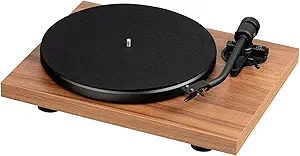
Music Hall vs Audio-Technica: Overview
Comparing Music Hall and Audio-Technica helps you determine which brand is best suited for your needs in Turntables. Both brands offer strong choices depending on your budget and key feature requirements.
Key Features & Comparison
Evaluate factors such as build quality, warranty, customer satisfaction, and total value before making your final purchase choice between Music Hall and Audio-Technica.
Affordability
When evaluating affordability, Audio-Technica overwhelmingly dominates the entry-level to mid-range landscape by leveraging massive economies of scale. The brand provides exceptional cost-to-performance ratios, beginning with sub-$150 plug-and-play models like the AT-LP60X up through enthusiast direct-drive workhorses like the AT-LP120XUSB under $400. For budget-conscious audiophiles, students, and casual vinyl enthusiasts, Audio-Technica includes pre-installed phono preamps, decent factory-mounted cartridges, and all necessary cabling out of the box, drastically lowering the total cost of ownership by eliminating the immediate need for outboard audio equipment.
Conversely, Music Hall positions itself higher up the price ladder as a boutique, audiophile-centric brand where entry-level begins around the upper boundary of Audio-Technica's mid-range catalog. Music Hall’s introductory offerings, such as the MMF-1.3, sit around $350, with their true engineering focus scaling well into four-figure territory with high-end models like the MMF-7.3 and MMF-9.3. While Music Hall products command higher initial investments, their value proposition lies in precision engineering, premium materials like multi-layer MDF and decoupled platters, and bundled high-end cartridges (often customized Ortofon or Goldring designs) that provide enduring quality rather than mass-market disposable affordability.
Sound Quality
In acoustic performance, Music Hall is designed from the ground up with purist hi-fi sensibilities that generally outclass Audio-Technica in terms of micro-detail, dynamic range, and noise reduction. Music Hall focuses extensively on isolation, employing proprietary split-plinth and multi-layer plinth constructions that mechanically isolate the motor, bearing, and tonearm. Combined with heavy alloy or acrylic platters and precision carbon-fiber tonearms, this engineering drastically lowers the noise floor and prevents resonance transfer, yielding a remarkably transparent, warm, and three-dimensional soundstage with rich low-end texture and crisp transient response.
Audio-Technica delivers a highly competent, lively, and energetic sound profile that excels in punch and clarity, particularly via its revered VM95 series cartridges. However, the brand often trades away ultimate acoustic transparency due to its heavy reliance on internal electronics and lightweight plastic or resonant hollow-chassis designs in its lower-to-mid-tier models. While higher-end Audio-Technica models such as the AT-LP7 compete admirably with thick MDF plinths, most mass-market direct-drive units can transmit slight motor cogging or vibration to the stylus, resulting in a slightly flatter soundstage and higher baseline rumble compared to Music Hall's decoupled belt-driven assemblies.
Features & Functionality
Audio-Technica stands as a titan of modern utility, offering a versatile suite of features designed for diverse applications ranging from basic listening to DJing and digital preservation. Many Audio-Technica decks boast integrated switchable phono preamplifiers, high-torque direct-drive motors, USB outputs for vinyl-to-digital archiving, Bluetooth connectivity for wireless speakers, and variable pitch controls with target lights. Furthermore, the inclusion of removable, universal headshells allows users to effortlessly swap cartridges and styli according to their playback needs, creating an adaptable tool for modern multi-purpose entertainment systems.
Music Hall takes an intentionally minimalist approach, prioritizing mechanical purity over electronic convergence. Operating predominantly on belt-drive mechanics, Music Hall avoids onboard electronics like USB outputs, Bluetooth transmitters, and cheap built-in preamps, viewing them as potential sources of electrical noise and signal degradation. Instead, functional features are hyper-focused on playback precision: decoupled motor designs, inverted stainless steel and bronze bearing assemblies, electronic speed control switches, and pre-mounted, meticulously aligned audiophile cartridges. Music Hall delivers fewer ancillary features, but every incorporated mechanical element is strictly optimized for superior analog performance.
Ease of Use & Setup Processes
Audio-Technica is the undisputed champion of user accessibility and frictionless setup, catering directly to consumers who want an unboxing-to-playback turnaround measured in minutes. Entry-level units are virtually turnkey with pre-calibrated tracking forces and anti-skate, while their enthusiast models provide clear, beginner-friendly instructions, pre-mounted headshells that simply twist into the tonearm, and built-in preamps that plug straight into any aux input. This user-centric philosophy ensures that even vinyl novices can achieve proper playback without stressing over delicate azimuth alignments, complex belt threadings, or specialized geometry gauges.
Music Hall demands a more deliberate, hands-on setup process that reflects its audiophile pedigree and mechanical precision. Users typically must mount the belt around the sub-platter, manually install the platter, calibrate counterweights with high-precision gram scales, and adjust anti-skate using traditional thread-and-weight mechanisms. Models utilizing multi-tier plinths require careful leveling via adjustable spike feet and external spirit levels to achieve optimal acoustic isolation. While this ritualistic assembly might intimidate beginners, it provides critical adjustability (VTA, azimuth, tracking) that audio purists require to squeeze the absolute highest fidelity out of their equipment.