






Fluance vs Victrola: Overview
Comparing Fluance and Victrola helps you determine which brand is best suited for your needs in Turntables. Both brands offer strong choices depending on your budget and key feature requirements.
Key Features & Comparison
Evaluate factors such as build quality, warranty, customer satisfaction, and total value before making your final purchase choice between Fluance and Victrola.
Affordability
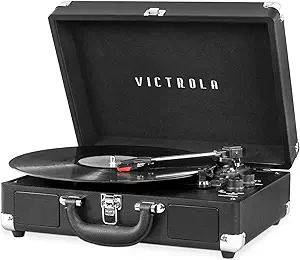
When analyzing the cost spectrum, Victrola firmly commands the budget tier, providing some of the lowest barrier-to-entry record players on the consumer market. Their quintessential all-in-one suitcase players and mid-tier retro consoles often retail well below $100, bundling speakers, amplification, and playback into a single, inexpensive unit. While Victrola has recently diversified into higher-end territory with their Stream lineup, their primary brand identity and value proposition remain anchored in entry-level accessibility. For casual listeners, novelty seekers, or gift shoppers seeking immediate vinyl playback without a secondary equipment budget, Victrola offers an undeniably attractive, low-stakes price point.
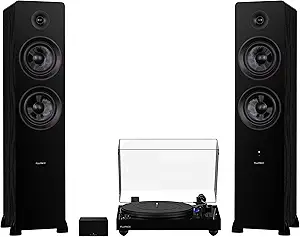
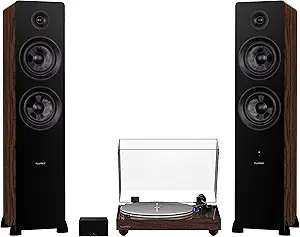
Fluance operates in an entirely different economic and mechanical bracket, positioning itself as the benchmark for entry-level to intermediate audiophile value. With the Reference Series (spanning from the RT80 to the flagship RT85), Fluance pricing begins in the $200 range and stretches upward of $500, requiring users to also invest in discrete preamps, amplifiers, or powered monitor speakers. However, Fluance delivers extraordinary cost-to-performance efficiency; the inclusion of premium third-party cartridges, heavy multi-layered MDF plinths, and isolated motors means consumers receive components that would often command much higher price tags from bespoke hi-fi manufacturers. Consequently, while Victrola is far more affordable in absolute dollars, Fluance offers superior long-term economic value for genuine audio enthusiasts.
Sound Quality
In terms of acoustic fidelity, Fluance radically outperforms the vast majority of Victrola's catalog due to precision mechanical engineering. Fluance turntables are engineered around resonance mitigation, utilizing dense solid wood plinths, isolation feet, and precision-machined aluminum or acrylic platters that maintain exceptionally low wow and flutter (often below 0.07%). Crucially, Fluance equips their tonearms with renowned high-performance phono cartridges, such as the Audio-Technica AT95E, Ortofon 2M Red, and Ortofon 2M Blue. The result is a clean, expansive soundstage characterized by punchy, controlled bass, accurate dynamic tracking, and minimal surface noise or inner-groove distortion.
Victrola, outside of its specialized premium Stream line, generally struggles in pure acoustic metrics. The brand's mass-market offerings rely on mass-produced ceramic cartridges with narrow frequency responses, heavy tracking forces (often exceeding 4 to 5 grams), and built-in, unisolated micro-speakers that induce direct mechanical feedback into the needle. This architecture produces a boxy, mid-heavy sound profile with negligible low-end extension and pronounced high-frequency roll-off. While higher-end models like the Victrola Premiere and Stream series incorporate better magnetic cartridges and stable drive systems, Fluance remains the decisive victor for listeners prioritizing acoustic accuracy, instrument separation, and the preservation of their vinyl records.
Features & Functionality
Victrola differentiates itself through broad, consumer-friendly convenience features and modern multi-room integration. Many of Victrola's lifestyle models incorporate two-way Bluetooth (allowing playback from phones or transmission to wireless headphones), auxiliary inputs, headphone jacks, and integrated radio tuners. The pinnacle of their modern functionality is the Victrola Stream ecosystem, which features native 'Works with Sonos' certification, allowing users to broadcast analog vinyl directly across a wireless Sonos network without complex cabling or intermediary hubs. This high degree of digital convergence makes Victrola exceptionally versatile for smart-home adopters and casual listeners who want friction-free whole-home audio.
Fluance takes a purist, analog-first approach to functionality, prioritizing structural precision over digital amenities. Rather than packing units with Bluetooth modules or internal speakers, Fluance focuses on foundational playback mechanics: static balanced S-type aluminum tonearms, precision anti-skate controls, adjustable counterweights, optical speed-sensor controls for exact pitch stabilization, and auto-stop mechanisms that pause platter rotation at the end of a side to reduce stylus wear. Furthermore, the Fluance Reference Series is engineered with high modularity; platters, cartridges, and headshells can be seamlessly upgraded over time. While Fluance lacks the seamless wireless smart integration of Victrola's Stream line, its mechanical feature set is optimized strictly for fidelity and longevity.
Ease of Use & Setup Processes
Victrola offers near-instantaneous plug-and-play gratification across the vast majority of its product catalog. Because models like the Journey or vintage consoles arrive fully assembled with pre-calibrated ceramic styli, factory-set tonearm weights, and integrated speakers, the user setup simply involves unboxing the unit, plugging in the AC adapter, and dropping the needle. Even their technologically sophisticated models, such as the Victrola Stream Onyx or Carbon, streamline the setup through an intuitive smartphone application that effortlessly links the turntable to Wi-Fi and existing Sonos profiles, entirely circumventing traditional audio component pairing.
Fluance, in contrast, requires a hands-on, methodical setup process standard in genuine hi-fi audio. Users must unpack individual precision components: placing the heavy plinth on a stable, level surface, setting the platter and drive belt, attaching the headshell, and meticulously calibrating the tonearm. Balancing the counterweight to achieve the exact recommended vertical tracking force (VTF) and setting the anti-skate dial requires patience and a basic understanding of turntable physics. Additionally, connecting to an external preamplifier, receiver, and passive or active speakers involves proper RCA routing and ground wire termination. While this demands more effort upfront, the tactile setup process of a Fluance turntable educates the user on mechanical calibration and ensures optimal playback alignment that protects record grooves.