Fluance vs Rega: Overview
Comparing Fluance and Rega helps you determine which brand is best suited for your needs in Turntables. Both brands offer strong choices depending on your budget and key feature requirements.
Key Features & Comparison
Evaluate factors such as build quality, warranty, customer satisfaction, and total value before making your final purchase choice between Fluance and Rega.
Affordability
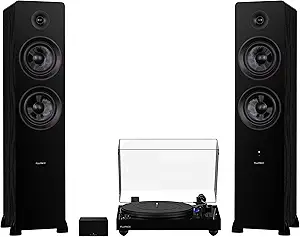
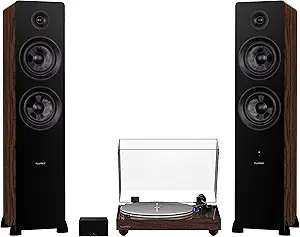
When evaluating affordability, Fluance represents one of the most compelling value propositions in modern hi-fi. The Canadian manufacturer dominates the budget-to-midrange space with its Reference Series (ranging from the RT80 up to the flagship RT85), delivering premium materials such as high-density MDF plinths, solid acrylic platters, and pre-mounted audiophile cartridges from Ortofon and Nagaoka at price points that undercut traditional European competitors. By leveraging efficient overseas manufacturing and direct-to-consumer distribution models, Fluance manages to include components that typically cost extra—such as built-in phono preamps on lower tiers and high-grade elliptical or nude diamond styli on upper tiers—making them remarkably accessible for hobbyists seeking maximum hardware for their dollar.
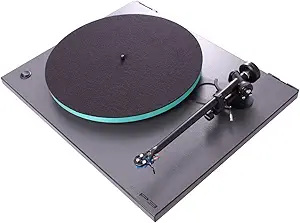
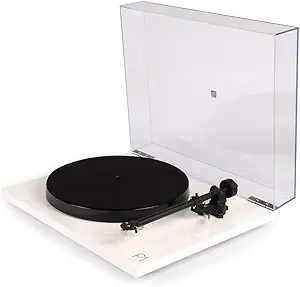
Conversely, Rega operates within a distinctly audiophile tier where entry-level pricing begins near the ceiling of Fluance’s entire catalog. Handcrafted in the United Kingdom, Rega’s Planar series (from the Planar 1 through the Planar 3, 6, and beyond) commands a premium driven by domestic research, specialized engineering, and high-labor manufacturing processes. While the initial investment in a Rega deck is significantly higher and often requires additional expenditure for dedicated phono stages or external power supplies, the brand’s resale value remains remarkably resilient. For budget-conscious consumers, Fluance offers unbeatable upfront value and complete out-of-the-box utility, whereas Rega represents a higher-tier, long-term investment aimed at dedicated audio purists willing to pay for bespoke British engineering.
Sound Quality
The acoustic profile of Fluance turntables is characterized by warmth, robust dynamic range, and exceptional low-end stability. The heavy MDF plinths and damped rubber isolation feet effectively suppress acoustic feedback, providing a dark, silent background from which musical details emerge. On models like the RT85, the inclusion of a dense acrylic platter imparts tighter bass control and reduced resonance compared to lighter aluminum designs. Coupled with premium factory-fitted cartridges like the Ortofon 2M Blue or Nagaoka MP-110, Fluance delivers a lively, forgiving, and full-bodied sonic presentation that excels across diverse musical genres, offering a punchy, consumer-friendly tuning that sounds immediately impressive without requiring specialized room treatment.
Rega approaches sound reproduction from an entirely different acoustic philosophy focused on ultra-low mass, extreme rigidity, and musical timing. Rather than dampening energy through heavy mass, Rega’s legendary tonearms (such as the RB110, RB220, and RB330) and lightweight phenolic or foam-core plinths transfer vibrational energy away from the stylus interface with surgical efficiency. This results in the trademark 'Rega sound'—unmatched rhythmic drive (Pace, Rhythm, and Timing, or PRaT), blistering transient attack, and micro-detail resolution. While Rega may sound leaner in the bass compared to the weighted low-end of Fluance, it vastly outperforms in stereo imaging, spatial separation, and harmonic accuracy, providing a transparent window into complex masterings that audiophiles revere.
Features & Functionality
Fluance packs an extensive array of modern features into its turntables, catering directly to the functional expectations of contemporary listeners. A standout inclusion is the optoisolated servo-controlled DC motor, which actively monitors platter velocity hundreds of times per second to achieve vanishingly low wow and flutter figures (0.07%). Additionally, Fluance decks incorporate a user-switchable auto-stop mechanism that halts platter rotation at the end of a record side to preserve stylus life. The inclusion of standard removable headshells allows enthusiasts to swap cartridges effortlessly, while gold-plated RCA outputs and switchable internal preamps on select entry-level models provide unmatched system compatibility right out of the shipping carton.
In stark contrast, Rega embraces a relentless purist design ethos where extraneous mechanical features are systematically eliminated to preserve signal purity. Rega decks feature fully manual operation with zero automated shutoff mechanisms, avoiding any mechanical linkage to the tonearm that could introduce tracking error or bearing friction. Speed changes on entry-level models like the Planar 1 and 2 require manually moving the drive belt between pulley steps beneath the platter, a choice made to prioritize structural rigidity over convenience. Rega’s one-piece cast tonearms eliminate the headshell coupling joint to eliminate resonance, and signal cables are hardwired directly to the base. While Rega sacrifices daily lifestyle conveniences, every design choice is strictly optimized for electrical and mechanical performance.
Ease of Use & Setup Processes
Fluance provides one of the most accessible and beginner-friendly setup workflows in the home audio market. Because the brand frequently serves newcomers and intermediate hobbyists, their packaging is thoroughly indexed, complete with detailed setup guides, calibrated counterweights, and leveling bubble indicators. Cartridges come pre-aligned and mounted on detachable headshells, requiring the user only to balance the tonearm, dial in the static tracking force via clearly marked counterweight rings, and adjust the mechanically straightforward anti-skate knob. Day-to-day operation is equally intuitive thanks to the top-mounted rotary speed control switch (33/45 RPM) and the forgiving auto-stop implementation, minimizing operational friction for casual and dedicated listeners alike.
Rega’s initial setup is deceptively simple at the entry level, yet it adopts an idiosyncratic design framework that demands technical understanding when upgrading. The Planar 1 and 2 feature factory-preset bias (anti-skate) mechanisms and pre-slotted counterweights calibrated specifically for Rega’s proprietary Carbon or Nd series cartridges, allowing non-audiophiles to play records within minutes of unboxing. However, deeper calibration on Rega tables reveals a deliberate lack of adjustable vertical tracking angle (VTA) and azimuth. If a user decides to install an aftermarket, non-Rega cartridge of a different height, they must install structural shims beneath the tonearm base. Thus, while a factory-spec Rega is essentially plug-and-play, customization and routine manual speed switching demand greater hands-on involvement from the owner.