Denon vs Fluance: Overview & Brand Philosophy
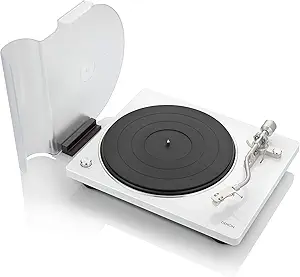
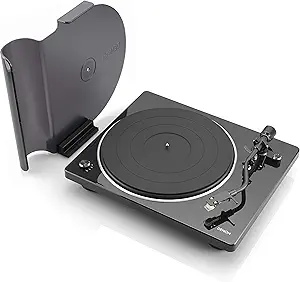
In the analog audio landscape, few matchups represent the divergence of hi-fi design philosophy better than Denon and Fluance. Denon, a titan of Japanese audio engineering with a history stretching back to 1910, has long been synonymous with broadcast-grade reliability and automated engineering. In the turntable sector, Denon is revered for its legacy of high-torque direct-drive motors, specialized tonearm mechanics, and iconic moving coil (MC) cartridges like the DL-103. Today, Denon’s consumer turntable lineup blends this century-old institutional knowledge with modern convenience, prioritizing integrated electronics, automated playback, and compact, lifestyle-friendly chassis designs that appeal to both traditionalists and space-conscious listeners.
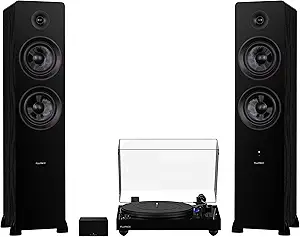
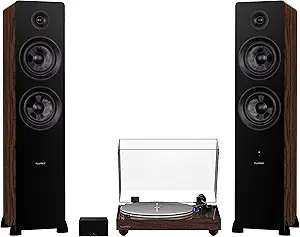
Conversely, Fluance is a Canadian disruptor that has captured the modern vinyl resurgence by taking an uncompromising, back-to-basics purist approach. Established as an audio company focused on high-performance home theater speakers, Fluance entered the turntable market with its "Reference Series" (RT80 to RT85) and immediately shifted industry expectations regarding price-to-performance ratios. Fluance’s philosophy rejects automation, digital USB conversions, and plastic chassis parts in favor of heavy multi-layered MDF plinths, isolated belt-drive mechanisms, and high-spec partnerships with Danish cartridge master Ortofon. Where Denon views the turntable as a refined, automated component of an integrated home system, Fluance treats it as a dedicated mechanical instrument designed for acoustic isolation.
Key Differences & Technological Comparison
The technical differences between Fluance and Denon dictate entirely distinct user experiences, starting with drive mechanisms and chassis isolation. Fluance utilizes external belt-drive motors isolated from the plinth by rubber decoupling grommets, paired with high-mass solid MDF wood plinths resting on spiked, height-adjustable rubber isolation feet. This setup drastically reduces acoustic resonance and motor vibration. Higher-tier Fluance models like the RT85 feature dense, 3-pound frosted acrylic platters that improve speed stability via rotational inertia. Denon typically utilizes internal belt-drive or legacy-style direct-drive mechanisms inside molded resin and aluminum composite housings. While Denon's signature curved, S-shaped tonearms feature dynamic balance technology developed through decades of laboratory research, their lighter chassis designs are inherently more susceptible to external footfall vibrations than Fluance's high-mass foundations.
Another major point of divergence is automation versus manual mechanical purism. Flagship entry models from Denon, such as the DP-300F and DP-400, emphasize fully automatic or semi-automatic operation. With the push of a button, Denon's mechanics cue, play, and return the tonearm at the end of a record, an indispensable safety and convenience feature for casual listeners worried about needle wear. Fluance operates on an entirely manual playback architecture, though its Reference series includes an optical sensor auto-stop function that cuts motor power at the run-out groove without mechanically interfering with the tonearm assembly.
In the cartridge and upgrade ecosystem, Fluance holds a distinct technological advantage. The Canadian brand scales its product line around swappable, world-class moving magnet (MM) cartridges straight out of the box, offering platforms pre-mounted with the Ortofon 2M Red, 2M Blue, or Nagaoka MP-110. Their tonearms feature standard half-inch mounts with adjustable counterweights, anti-skate dials, and removable headshells, encouraging long-term user upgrades. Denon frequently equips its entry-to-midrange decks with proprietary or lower-tier OEM cartridges (often rebadged Audio-Technica styli) and hardwires many of their internal preamps, trading modular upgrade paths for plug-and-play simplicity.
Pros & Cons Comparison
Denon Turntables
Pros:
- Convenient fully automatic and auto-lift/stop mechanical implementations that protect vinyl and styli.
- Decades of proprietary tonearm engineering, offering exceptional tracking on irregular or warped pressings.
- Built-in, switchable phono preamplifiers optimized specifically for the factory-installed pick-up systems.
- Select models feature integrated high-quality analog-to-digital converters with USB outputs for vinyl archiving.
- Compact, polished aesthetic footprints that integrate neatly into modern, confined media furniture.
Cons:
- Lighter chassis materials that provide less natural acoustic damping and feedback resistance.
- Stock factory cartridges are generally entry-grade and require early replacement for true audiophile performance.
- Higher price premiums tied to the heritage brand name rather than baseline mechanical components.
Fluance Turntables
Pros:
- High-mass MDF plinths and isolated belt-drive motors deliver superior mechanical damping and low rumble.
- Exceptional out-of-the-box cartridge pairings, including audiophile-grade Ortofon 2M Blue options.
- Heavy acrylic platters (on upper models) provide remarkable rotational inertia and speed consistency.
- Modular design with universal headshells allows extensive, frictionless cartridge and stylus upgrades.
- Unmatched price-to-performance ratio across entry-level and midrange budget brackets.
Cons:
- Strictly manual operation requires physical interaction to cue the tonearm and begin playback.
- Reference line models (RT82 through RT85) do not have built-in phono stages, requiring external amplification.
- Larger, heavier physical footprint demands a sturdy, dedicated isolation stand or shelf.
Performance, Durability & Value Analysis
When measuring sonic performance and long-term durability, Fluance holds the edge in acoustic transparency, while Denon excels in mechanical integration. Fluance’s low wow-and-flutter ratings (often below 0.07% on the RT82-RT85 line) and decoupled servo-controlled DC motors yield a remarkably dark, quiet background with virtually non-existent motor hum. The mass of the plinth absorbs low-frequency household vibrations, allowing details captured by high-end elliptical or nude diamond styli to surface without mud. In terms of durability, Fluance's minimalist mechanical design means there are fewer internal moving gears, levers, and optical switches to fail over a decade of service; long-term maintenance is largely restricted to straightforward belt replacements and stylus swaps.
Denon delivers exceptional value if convenience, space, and immediate functionality are your primary purchase drivers. The electronic circuitry and motor control in Denon units are robust, benefiting from parent company Sound United's rigorous quality-assurance standards. However, from a pure dollar-for-dollar acoustic perspective, Denon models like the DP-400 sit at a price point where Fluance provides superior tonearm mass matching, premium pre-installed cartridges, and heavier plinths. Denon decks require less peripheral equipment (often skipping the immediate need for a standalone phono preamplifier), but audiophiles seeking maximum acoustic retrieval per dollar spent will find better sustained value in the Fluance ecosystem.
Final Verdict: Which Brand Should You Choose?
Your choice between Fluance and Denon ultimately hinges on whether your priority is modern playback convenience or purist analog fidelity. If you are seeking a hassle-free, lifestyle-compatible turntable that protects your records with automatic start and return functions, integrates directly into an existing receiver or powered speaker setup without an external preamp, and fits cleanly onto standard shelves, Denon is the right choice. It is ideal for casual listeners, busy households, and those who prioritize operational simplicity over technical micro-adjustments.
If your goal is to extract the highest possible audio fidelity from your vinyl collection and you are willing to embrace a hands-on, manual playback ritual, Fluance is the clear winner. Offering heavier resonance-damping materials, precision-machined acrylic platters, and factory-installed audiophile cartridges that would cost hundreds of dollars on their own, the Fluance Reference series (specifically the RT82 for budget-conscious buyers or the RT85 for serious audiophiles) offers an uncompromising performance platform that simply outclasses comparable Denon units at similar price points.
Affordability
When assessing affordability in the turntable market, Fluance and Denon approach the concept of "value" from fundamentally different engineering and economic philosophies. Fluance has built its reputation as a direct-to-consumer giant, fiercely optimizing price-to-performance by funneling manufacturing costs directly into analog acoustic components. In the entry-to-midrange bracket—principally represented by the Reference Series (RT81 through RT85)—Fluance delivers high-density MDF plinths, decoupled servo-controlled motors with remarkably low wow and flutter (often under 0.07%), and high-end pre-mounted cartridges like the Ortofon 2M Blue. Because Fluance avoids licensing costs, automated internal mechanical linkages, and traditional retail markups, consumers invest purely in vibration damping and signal path fidelity, resulting in an unmatched price-per-audio-grade-component ratio that dominates the sub-$500 landscape.
Conversely, Denon targets affordability through integrated functionality and lifestyle convenience, engineering turntables tailored to users who value automation over manual, modular tinkering. Models such as the DP-29F, DP-300F, and the design-forward DP-400/450USB carry price points that reflect mechanical complexity rather than raw playback fidelity. Denon’s engineering budget at these price tiers is largely consumed by fully automatic tonearm mechanisms, integrated phono preamplifiers, and analog-to-digital USB encoding chips. While this delivers tremendous practical value for casual listeners who want a "plug-and-play" experience without the risk of scratching records or the need to buy outboard preamps, the trade-off manifests in lighter, more resonance-prone plastic chassis, higher wow and flutter ratings, and proprietary or basic stock cartridges that require premature spending to upgrade.
Ultimately, the financial verdict hinges on the consumer’s definition of operational economy. Fluance represents pure audiophile affordability; its modular architecture allows users to start with an economical base model (like the RT82) and scale components over time—such as swapping acrylic platters or moving-coil styli—without rendering the core turntable obsolete. Denon offers consumer-convenience affordability, providing an all-in-one ecosystem that eliminates the initial hidden costs of external preamps and cueing accessories, but its proprietary constraints and automated mechanics cap its long-term sonic return on investment. For dollar-for-dollar acoustic performance, Fluance effortlessly wins the affordability matrix, while Denon remains viable strictly for those prioritizing motorized automation on a budget.
Sound Quality
When evaluating sound quality, Denon and Fluance represent two distinct design philosophies: heritage Japanese acoustic tuning versus modern Canadian audiophile value engineering. Fluance, particularly within its highly regarded Reference series (RT82 through RT85), emphasizes mechanical isolation and component transparency to maximize fidelity. By utilizing high-density, multi-layered MDF plinths, decoupled rubber spike feet, and isolated servo-controlled DC motors that boast vanishingly low wow-and-flutter ratings (typically under 0.07%), Fluance builds an exceptional acoustic foundation. Furthermore, their strategy of pairing tables with premium, pre-aligned cartridges—ranging from the warm, articulate Ortofon OM10 up to the resolving, detail-rich Ortofon 2M Blue with a nude elliptical stylus—yields an expansive soundstage, tight bass response, and brilliant high-frequency clarity that punches far above its price tier.
Denon counters with a more specialized, time-tested approach to analog reproduction, drawing on its century-long audio pedigree. Models like the DP-300F and DP-400 are engineered to deliver a warm, forgiving, and musically cohesive sound signature straight out of the box. While Denon's rigid, die-cast aluminum platters and proprietary static-balanced S-shaped tonearms effectively trace record grooves to minimize tracking distortion, their acoustic ceiling is often bottlenecked by stock components. Entry and mid-tier Denon turntables frequently ship with basic, proprietary moving magnet cartridges that present a pleasant midrange but lack the micro-detail, dynamic punch, and upper-register air found on equivalently priced Fluance models. Additionally, Denon's inclusion of built-in phono preamps—while convenient—can introduce slight noise floors and compression compared to the pristine, purist signal paths Fluance achieves by omitting internal preamps on their higher-end decks to prevent electrical interference.
Ultimately, the trade-off in sound quality centers on precision versus convenience. Audiophiles seeking reference-grade transparency, clinical instrument separation, and the best possible dynamic range will find Fluance to be the superior sonic performer, largely due to its superior tonearm mass matching and high-end factory-installed Ortofon and Nagaoka cartridges. Denon, while delivering an undeniably smooth and fatigue-free analog warmth that flatters vintage pressings, requires immediate cartridge upgrades and an external phono stage to compete on an equal footing with Fluance's resolving power and low-resonance mechanical engineering.
Features & Functionality
When evaluating features and functionality, Denon and Fluance cater to distinctly different vinyl philosophies through their engineering priorities. Denon excels in convenience-driven automation and modern integration, engineered for seamless ease of use without sacrificing fidelity. Models like the popular DP-300F and the heritage-inspired DP-400/DP-450USB showcase sophisticated mechanical engineering with fully automatic operation or semi-automatic auto-lift and auto-stop mechanisms. Additionally, Denon frequently integrates high-quality, switchable internal phono preamplifiers and, on select models, high-resolution analog-to-digital converters that allow users to rip vinyl directly to USB drives as MP3 or WAV files. The engineering trade-off for this technological density is a reliance on plastic sub-chassis materials and internal mechanical linkages that, while durable, can theoretically introduce micro-vibrations into the sensitive audio signal chain.
Conversely, Fluance prioritizes purist audiophile mechanics over automated electronics, particularly demonstrated in their critically acclaimed Reference Series (RT81 through RT85). Rather than investing production costs into automation or digital connectivity, Fluance focuses on acoustic isolation, precision hardware, and component modularity. Their decks boast heavy, high-density MDF plinths, multi-layered acrylic platters, and three-point rubber isolation feet that minimize resonance. A defining functional strength of Fluance is their cartridge-forward engineering; they equip their tables out-of-the-box with premium, highly regarded pre-mounted cartridges—such as the Audio-Technica AT95E, Ortofon 2M Red, and the high-end Ortofon 2M Blue. While Fluance incorporates a functional auto-stop feature to prevent prolonged stylus wear at the run-out groove, their tonearms remain entirely manual to lower tracking distortion and eliminate unnecessary physical resonance inside the housing.
Ultimately, the practical trade-off between the two brands rests on the choice between automated lifestyle convenience and mechanical upgradability. Denon provides a friction-free ecosystem ideal for casual listeners or archivists who value auto-start push-button functionality, compact footprints, and built-in digitizing tools. Fluance, however, wins on technical strengths related to core analog performance, offering superior speed stability via optical sensor-controlled servo motors and an expansive upgrade path where platters, styli, and phono stages can be swapped incrementally as the listener's ear matures. For sheer functional versatility and ease of operation, Denon leads the charge; for structural acoustic engineering and component-level fidelity, Fluance delivers a more purist, high-performance feature set.
Ease of Use & Setup Processes
Denon and Fluance approach turntable engineering from fundamentally different operational philosophies, which heavily influences their respective setup requirements and day-to-day usability. Denon leans into consumer-first convenience and modern plug-and-play functionality, most notably represented in best-selling models like the DP-300F and DP-400. Many of Denon's entry-to-midrange decks feature fully automatic or semi-automatic mechanisms—allowing vinyl newcomers to press a single button to cue, play, and return the tonearm, or rely on an auto-lift sensor that raises the needle and stops platter rotation at the end of a record side. Furthermore, Denon decks come with pre-mounted, factory-aligned proprietary cartridges and switchable, built-in phono preamps, minimizing the initial calibration friction. In contrast, Fluance designs its highly regarded Reference Series (RT81 through RT85) around a purist, fully manual belt-drive architecture. Fluance prioritizes audiophile acoustic isolation over automated mechanical linkages, requiring users to manually lower the cue lever and physically move the tonearm, although they cleverly integrate an electronic auto-stop function that halts platter rotation to preserve stylus life without introducing mechanical noise to the tonearm assembly.
When evaluating the initial unboxing and physical assembly, Fluance demands a slightly steeper learning curve but provides superior tooling, clearer documentation, and higher-grade mechanical components. A Fluance turntable requires the user to install an isolated rubber belt onto the motor pulley, position a heavy acrylic or aluminum platter, mount a pre-installed headshell, and meticulously calibrate the tonearm. Fluance facilitates this by including an exceptionally precise counterweight with clear gram-force markings, a calibrated anti-skate dial, and a bubble level in higher-tier bundles, making manual tracking force adjustment an educational, transparent process. Denon streamlines physical assembly by often enclosing the belt beneath the platter from the factory and providing a simpler, albeit plasticky, dynamic balance counterweight. However, while Denon gets users spinning vinyl within five to ten minutes, Fluance’s modular approach—utilizing standard SME universal bayonet headshells paired with renowned, pre-aligned Ortofon or Audio-Technica cartridges—offers a more intuitive, long-term upgrade path that teaches owners foundational hi-fi maintenance.
In terms of practical trade-offs, the choice between Denon and Fluance comes down to the user's tolerance for manual operation versus automated convenience. Denon’s engineering minimizes human error, making it ideal for casual listeners or multi-user households where the risk of dropping a tonearm and damaging a fragile stylus is a legitimate concern; however, its built-in internal preamps and plastic-molded tonearm mechanisms offer less precision during micro-adjustments and can introduce unwanted resonant vibration over time. Fluance trades push-button automation for mechanical precision, audiophile-grade dampening, and isolated external power supplies. While the lack of a motorized tonearm return means the user must actively engage with the playback cycle, Fluance's flawless mechanical feedback, superior isolation feet, and foolproof cartridge-swapping ecosystem make it the more rewarding and technically robust platform for listeners willing to spend fifteen minutes mastering manual calibration.