





Denon vs Victrola: Overview
Comparing Denon and Victrola helps you determine which brand is best suited for your needs in Turntables. Both brands offer strong choices depending on your budget and key feature requirements.
Key Features & Comparison
Evaluate factors such as build quality, warranty, customer satisfaction, and total value before making your final purchase choice between Denon and Victrola.
Affordability
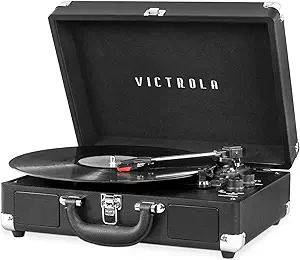
When examining affordability, Victrola holds an undeniable advantage for budget-conscious consumers and casual listeners entering the vinyl hobby. Victrola's product catalog is heavily skewed toward ultra-accessible price points, with many of its popular suitcase models and all-in-one music centers retailing for well under one hundred dollars. Even their higher-end lifestyle offerings, such as the Stream and Carbon series, are priced competitively relative to modern smart home gear. For shoppers seeking the lowest monetary barrier to playing analog records without purchasing auxiliary equipment like standalone preamps or external powered speakers, Victrola represents a remarkably cheap initial investment.
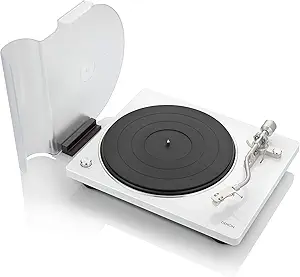
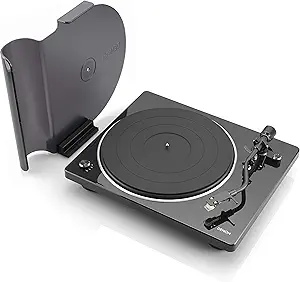
Denon, in contrast, operates in the entry-level hi-fi to mid-fi audio tiers, meaning its baseline price of admission is significantly higher than Victrola's entry tier. A starter turntable from Denon typically retails in the hundreds of dollars, reflecting a focus on robust mechanical design, higher-grade raw materials, and precision engineering. While Denon cannot compete with Victrola in sheer low cost, it offers superior long-term economic value. The higher upfront cost pays for component longevity, replaceable parts, and gentle record handling that prevents the groove wear and vinyl damage frequently associated with ceramic cartridges found on rock-bottom budget players.
Sound Quality
Denon distinctly outclasses Victrola in pure acoustic fidelity, delivering the nuanced, dynamic sound reproduction that audiophiles and serious collectors expect from vinyl. Denon turntables benefit from decades of Japanese audio engineering, featuring low-resonance plinths, mechanically isolated DC servo motors, and precision tonearms paired with moving magnet (MM) cartridges from reputable manufacturers like Audio-Technica or Denon's proprietary cartridge division. The result is a wide frequency response, minimal harmonic distortion, and an expansive soundstage that accurately extracts the detailed sonic textures embedded in vinyl microgrooves.
Victrola's acoustic output, on the other hand, is generally tuned for casual, non-critical background listening. Its pervasive suitcase-style players utilize low-mass plastic tonearms, basic ceramic styluses, and compact internal speakers that produce a thin, mid-heavy tonal balance with virtually no true sub-bass extension. Although Victrola has made commendable strides with premium models like the Victrola Hi-Res and Stream Carbon—which incorporate calibrated Ortofon cartridges, aluminum platters, and resonance-dampening plinths—the broader lineup still suffers from audible motor rumble, higher wow and flutter measurements, and a lack of acoustic separation compared to Denon's Hi-Fi standards.
Features & Functionality
Victrola excels in consumer-facing convenience and lifestyle-driven modern functionality. Rather than focusing purely on analog purism, the brand integrates multifaceted technologies that cater to the streaming generation. Many Victrola decks feature bi-directional Bluetooth streaming (allowing users to transmit vinyl to wireless headphones or stream digital tracks through the turntable's speakers), auxiliary inputs, and even native integration with multi-room smart ecosystems like Sonos. Their modern smart-turntables successfully demystify vinyl for users who prioritize wireless convenience and multi-room audio playback over strict analog signal paths.
Denon approaches functionality through an audiophile-centric lens, prioritizing mechanical utility and signal purity over novelty wireless additions. Denon decks frequently offer sophisticated mechanical conveniences such as full or semi-automatic tonearm operation, speed sensors to eliminate pitch fluctuations, and built-in phono preamps equipped with high-grade bypass switches for pairing with external audiophile gear. Select modern Denon units also feature integrated USB ports with digital analog-to-digital converters (ADC) for ripping high-resolution digital archives of rare records, focusing functionality squarely on vinyl preservation and pristine playback.
Ease of Use & Setup Processes
Victrola provides one of the most frictionless, plug-and-play user experiences on the market today. Many of their staple units require virtually zero technical setup: consumers simply open the lid, plug the unit into a wall outlet, and drop the stylus onto a record. The tonearms on budget models are pre-calibrated at the factory with fixed tracking forces, completely eliminating the need for users to balance counterweights, adjust anti-skate mechanisms, or align cartridge cantilevers with protractors. This frictionless approach drastically lowers the technical barrier to entry for complete novices.
Denon bridges the gap between plug-and-play simplicity and proper hi-fi calibration, resulting in a slightly more involved setup process. While entry models like the DP-29F or DP-300F come largely pre-assembled with factory-aligned cartridges, users are still expected to mount the platter and drive belt, manually balance the tonearm counterweight, and dial in the correct vertical tracking force and anti-skate settings. While this requires referencing the user manual and spending ten to fifteen minutes on initial installation, Denon rewards the user with an intuitive day-to-day operation, particularly on its fully automatic models that start and return the tonearm with the simple push of a button.