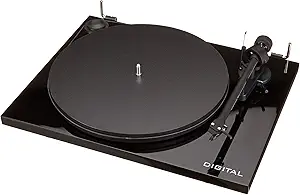
Pro-Ject vs Audio-Technica: Overview & Brand Philosophy
The vinyl revival has matured from a niche collector's trend into a dominant force in modern physical media, bringing two industry titans to the forefront of consumer choice: Pro-Ject Audio Systems and Audio-Technica. While both brands dominate market share across various price brackets, they approach analog playback from fundamentally different engineering and cultural philosophies. Choosing between them requires an understanding not just of specifications, but of how each manufacturer envisions the listener's interaction with their record collection.
Founded in Austria in 1991 by Heinz Lichtenegger, Pro-Ject was born amidst the rise of the compact disc with a singular, contrarian mission: to offer pure, unadulterated analog playback at an accessible price point. Pro-Ject manufactures its turntables in Europe, utilizing specialized factories in the Czech Republic and Slovakia. The brand’s ethos centers on high-end minimalist design, mechanical purity, and the systematic reduction of resonance. Pro-Ject champions passive, purely mechanical engineering, intentionally omitting internal electronics like preamplifiers, Bluetooth, or automated mechanisms in their core audiophile decks to eliminate potential signal interference.
Conversely, Audio-Technica is a historic Japanese audio titan established in Tokyo in 1962 by Hideo Matsushita, initially gaining global acclaim for its phono cartridges. Unlike Pro-Ject's boutique, purist hi-fi roots, Audio-Technica operates as a massive consumer electronics and professional broadcast manufacturer. Its philosophy prioritizes versatility, mass-market accessibility, ergonomic functionality, and robust feature integration. Audio-Technica is celebrated for bridging the gap between legacy analog tech and modern convenience, integrating switchable preamps, USB outputs, and direct-drive motor systems into turntables suited for entry-level enthusiasts and home DJs alike.
Key Differences & Technological Comparison
The engineering divergence between Audio-Technica and Pro-Ject is evident across several critical design vectors, defining the user experience, audio signature, and long-term upgradeability of their machines.
- Drive Mechanisms: Pro-Ject predominantly relies on belt-drive systems featuring decoupled synchronous AC or DC motors and precision ground belts. This isolates motor vibrations from the plinth and platter, drastically reducing low-frequency rumble at the cost of high initial torque. Audio-Technica offers both belt-drive options (such as the AT-LP60X series) and iconic direct-drive platforms (such as the AT-LP120XUSB). Their direct-drive models couple the platter directly to a high-torque brushless DC motor, providing pitch stability, rapid spin-up, and reverse-playback capabilities vital for broadcast and DJ monitoring, though requiring advanced damping to prevent motor hum from reaching the stylus.
- Tonearm Engineering and Materials: Pro-Ject is famous for trickling ultra-high-end materials down to mid-tier decks. Many Pro-Ject models (like the Debut Carbon EVO) feature single-piece, highly rigid carbon-fiber tonearms with integrated headshells, designed to eliminate standing waves and track grooves with surgical precision. Audio-Technica typically employs lightweight aluminum tonearms, often shaped in an S-configuration with classic SME-type detachable headshells. While Audio-Technica’s tonearms allow for hot-swapping pre-mounted cartridges in seconds, Pro-Ject’s one-piece designs deliver superior rigidity and geometric alignment precision.
- Chassis Architecture and Resonance Control: Pro-Ject chassis design relies on heavy, dense medium-density fibreboard (MDF) plinths finished in high-gloss lacquers or real-wood veneers, paired with heavy steel or acrylic platters with internal TPE (thermoplastic elastomer) damping rings. Audio-Technica utilizes layered polymer and cast aluminum chassis. While structurally sound, the inclusion of internal buttons, sliders, digital converters, and hollow internal cavities in lower-to-mid-tier Audio-Technica decks makes them more susceptible to structural resonance and acoustic feedback at high volumes.
- Feature Set and Modern Connectivity: Audio-Technica excels at all-in-one out-of-the-box utility. Most models feature built-in phono preamps (allowing direct connection to powered speakers without an external amplifier), digital USB outputs for vinyl digitization, and selectable automatic start/stop mechanisms. Pro-Ject typically delivers fully manual turntables with high-purity RCA output terminals, requiring an external phono stage (or an amplifier with a dedicated phono input), reflecting an architecture that appeals to listeners curating dedicated, separated audio stacks.
Pros & Cons Comparison
Pro-Ject
- Pros:
- Exceptional acoustic performance with ultra-low noise floors and superior resonance damping.
- High-end materials used across entry and mid-tier decks (carbon fiber tonearms, TPE-damped platters).
- Sophisticated European design aesthetic available in diverse premium finishes.
- Significant upgrade headroom (sub-platters, acrylic platters, high-end moving coil cartridges).
- Pure analog signal paths free from internal digital circuitry interference.
- Cons:
- Higher cost of entry compared to entry-level competitors.
- Requires ancillary gear (external phono stage or phono-enabled receiver on most models).
- Manual operation requires the user to place and lift the tonearm manually.
- Manual speed change on select base models requires moving the belt along the pulley by hand.
Audio-Technica
- Pros:
- Outstanding plug-and-play accessibility with built-in preamplifiers and comprehensive cable inclusions.
- High-value pricing across entry-level and intermediate tiers.
- Convenient features available, including USB vinyl ripping, Bluetooth streaming, and push-button operation.
- Removable headshells make cartridge maintenance and swapping exceptionally simple.
- Direct-drive options deliver pitch-perfect speed accuracy and rapid torque for DJs.
- Cons:
- Plastic-heavy build quality and resonant internal components on entry-level models.
- Built-in phono preamps are adequate for beginners, but lack dynamic range and detail for critical listening.
- Lower acoustic ceiling; tonearm tolerances do not fully resolve high-end audiophile cartridges.
- Industrial/utilitarian aesthetics may not complement upscale residential decor.
Performance, Durability & Value Analysis
From an acoustic performance standpoint, Pro-Ject generally outperforms Audio-Technica when matched with high-resolving stereo systems. Thanks to rigid carbon-fiber tonearms, heavy dense platters, and precision-engineered bearing blocks, Pro-Ject units reveal micro-details, wider stereo imaging, and more authoritative bass control. The noise floor on a properly isolated Pro-Ject turntable is remarkably low, preserving the dynamic range of pristine vinyl pressings. Audio-Technica, while capable of energetic and punchy sound—especially when paired with their acclaimed VM95 cartridge line—tends to exhibit a shallower soundstage and higher susceptibility to motor and footfall vibrations due to lighter chassis materials and integrated electronic switching.
In terms of durability and long-term value, the brands balance the ledger differently. Audio-Technica offers unmatched entry-level financial value; an entry-to-mid model like the AT-LP120XUSB gives a user an all-inclusive playback station that will last years with zero maintenance. However, Pro-Ject turntables operate under the principle of modular longevity. Constructed with minimal moving electrical components, high-grade brass bearing sleeves, and external power supplies, a Pro-Ject chassis is built to last decades. While you will pay more upfront for a Pro-Ject, its resale value remains remarkably steady in the secondary hi-fi market, representing a durable capital investment for an audiophile.
Final Verdict: Which Brand Should You Choose?
Selecting the optimal turntable between these two brands comes down to your budget, your existing audio infrastructure, and how you intend to engage with your vinyl collection.
Choose Audio-Technica if:
- You are a vinyl newcomer looking for a complete, hassle-free setup on a budget under $400.
- You want integrated features such as switchable phono preamps, direct PC connection via USB for audio archiving, or Bluetooth streaming.
- You are an aspiring DJ or home producer requiring high-torque direct-drive motors, reverse play, and pitch control sliders.
- You prefer push-button automated playback or simple cartridge changes via standard removable headshells.
Choose Pro-Ject if:
- You are an audiophile or critical listener building a dedicated, component-based high-fidelity stereo system.
- You prioritize pure acoustic performance, black backgrounds, low rumble, and expansive soundstaging over auxiliary convenience features.
- You appreciate minimalist, elegant design, European industrial build quality, and furniture-grade visual finishes.
- You want a reliable, modular platform that can be incrementally upgraded over time with better styli, platters, and dedicated preamplification.
Affordability
When evaluating affordability in the turntable category, Audio-Technica and Pro-Ject operate with fundamentally divergent pricing philosophies, targeting different ends of the value spectrum. Audio-Technica is the undisputed champion of low-barrier entry, dominating the budget tier with models like the AT-LP60X and the direct-drive AT-LP120XUSB. Audio-Technica achieves unmatched economic accessibility through mass manufacturing, integrated features, and turnkey functionality. For a price point often well under $200, an entry-level Audio-Technica deck typically includes a pre-installed cartridge, an integrated switchable phono preamplifier, and often digital USB outputs or Bluetooth connectivity. The engineering relies heavily on molded plastics and automated mechanisms, which lowers production costs and offers immediate plug-and-play utility. However, this aggressive affordability entails practical trade-offs: higher wow-and-flutter ratings, less rigid chassis construction that is more susceptible to acoustic resonance, and limited long-term upgrade paths on their cheapest decks.
Conversely, Pro-Ject treats affordability through an audiophile lens, prioritizing acoustic isolation, component minimalism, and material integrity over convenience-oriented feature density. Pro-Ject’s entry-level models, such as the Primary E and the acclaimed Debut series, command a higher baseline price—rarely dipping below the $300 threshold. Rather than allocating manufacturing budgets toward built-in preamps, automated tonearm returns, or digital conversion chips, the Austrian manufacturer concentrates capital into structural fundamentals. Pro-Ject decks feature heavy, resonance-damping CNC-machined MDF plinths, high-precision stainless steel platter bearings, decoupled low-vibration AC synchronous motors, and single-piece carbon fiber or stiff aluminum tonearms paired with higher-spec Ortofon cartridges. The practical trade-off for the consumer is upfront expenditure; a Pro-Ject turntable often requires an additional investment in an external phono stage, separate cabling, and entirely manual cueing mechanics.
From an analytical cost-to-performance perspective, Audio-Technica offers superior "out-of-the-box" affordability, making it the premier option for budget-conscious buyers, casual listeners, and vinyl newcomers who want an all-in-one analog solution without hidden auxiliary costs. In contrast, Pro-Ject provides long-term value and modular affordability for discerning listeners. While a Pro-Ject turntable demands a steeper initial financial commitment, its superior acoustic engineering, lower mechanical noise floors, and extensive modularity—allowing users to incrementally upgrade platters, sub-platters, and cartridges over decades—deliver a substantially higher return on investment for users aiming to build a genuine high-fidelity sound system over time.
Sound Quality
When evaluating sound quality, Pro-Ject approaches vinyl playback from a purist, audiophile perspective that prioritizes resonance control, passive mechanical damping, and low-noise operation. Pro-Ject decks—such as the Debut Carbon and Debut PRO lines—feature high-rigidity single-piece carbon fiber or carbon-aluminum tonearms, heavy acrylic or resonance-damped aluminum platters, and isolated AC motors decoupled via TPE suspension. This uncompromising belt-drive engineering minimizes micro-vibrations and drastically reduces acoustic feedback. The result is a sound profile characterized by an exceptionally low noise floor, precise stereo imaging, deep bass extension, and high resolving power in the mid-to-high frequencies. Paired predominantly with carefully matched Ortofon or Sumiko cartridges, Pro-Ject tables deliver a neutral, transparent, and dynamic acoustic presentation that reveals subtle studio nuances, making them the preferred choice for critical, focused listening.
Conversely, Audio-Technica engineers its sound quality to prioritize versatility, punch, and dynamic energy, offering a warmer and more immediately accessible sonic profile. While Audio-Technica manufactures belt-drive models, the brand is most renowned for its robust direct-drive platforms, notably the AT-LP120XUSB and higher-end AT-LP5X. These turntables leverage quartz-controlled high-torque motors that yield excellent rotational speed stability and negligible pitch drift (wow and flutter). Audio-Technica utilizes classic aluminum S-shaped tonearms paired with their proprietary Dual Moving Magnet cartridges (such as the ubiquitous AT-VM95 series), which excel at energetic transient response, wide groove tracking, and punchy, articulated low-end performance. However, because entry- and mid-tier models often incorporate internal circuitry like switchable phono preamps, ADC converters, and DJ pitch controls, the noise floor is slightly higher than on equivalent Pro-Ject models, occasionally introducing subtle electrical coloration or mechanical resonance through the lighter composite plinths.
The practical trade-off between the two brands centers on acoustic transparency versus sonic utility and upgrade flexibility. Pro-Ject excels in hi-fi environments where downstream amplification and speakers can fully reveal the benefit of its superior signal-to-noise ratio and ultra-rigid mechanical architecture, though achieving optimal sound often requires meticulous manual setup and tracking force calibration. Audio-Technica sacrifices the absolute top-tier resolution, micro-detail, and spatial width offered by Pro-Ject in exchange for plug-and-play sonic consistency and unmatched cartridge versatility, thanks to their standard detachable headshells and vast ecosystem of interchangeable styli (from conical to Shibata). For listeners demanding raw dynamic rhythm, track stability, and easy stylus upgrades across genres, Audio-Technica is highly competent; however, for consumers seeking authentic, uncolored, and immersive audiophile fidelity, Pro-Ject commands a definitive acoustic advantage.
Features & Functionality
When evaluating features and functionality, Pro-Ject and Audio-Technica represent fundamentally opposing design philosophies: purist audiophile minimalism versus feature-dense modern utility. Pro-Ject strips away extraneous mechanical features to prioritize sonic purity, vibration isolation, and component quality. Most Pro-Ject decks, particularly within the acclaimed Debut and T-line series, feature fully manual belt-drive mechanisms with rigid MDF plinths, high-grade carbon-fiber or one-piece aluminum tonearms, and decoupled low-noise motors. Speed changes are frequently handled manually by physically moving the belt across a stepped pulley, although higher-tier models incorporate electronic speed boxes. By deliberately excluding features like automatic tonearm returns, onboard preamps, or digital connectivity, Pro-Ject minimizes resonance and electrical interference, channeling consumer investment directly into structural rigidity, precision bearings, and superior cartridge integration—typically paired with high-performance Ortofon or Pick it cartridges.
In contrast, Audio-Technica champions versatility, ease-of-use, and multi-format integration, appealing to everyday listeners, content creators, and DJs alike. Models ranging from the entry-level LP60X to the professional-grade LP120X and LP140X are packed with convenience-oriented utilities. Audio-Technica heavily features direct-drive motors, push-button electronic speed controls (33, 45, and often 78 RPM), pitch-fader sliders, and either semi-automatic or fully automatic operation that safely lifts and returns the tonearm. Furthermore, their turntables frequently include switchable internal phono preamplifiers, USB outputs for digitizing vinyl collections to PC or Mac, and modern Bluetooth wireless streaming capabilities. This extensive feature set removes setup hurdles and eliminates the need for expensive secondary components like dedicated phono stages.
The practical trade-offs between the two brands hinge on user priorities regarding mechanical simplicity versus operational convenience. Audio-Technica delivers unmatched plug-and-play functionality, making their turntables versatile workhorses for multi-room listening and vinyl preservation, though purists may note that their plastic-heavy chassis and busy electrical pathways introduce minor acoustic compromises. Pro-Ject requires a more deliberate, hands-on ritual and usually demands outboard amplification and manual calibration, trading immediate convenience for lower signal-to-noise ratios, expansive aftermarket upgradability (such as acrylic platters and sub-platter upgrades), and uncompromising fidelity. Ultimately, Audio-Technica wins on comprehensive utility and connectivity, while Pro-Ject excels in purpose-driven acoustic engineering.
Ease of Use & Setup Processes
When evaluating the setup process and daily operation of turntables, Audio-Technica and Pro-Ject represent two fundamentally different philosophies: consumer-friendly automation versus traditional audiophile minimalism. Audio-Technica excels in accessibility, engineering its entry-to-mid-range turntables—such as the LP60X and LP120X series—for swift, out-of-the-box functionality. The most entry-level models arrive virtually pre-assembled, featuring fixed, pre-calibrated tracking forces and factory-aligned cartridges that require little more than slipping on the platter and belt. Even their more advanced, DJ-inspired direct-drive decks feature convenient modularity, including detachable headshells with standard half-inch mounts that drastically simplify cartridge swaps. In contrast, Pro-Ject deliberately prioritizes mechanical isolation and acoustic purity over plug-and-play ease. While decks like the Debut Carbon EVO or Primary E arrive with pre-mounted Ortofon or Sumiko cartridges, the user is directly responsible for precision mechanical adjustments. Setting up a Pro-Ject typically demands a delicate hand for balancing counterweights, dialing in exact tracking force with a manual scale, and looping a delicate fishing-line anti-skate weight, making the initial assembly a meticulous, audiophile-oriented ritual.
In day-to-day usability, Audio-Technica continues to emphasize convenience through thoughtful electrical and mechanical features. Many of their models offer fully automatic push-button operation, integrated switchable phono preamplifiers, and modern digital amenities like Bluetooth streaming and USB outputs for vinyl ripping. Direct-drive configurations also provide electronic speed switching between 33, 45, and sometimes 78 RPM at the press of a button. Pro-Ject, on the other hand, embraces an analog-purist architecture. While higher-tier Pro-Ject models have begun integrating built-in speed boxes for push-button electronic speed changes, several classic designs still require users to physically remove the platter and manually shift the drive belt along the motor pulley to change playback speeds. Furthermore, the absence of auto-stop or auto-return mechanisms on most Pro-Ject decks means the tonearm must be manually cued and lifted at the end of every record side, risking needle wear if left unattended.
Ultimately, the choice between these two brands involves a practical trade-off between modern convenience and acoustic optimization. Audio-Technica’s streamlined setup and automated feature set eliminate the intimidation factor for vinyl newcomers and multi-tasking listeners who desire low-maintenance playback. However, Pro-Ject’s more demanding setup process yields significant engineering dividends. The one-piece carbon fiber or aluminum tonearms, detached low-noise AC motors, and absence of automated interior linkages significantly reduce mechanical resonance, tracking distortion, and electrical interference. For enthusiasts willing to navigate a steeper learning curve, Pro-Ject delivers superior acoustic calibration and higher fidelity, whereas Audio-Technica remains the undisputed champion of effortless, friction-free vinyl playback.