BLACK+DECKER vs Balmuda: Overview
Comparing BLACK+DECKER and Balmuda helps you determine which brand is best suited for your needs in Toaster Ovens. Both brands offer strong choices depending on your budget and key feature requirements.
Key Features & Comparison
Evaluate factors such as build quality, warranty, customer satisfaction, and total value before making your final purchase choice between BLACK+DECKER and Balmuda.
Features
BLACK+DECKER concentrates its feature set on traditional utility and high-capacity versatility. Depending on the model, their toaster ovens frequently include multiple rack positions, convection fan settings, dedicated broiling functions, and interior cavities spacious enough to accommodate a nine-inch or twelve-inch pizza. Modern digital variants offer preset cooking modes for frozen snacks, baking, and bagels, alongside standard mechanical timers with stay-on features. While the implementation relies on standard heating elements and mechanical thermostats, the breadth of cooking modes provides extensive culinary flexibility for budget-conscious home cooks.
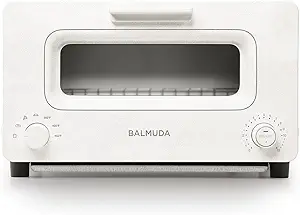
Balmuda wholly eschews broad-spectrum oven features in favor of micro-steaming technology and mathematically curated heating curves. Instead of generic presets, Balmuda features specialized modes for Sandwich Bread, Artisan Bread, Pizza, and Pastry, alongside conventional non-steam heating modes (at fixed temperatures like 350°F, 400°F, and 450°F). The core technological feature is a 5cc water reservoir that turns into a localized burst of steam, enveloping the food to trap moisture inside before radiant quartz heaters crisp the exterior. While lacking the capacity to roast a chicken or bake a full casserole, Balmuda’s technical sophistication within its chosen domain drastically outclasses the utilitarian feature roster of BLACK+DECKER.
Performance
In standard performance testing, BLACK+DECKER delivers functional, workmanlike results characterized by typical radiant heat variances. Its quartz or metal heating elements generate fast, direct heat that toasts bread and melts cheese quickly, though users must often contend with hot spots and uneven browning across multiple slices. When utilizing convection settings, cooking times for frozen foods and small baked dishes decrease noticeably, but the lack of micro-thermal management means delicate baked goods can dry out or brown prematurely on the edges before heating evenly through the center.
Balmuda’s performance, by contrast, is a masterclass in thermal engineering and humidity management. The initial burst of steam condensates on the surface of the bread, creating a delicate protective film that prevents internal moisture evaporation while the internal heating elements bring the core to temperature. A multi-phase heating sequence—calibrated in seconds rather than rough minutes—then brings the exterior to an exceptionally uniform, golden crispness. The result is artisan bread and pastries that taste freshly baked rather than merely reheated. For dedicated toast, pastry, and slice-level pizza revival, Balmuda achieves a level of texture and flavor retention that BLACK+DECKER's brute-force heating simply cannot replicate.
Design
From an industrial design standpoint, BLACK+DECKER prioritizes cost-effective manufacturing and functional ergonomics. Built primarily with stamped sheet metal, brushed stainless steel accents, and standard heat-resistant plastics, their appliances are engineered to blend unobtrusively into average kitchens. The interface typically uses classic tactile dials with analog timers or membrane digital pads with basic LED readouts. While sturdy and straightforward, the aesthetic is undeniably commercial and utilitarian, and the exterior chassis tends to get quite hot during extended operation due to minimal thermal insulation layers.
Balmuda treats the toaster oven as an object of minimalist interior design, heavily influenced by contemporary Japanese aesthetic sensibilities. The exterior features smooth, matte textured finishes, subtle metallic accents, and a distinctive compact footprint that elevates the countertop aesthetic. Every physical interaction is tuned for sensory pleasure, from the soft mechanical detent of the selector knobs to the nostalgic, metronome-like ticking sound accompanied by ambient interior lighting during the cooking cycle. While its diminutive interior severely restricts what cookware can fit inside, the superior fit, finish, and thoughtful user-interface design make Balmuda a striking focal point rather than a hidden appliance.
Compare current retail pricing, active promotions, and verified stock availability directly from authorized stores: